

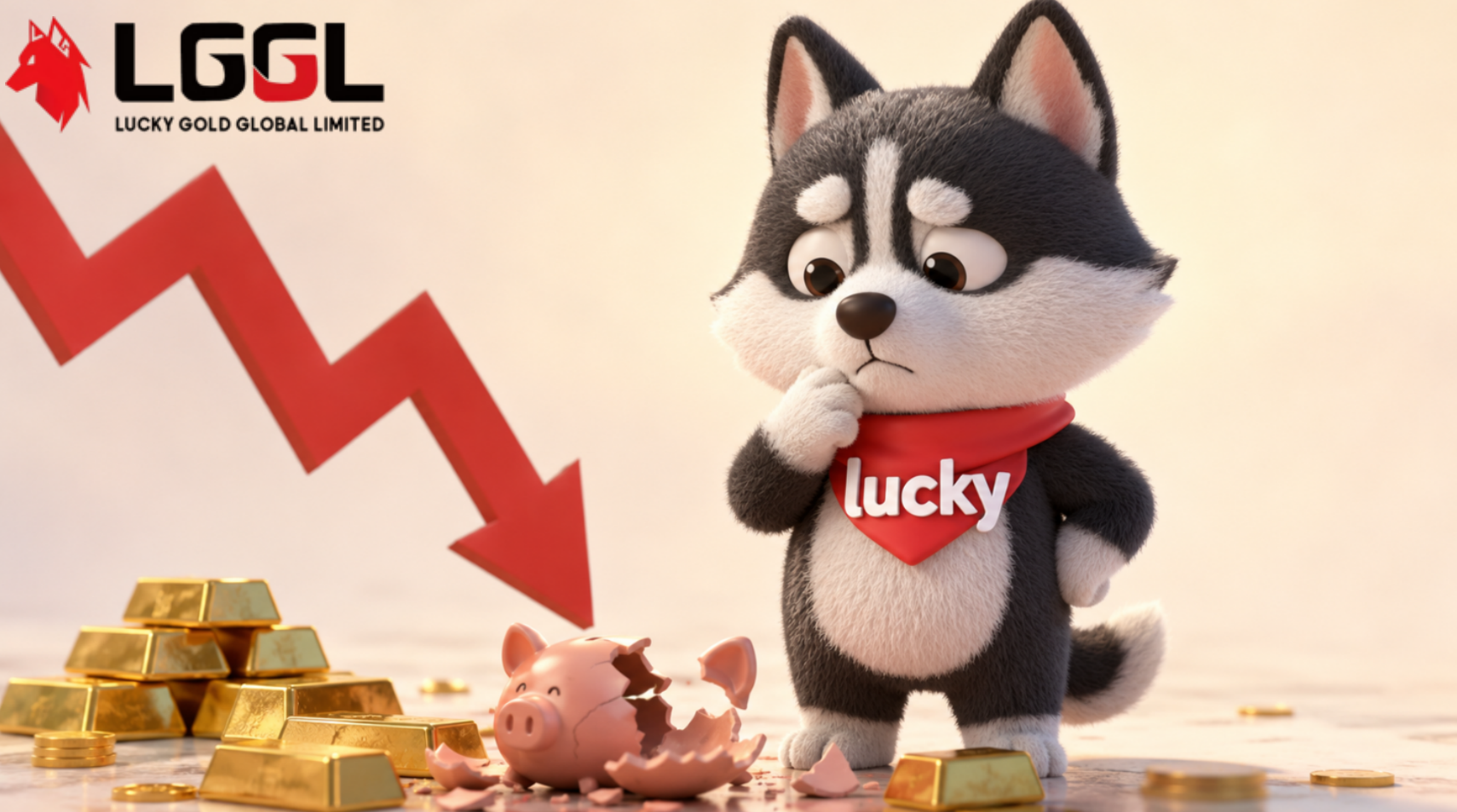
Gold Has Fallen a Lot—Does That Mean It Is Cheaper?
A Large Decline Only Tells Us That the Price Has Changed
After gold falls from a previous high, beginners may instinctively think that it has become cheap. A 10% decline from a recent peak can certainly make the price look more attractive, but this easily confuses two different ideas: a lower price and a lower valuation.
The percentage decline simply compares today's price with an earlier price. It tells us how far gold has fallen, but it does not tell us whether the current price is below a reasonable level.
If the conditions that pushed gold lower have not changed, the market can remain under pressure even after a substantial correction. A higher price in the past therefore does not automatically mean that today's price is cheap.
This resembles another common mistake: focusing on a lower average cost after losses rather than asking whether the original market logic still holds. See Can Averaging Down After a Loss Help You Return to Break-Even Faster?.
Gold Is More Difficult to Value Directly Than a Stock
Stocks can often be discussed using earnings, cash flow and valuation multiples. Gold does not generate corporate earnings or operating cash flow, so there is no single metric that produces an obvious intrinsic value.
Gold therefore needs to be viewed through a broader market framework, including economic growth, risk and uncertainty, opportunity cost, the U.S. dollar, investment flows and demand.
The important question is not simply how far gold has fallen from an all-time high, but whether the environment that caused the decline has changed.
Higher Real Yields Can Push an Apparently Low Price Even Lower
Gold does not pay interest, which makes the interest-rate environment important. When real yields rise, interest-bearing assets may become relatively more attractive, putting pressure on gold. Falling real yields can reduce the opportunity cost of holding gold.
However, real yields are not the only driver. Central-bank purchases, safe-haven demand, currency movements and investment flows can all affect how gold responds to interest rates.
If gold has already fallen while real yields continue to rise, the dollar remains firm and investment flows remain weak, the size of the previous decline alone does not establish a reversal.
Adding more technical indicators to justify the belief that gold is already cheap does not necessarily improve the analysis either. This is discussed in Do More Indicators Make a Trading Decision More Accurate?.
Both High and Low Prices Need Market Context
The same principle works in the opposite direction. A record high does not automatically mean gold is overvalued. Rising geopolitical risk, easier monetary-policy expectations, stronger central-bank demand or sustained investment inflows may support a higher price regime.
The same nominal gold price can therefore represent very different market conditions at different times. A level that was once a record high is not automatically expensive forever, just as a large decline from a high is not automatically cheap.
Do Not Use the Size of the Decline as the Buying Argument
The key beginner mistake is treating the path of the price as a valuation conclusion. Instead of asking how much cheaper gold has become, ask why it fell and whether the forces behind that decline have changed.
Losses can also create emotional pressure to recover quickly, which may weaken risk discipline. This behaviour is explored in How Emotions Affect Money Management and Why Traders Often Increase Risk After Losses.
Technical analysis can examine whether price has stabilised, whether support is holding and whether the trend structure is improving. Fundamental analysis can examine real yields, the dollar, risk sentiment and gold demand.
Any valuation view should also sit inside a broader risk framework. See Full Trading Lifecycle Risk Management: From Account Setup to Profit Withdrawal.
A large fall therefore means that gold is cheaper than it was before in a purely numerical sense. It does not automatically mean it is undervalued. Price decline describes what happened; valuation asks whether the current price makes sense in today's market environment.