

Gold Retracts After Initial Surge
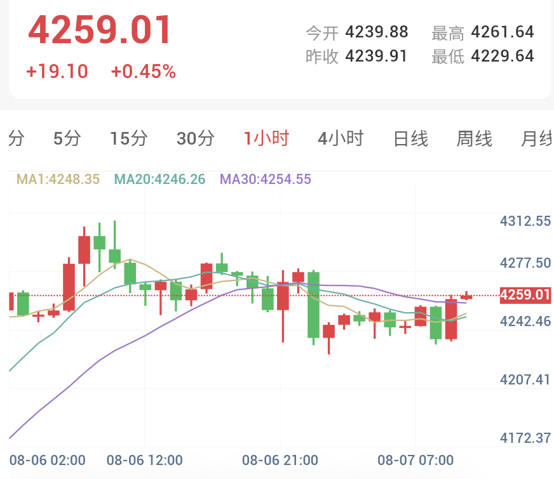
Spot gold reached 4312.55 USD/oz on August 6, hitting its highest level since June 18, before pulling back sharply to a low of 4223.00 USD/oz and closing near 4240.55 USD/oz (-0.15%).
Prices stabilized near 4259 USD/oz during August 7 Asian morning trading. Recent gold volatility reflects shifting focus across Middle East geopolitical risks, energy price swings, and Federal Reserve policy expectations.
Middle East Tensions Re-Escalate

Iranian parliamentary committees are evaluating a preliminary bill proposing restrictions and penalties on US, Israeli, and hostile foreign vessels traversing the Strait of Hormuz.
Energy benchmarks surged following the headlines, with Brent crude advancing 3.83% to 82.49 USD/bbl and WTI crude rising to 77.29 USD/bbl. Strait transit threats alongside Red Sea disruptions continue to underpin safe-haven demand.
Inflation Expectations Rebound

Rebounding energy prices sparked renewed US inflation concerns. Higher transport and production costs could delay monetary easing, prompting bond yield advances.
US Treasury yields rose, with 2-year yields climbing to 4.252% and 10-year yields touching 4.674%. Rising yields increased gold holding opportunity costs, triggering the intraday price pullback.
NFP Report in Short-Term Focus
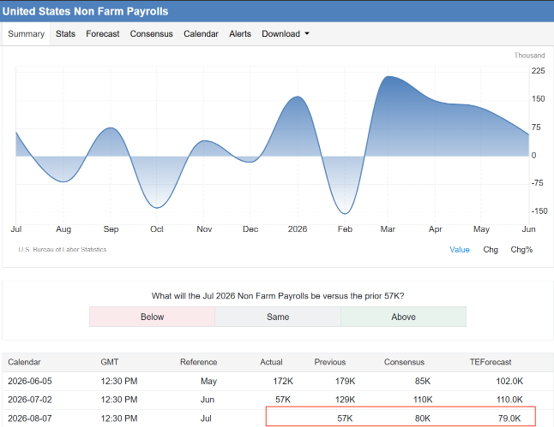
The US July Non-Farm Payrolls report releases on August 7, with consensus expecting ~80,000 job additions and unemployment holding at 4.2%.
Labor indicators continue to show underlying resilience, as initial jobless claims remain muted and corporate layoff announcements slowed. A mild downside surprise may not immediately alter the Federal Reserve's rate path.
Market Outlook
Gold remains in high-level consolidation. Safe-haven demand provides baseline support, while energy-driven yield advances cap upward momentum ahead of NFP data.