

I. Headline Summary: Employment Contracts as Labor Force Shrinks
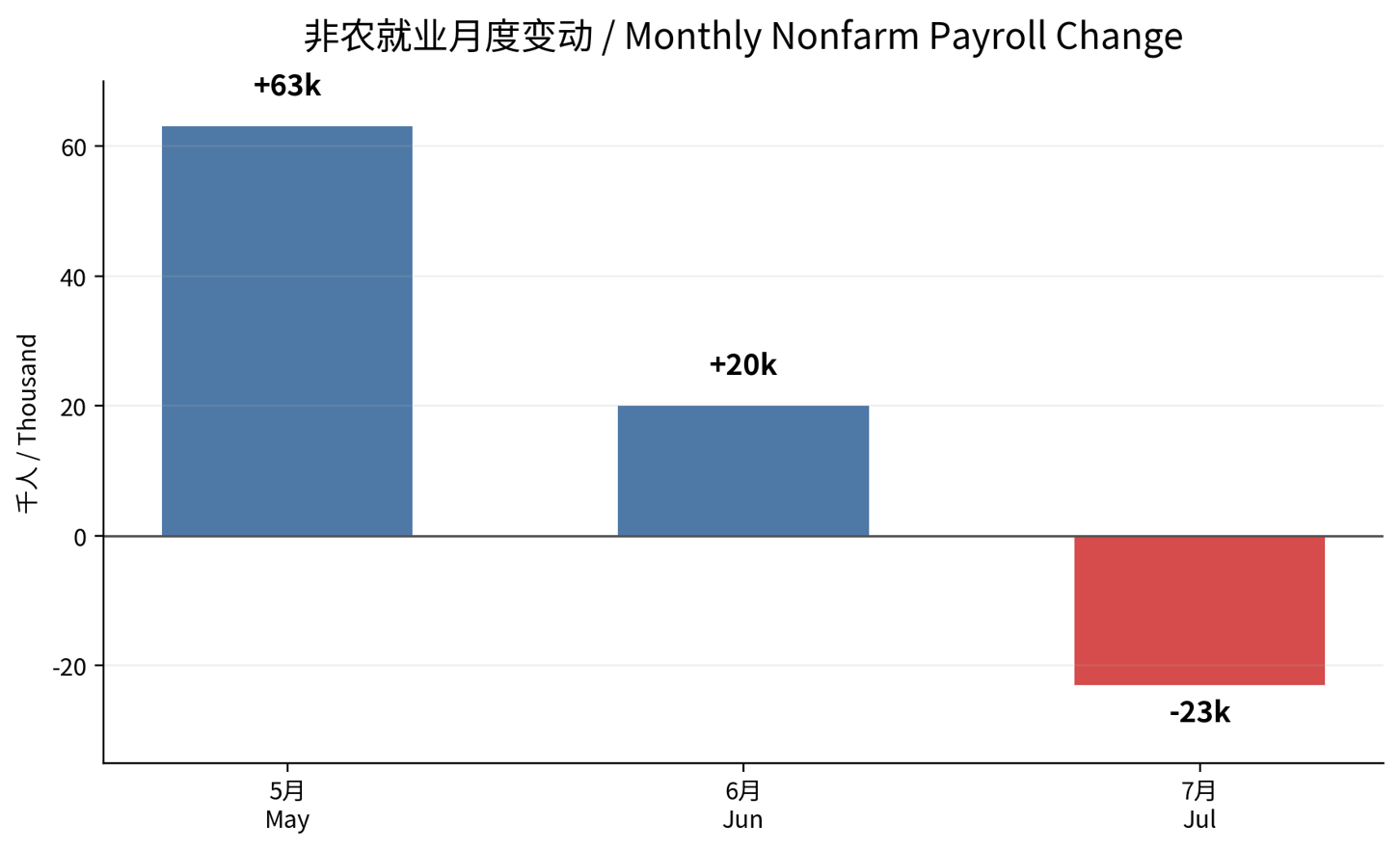
US July non-farm payrolls dropped by 23,000 jobs, far missing consensus forecasts of an 80,000 gain. Combined May and June figures were revised down by 103,000 (May to +63,000; June to +20,000), reducing the 3-month average job growth to just 20,000 per month.
While the unemployment rate edged down to 4.1% from 4.2%, this was driven by 264,000 workers exiting the workforce (per Reuters), pushing participation down to 61.4% and the employment-population ratio to 58.9%.
II. Core Metrics: Softness Spreads Across Labor Indicators
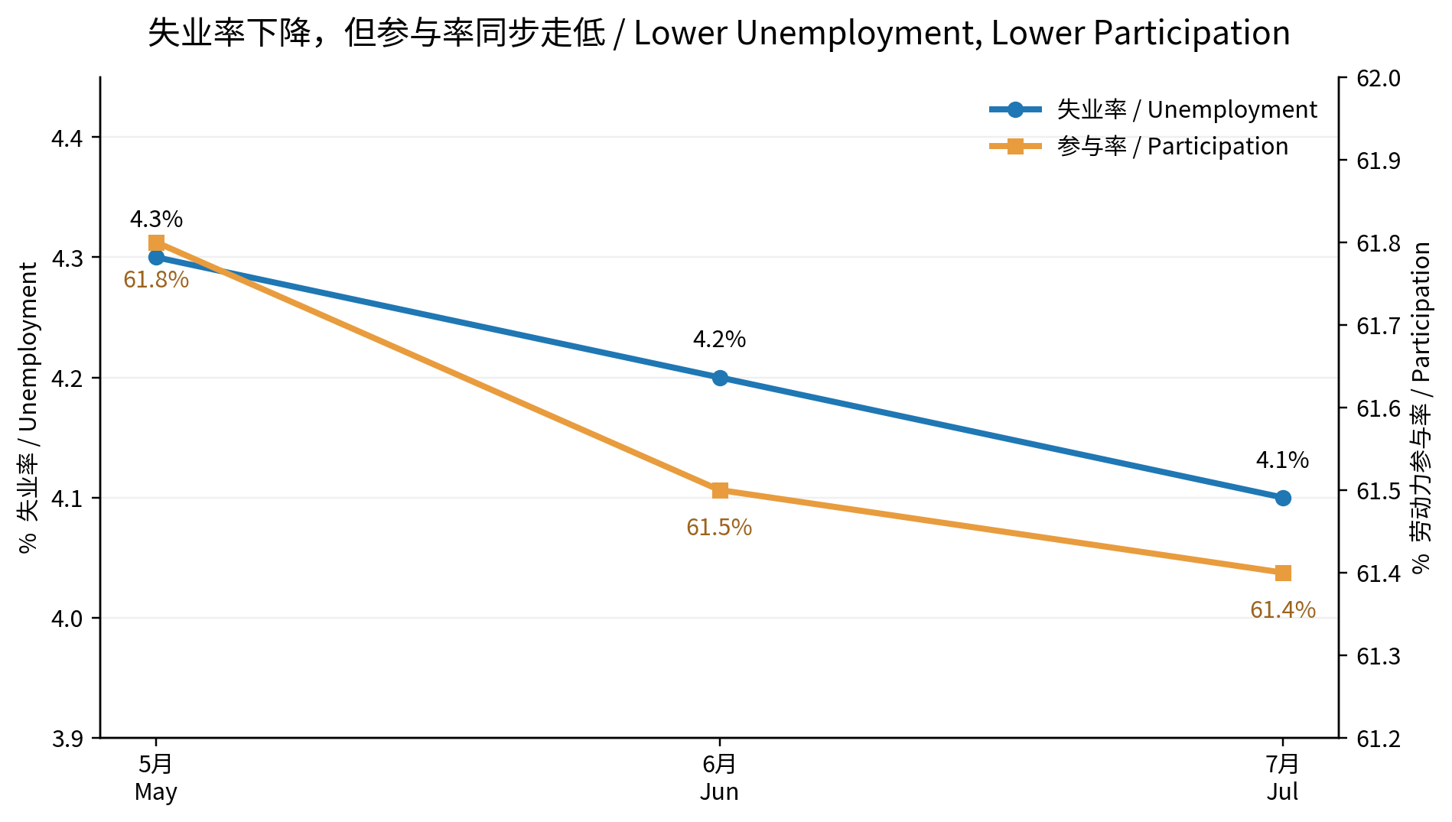
Negative monthly job growth combined with heavy historical downward revisions confirms underlying labor momentum has cooled steadily since Q2.
Involuntary part-time employment held at 4.8 million, indicating ongoing employment quality pressures. Average hourly earnings rose just 2 cents month-over-month to $37.62 (+3.2% year-over-year), while average weekly hours held steady at 34.3, confirming firms are curbing recruitment rather than slashing hours.
III. Industry Breakdown: Education and Post-World Cup Normalization Drag
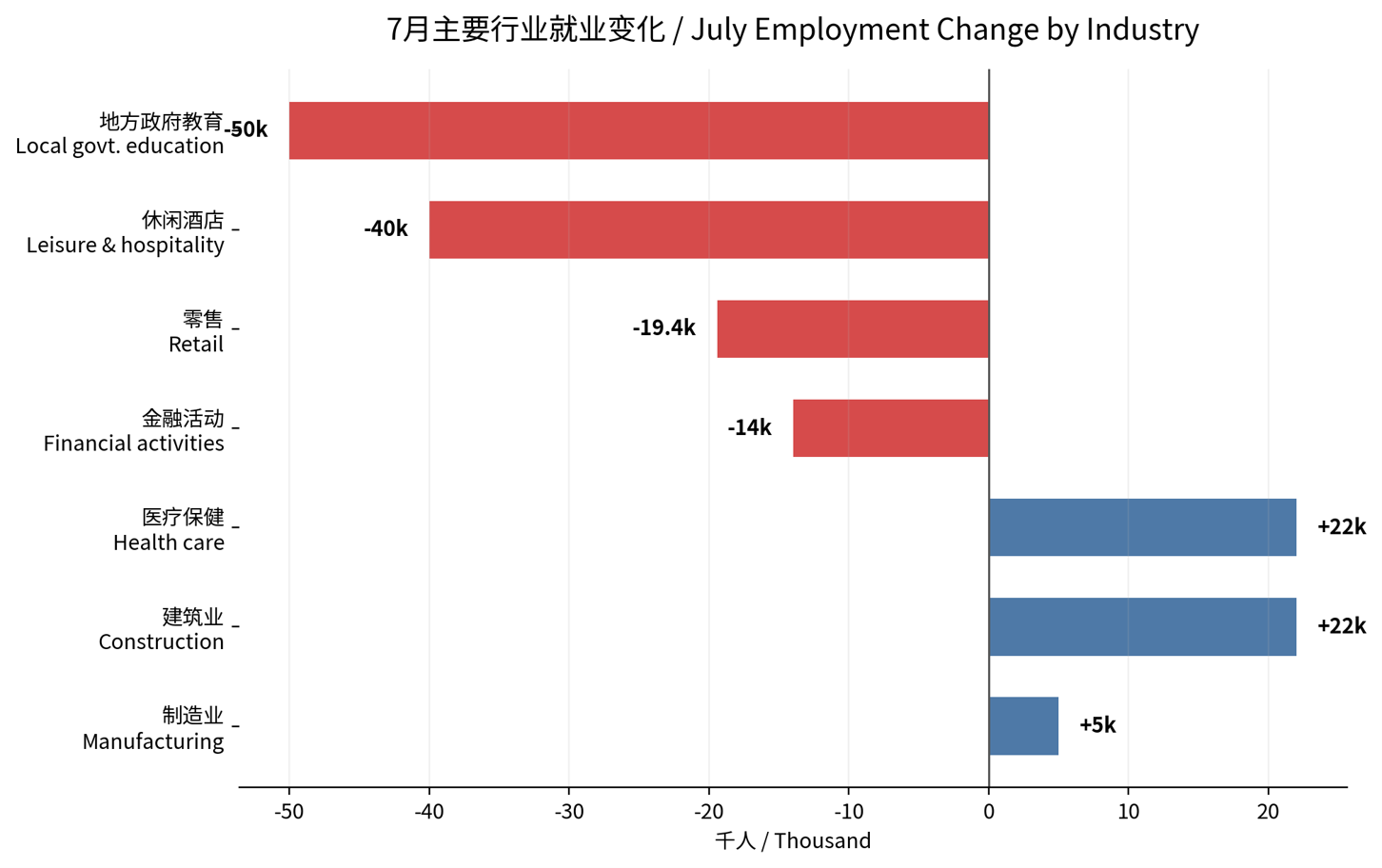
Government payrolls contracted by 53,000, led by a 50,000 drop in local government education due to summer seasonal adjustments.
Leisure and hospitality shed 40,000 jobs as temporary hiring booms from the World Cup unwound. Retail lost 19,000 jobs and financial activities shrank by 14,000. Conversely, private sector hiring remained net positive (+30,000), driven by healthcare (+22,000), construction (+22,000), and manufacturing (+5,000).
IV. Fed Policy Trajectory: September Rate Hike Odds Retreat
Following the Fed's 9-3 vote to hold rates at 3.50%-3.75% on July 29, weak payroll data curbed hawkish momentum. Reuters cited LSEG data showing market odds for a September rate hike fell from 57% to 44%, depressing Treasury yields and weakening the US Dollar.
However, policy expectations remain dependent on incoming macro data, particularly the July CPI report on August 12, the annual benchmark revision on August 28, and August payrolls on September 4.
V. Strategic Conclusion & Asset Implications
The US labor market exhibits low hiring, low layoffs, and shrinking labor supply rather than an outright crisis.
For gold markets, softening employment, lower yields, and a weaker dollar provide solid underlying support, though further upside depends on whether upcoming CPI prints confirm broader disinflation.