

US-Iran Conflict Escalates, Gold and Silver in Weak Consolidation
1. Market News & Fundamental Analysis
• The residual impact of the hawkish Jackson Hole remarks continues to ferment, pushing the probability of a September Fed rate hike above 65% and driving Treasury yields to new highs, weighing on precious metals. Fed Chair Warsh delivered a strongly hawkish speech last week, reaffirming a steadfast commitment to the 2% inflation target and warning that policy will tighten further if inflation does not retreat as expected. As of September 1, interest rate futures priced the probability of a 25-basis-point hike in September at 65.4%, nearly doubling from pre-speech levels.
• The escalation of the US-Iran military conflict has driven energy prices sharply higher, escalating fears of sticky inflation and further cementing rate hike expectations, which has overshadowed geopolitical safe-haven support. Direct military confrontation broke out over the weekend, with U.S. forces launching airstrikes on military facilities within Iran, and Iran retaliating with ballistic missiles targeting U.S. forces in the Middle East. These geopolitical supply risks propelled international energy prices to their largest single-day gain in three weeks.
• A barrage of heavyweight employment data is approaching this week, putting the market in a cautious wait-and-see mode, keeping gold and silver in a range-bound structure. The first week of September marks an "NFP Super Week," featuring the release of JOLTS job openings, ADP employment, ISM Manufacturing and Services PMIs, and the highly anticipated August Non-Farm Payrolls report. The NFP data will serve as the most critical decision-making benchmark ahead of the Fed's September FOMC meeting.
• Lingering concerns over U.S. dollar credibility and enduring central bank gold purchases continue to provide long-term support, capping the downside for precious metals alongside technical dip-buying. Despite short-term suppression from rate hike expectations, underlying structural concerns—such as towering U.S. fiscal deficits and fears of debt monetization—sustain the medium-to-long-term bullish thesis against a weakening dollar. Additionally, the global trend of central bank gold accumulation remains intact, with the PBOC increasing its gold reserves for 21 consecutive months, continuously unleashing strategic allocation demand.
2. Gold Technical Analysis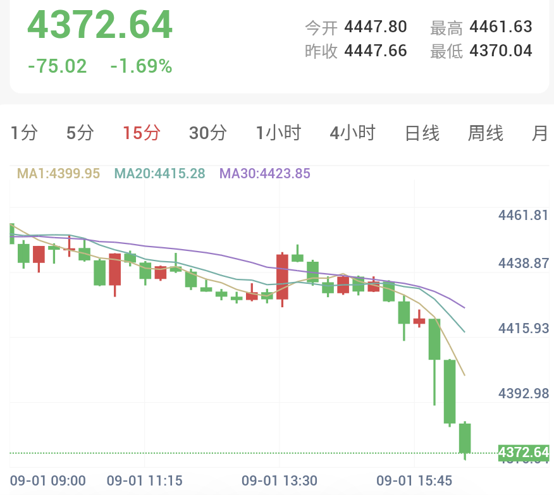
• Daily Timeframe: Spot gold opened the Asian session at $4,447.80/oz, undergoing a narrow intraday correction and extending a minor bearish trajectory. The daily moving averages currently remain in a bullish cross, keeping the macro bias pointing higher. With prices pulling back into the moving average cluster, traders should wait for a fresh break above the 20-day MA to initiate medium-term long positions.
• 15-Minute Timeframe (Intraday): Short-term moving averages are in a bearish alignment. Traders can look to enter short positions upon a breakdown below the 20-period MA, placing a stop loss above the recent swing high of $4,446.05, targeting a 1:2 risk-to-reward ratio for exit.
3. Silver Technical Analysis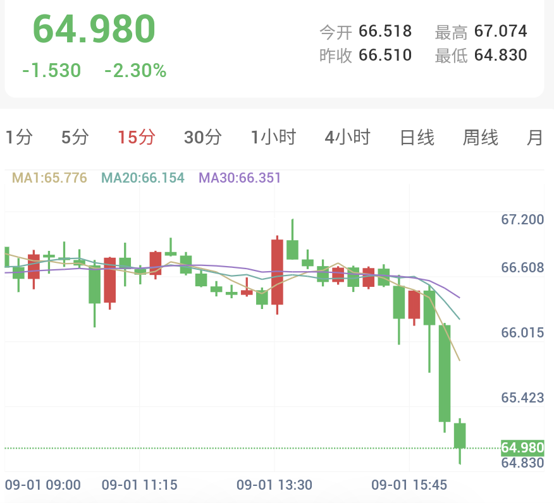
• Daily Timeframe: Spot silver opened at $66.518/oz, trading in a narrow consolidation with a bearish intraday tilt. The daily moving averages have crossed bullish, pivoting the broader direction to the upside. With prices currently hovering near the moving averages, it is advisable to wait for a suitable technical setup before executing medium-term long trades.
• 15-Minute Timeframe (Intraday): The moving averages are arranged in a bearish formation, bounded by a distinct consolidation range. It is recommended to wait for a confirmed breakout from this range before acting. Experienced traders may scalp the edges, selling highs and buying lows within the established boundaries.
4. Risk Disclaimer
Financial trading involves unpredictable risks, including the potential loss of principal. This analysis is provided for informational purposes only and does not constitute direct investment advice. Investors should make independent judgments based on their own risk tolerance.