

I. Gold Spikes and Reverts from Two-Week High, Returning to Range-Bound Box
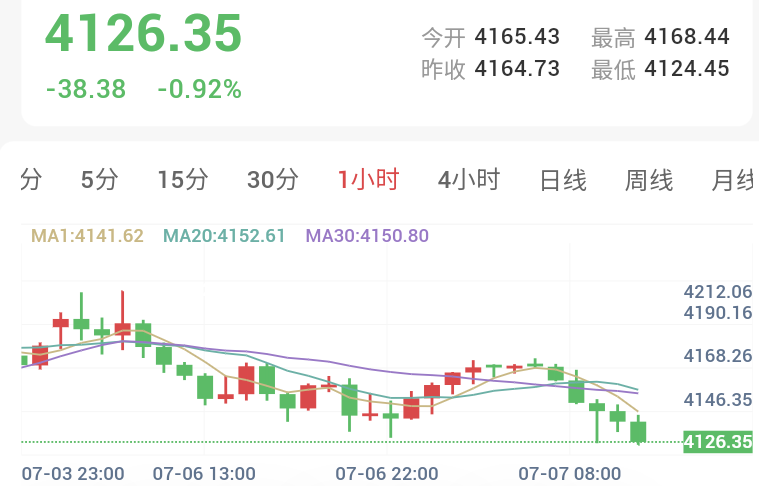
On Monday, the spot gold market staged a volatile "spike-and-revert" session. During the early hours, spot gold prices surged to $4,212.06 per ounce, marking a two-week high since June 22. However, driven by an intraday rebound in the US dollar, spot gold erased its gains to close down 0.24% at $4,164.73 per ounce.
Entering Tuesday's early Asian session, spot gold maintained a tight consolidation near yesterday's close. As of 07:17 Beijing Time, spot gold was trading at $4,126.35 per ounce. On the eve of the Federal Reserve's meeting minutes release, bulls and bears are locked in an intense structural tug-of-war.
II. Services Sector Expansion Slows Down
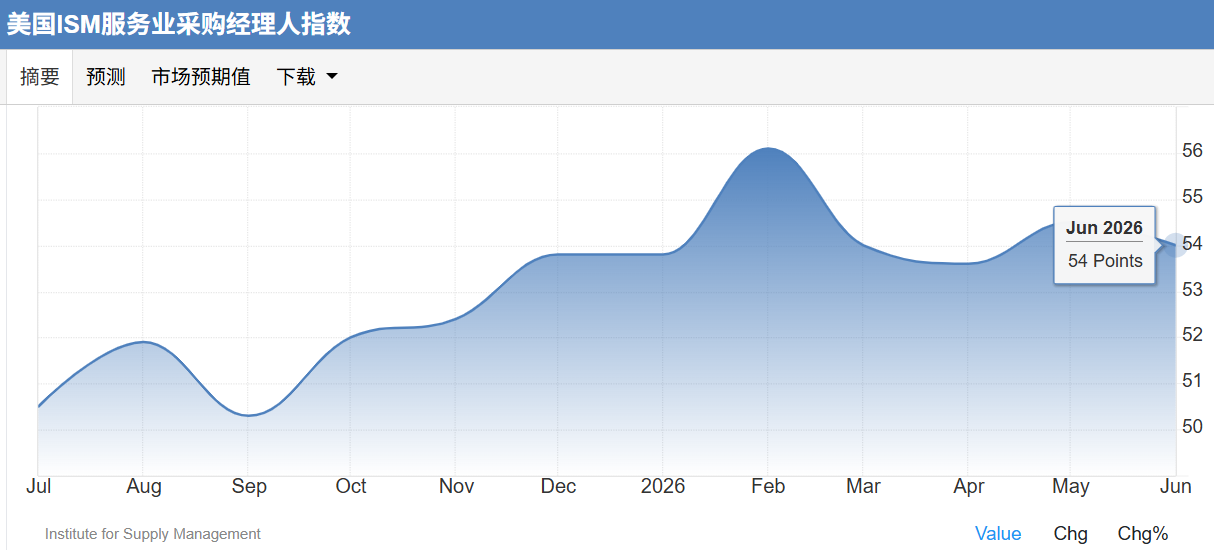
The US ISM Services PMI dropped to 54.0 in June 2026, down from 54.5 in May, aligning precisely with market consensus. The reading continues to signal a robust expansion in US service sector activity, albeit at a slower pace, primarily weighed down by cooler business activity (55.4 vs. 57.7 in May) and softening new orders (55.1 vs. 57.3).
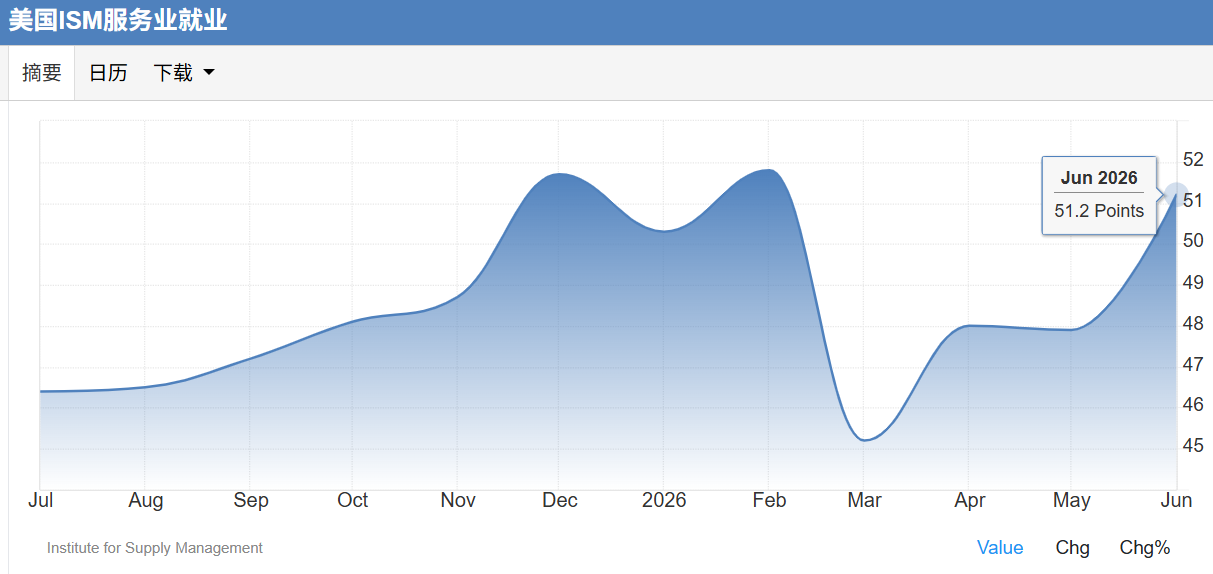
Concurrently, the services employment index logged its sharpest increase since 2024, rebounding from 47.9 to 51.2 and marking the first expansion in payrolls since February. The prices paid index (inflation indicator) also dipped to a four-month low of 67.7, down from 71.3. Despite lingering concerns over persistent inflation tied to Middle East frictions, survey respondents noted that broader business conditions remain resiliently strong.
III. Internal Fed Rhetoric Reveals Deepening Divergence
The internal stance within the Federal Reserve currently appears divided:
- Dovish Signals: Fed Chair Kevin Warsh delivered relatively mild commentary at the ECB Forum, acknowledging that inflation risks have receded and stating that the central bank will not telegraph its future interest rate path to the market in advance.
- Hawkish Signals: Conversely, Fed Governor Christopher Waller struck a noticeably more hawkish tone during a conference in Rome. He argued that the risk landscape has inverted with inflation accelerating upward, reinforcing that high inflation remains the primary threat confronting the US economy. He directed market attention toward the upcoming June CPI print scheduled for release on July 14.
Currently, the CME FedWatch Tool shows the market pricing a 77% probability that the Fed will hold rates steady in July, against a 23% chance of a hike. Meanwhile, the priced probability of a September rate hike sits around 56%.

This Wednesday's release of the June FOMC policy meeting minutes is drawing immense global attention. As the first policy meeting chaired by the newly appointed Kevin Warsh, the text will provide vital details regarding internal policy debates.
IV. Dollar Rebound Exerts Pressure, While Treasury Markets Stabilize
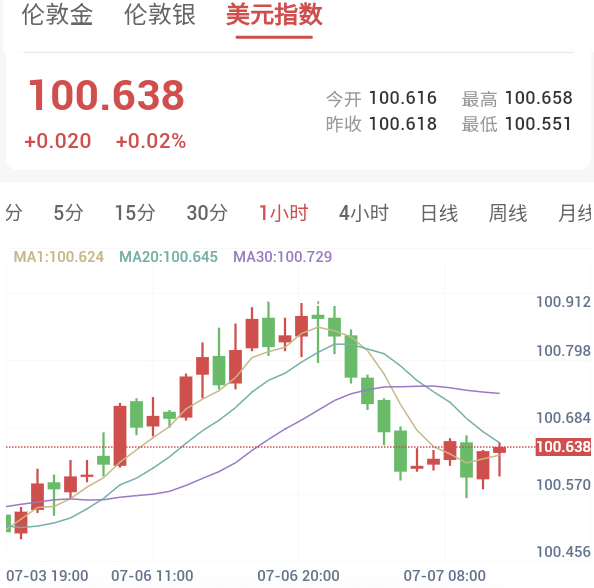
In terms of multi-asset correlation, the US Dollar Index climbed 0.27% intraday on Monday to touch 100.912, placing direct overhead pressure on dollar-denominated gold. This dollar strength was a major catalyst behind the aggressive selling encountered by gold above the $4,200 handle, and its ongoing bounce continues to cap the upside for gold bulls.
Meanwhile, the US Treasury market remained relatively stable. With the US Treasury Department scheduled to auction 3-year notes on Tuesday, followed by 10-year and 30-year bond auctions on Wednesday and Thursday respectively, fixed-income markets are broadly adopting a wait-and-see posture ahead of the FOMC minutes.
V. Market Outlook and Technical Analysis
From a technical perspective, spot gold faces clear, heavy resistance above the $4,200 threshold, a barrier validated by Monday's sharp intra-day reversal. On the downside, the $4,000 psychological big figure remains the core defensive floor that bulls must protect. A breach below this level could expose gold to further downside toward the lower Bollinger Band boundary near $3,948.
Ole Hansen, Head of Commodity Strategy at Saxo Bank, pointed out that lingering rate hike expectations continue to cap gold's upward momentum, meaning the market is highly likely to remain stuck in a range-bound consolidation phase over the near term.
Looking at the medium-to-long term, however, J.P. Morgan maintained its bullish outlook in its latest report, forecasting an average gold price of approximately $4,300 per ounce for the third quarter of 2026 and a climb to $4,500 per ounce in the fourth quarter. The firm cites the overarching secular trend of global central bank strategic gold purchases and structural asset reallocation as the primary long-term pillars supporting the metal.