

I. Gold Rebounds Weekly to Hold Above $4,370
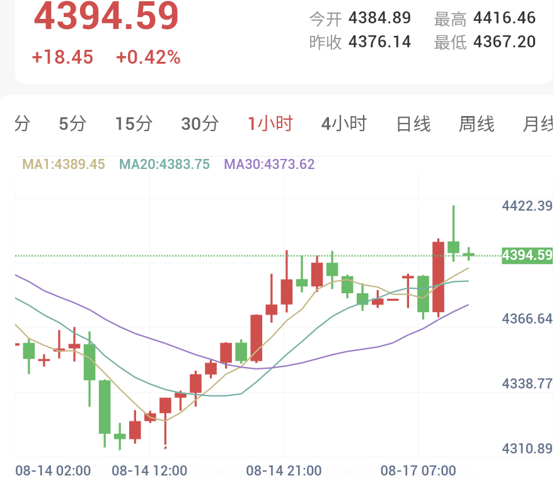
Gold prices exhibited substantial volatility last week. Spot gold opened near $4,346/oz on August 10, surging toward $4,450/oz mid-week to touch a two-month high before pulling back on profit-taking. Despite a Thursday drop of 1.3% and a dip to $4,310/oz on Friday, weak US retail sales data sparked a quick recovery, pushing spot gold to settle at $4,376.14/oz for a weekly gain of roughly 0.8%.
As Asian trading opened on August 17, spot gold consolidated around the $4,400/oz psychological level. Following last week's $100+ trading range, market focus turns to upcoming FOMC meeting minutes and key US macroeconomic releases.
II. US Retail Sales Drop 0.6% MoM
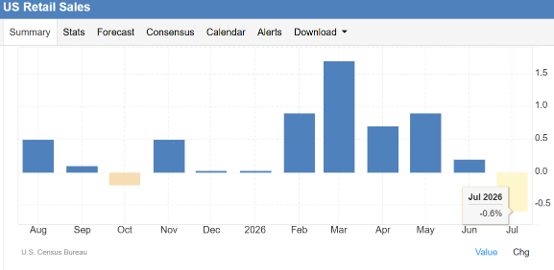
US July retail sales dropped 0.6% MoM, marking the first decline in nine months and the largest drop in nearly 14 months, missing market expectations of +0.1%.
This print follows weak July non-farm payrolls, a mild CPI (+0.1% MoM, slowing to +3.4% YoY), and flat PPI (+0.0% MoM, slowing to +4.7% YoY). Sequential cooling across employment, consumer spending, and wholesale inflation has prompted investors to recalibrate Fed monetary policy expectations.
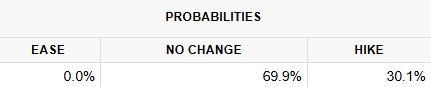
CME FedWatch tool data indicates September rate hike odds fell to ~30%, down from 55% a week earlier, weighing on the US Dollar Index and supporting gold.
III. Key Focus Turns to FOMC Meeting Minutes
The central focus this week is the FOMC meeting minutes from the July policy session. While the Fed maintained interest rates at 3.50%-3.75% for a fifth consecutive meeting, three voting members dissented in favor of a 25 bps hike.
Investors will scrutinize the minutes for insights into Fed officials' assessments of inflation durability, labor market conditions, and future policy paths. Additional upcoming indicators—including NY Empire State Manufacturing, Housing Starts, Building Permits, Initial Jobless Claims, and S&P Global Flash PMIs—will further test US economic growth momentum.
IV. Strait of Hormuz Tension Remains Unresolved
Geopolitical frictions between the US and Iran persist in the Middle East. Following recent attacks on commercial vessels near the Strait of Hormuz, Iran demanded the departure of US military forces, while the US signaled ongoing naval deployments. A timeline for restoring normal maritime transit remains uncertain.
Persisting geopolitical uncertainty drove crude benchmarks up ~6% for the week (Brent closing near $88.52/bbl and WTI near $82.40/bbl). Rising energy input costs keep inflation risk alive, creating a dual dynamic where geopolitical safe-haven demand competes against fears of sustained central bank hawkishness.
V. Central Bank Buying Supports Outlook
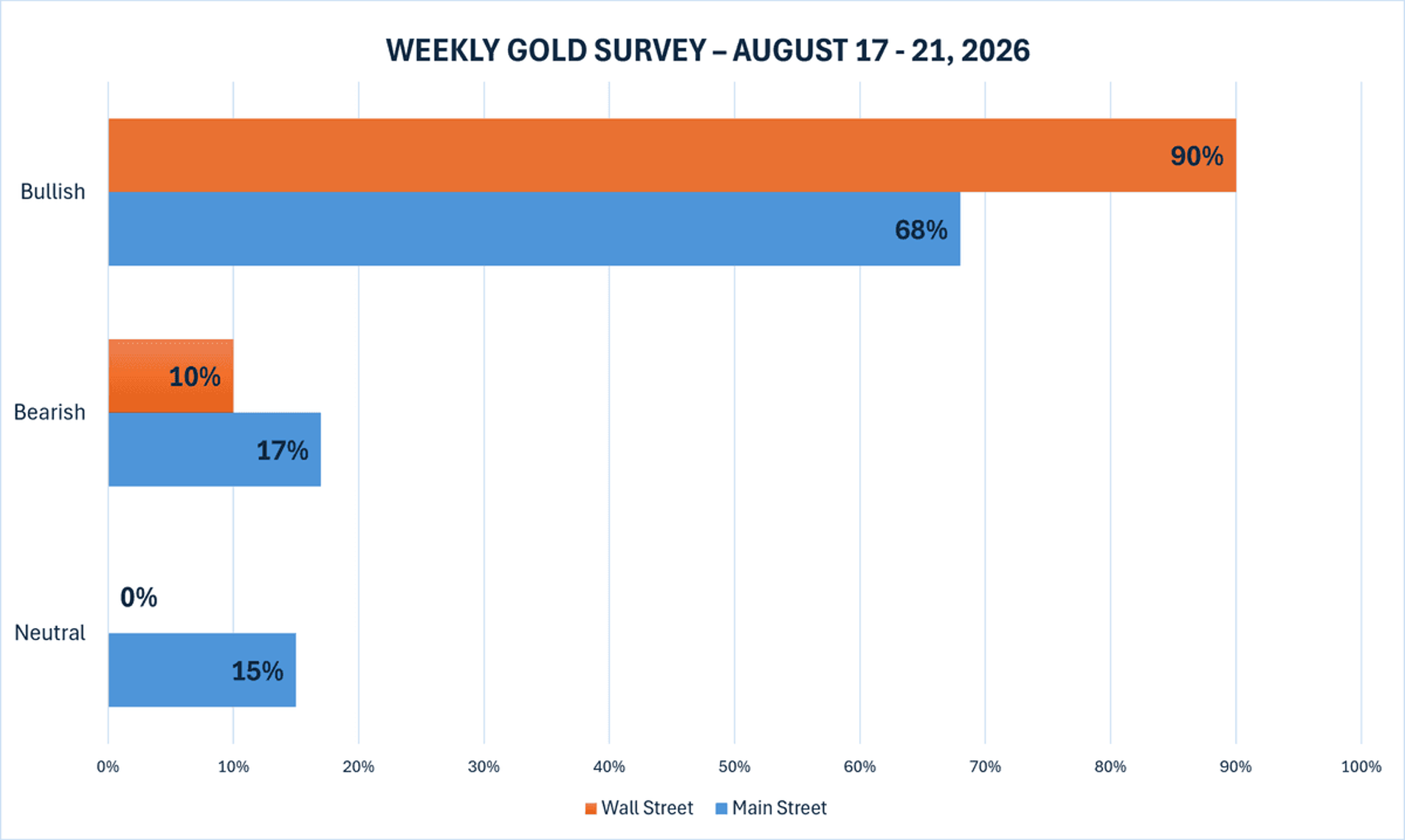
Official gold buying remains robust: the People's Bank of China reported gold reserves reached 76.08 million ounces at end-July (+640,000 ounces MoM), marking 21 consecutive months of expansion. Kitco's weekly survey revealed that 9 out of 10 market analysts and 68% of retail respondents anticipate gold prices advancing further this week.
Market Outlook: Near-term resistance stands at $4,450 and $4,500, with initial support situated between $4,300 and $4,350. Directional momentum will hinge on FOMC minutes, incoming US macroeconomic releases, and Strait of Hormuz developments.