

I. Gold Prices Hover Around $4,660
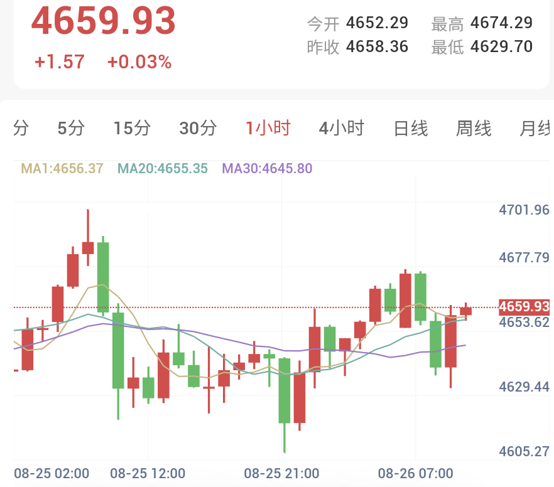
During the Asian session on August 26, spot gold continued its high-level consolidation. As of 10:10 Beijing time, spot gold traded at $4,659.93 per ounce, up $1.57 or 0.03% on the day. Opening at $4,652.29, intraday prices reached a high of $4,674.29 and touched a low of $4,629.70, fluctuating repeatedly around the $4,650 level. In the previous trading session, spot gold peaked at $4,696.55/oz—marking its highest level since May 14 and coming within a whisper of the $4,700 psychological mark—before pulling back to settle at $4,658.67. Moving into Wednesday, prices briefly dipped below $4,630 before rebounding back toward $4,660, indicating solid buying support on dips.
II. U.S. Expands Restrictions Against Iran

Geopolitical developments in the Middle East remain a key driver. The U.S. Department of the Treasury recently expanded secondary sanctions targeting Iran, affecting approximately 60 individuals, entities, and vessels across digital assets, technology, gold, aviation, and maritime shipping. Iran subsequently vowed to retaliate. Meanwhile, maritime security in the Strait of Hormuz remains uncertain. The UK Maritime Trade Operations (UKMTO) reported that a commercial vessel was struck by an unidentified projectile near Oman, losing propulsion. Iran and Oman are currently discussing joint security oversight arrangements for navigation through the Strait of Hormuz. Although the U.S. has begun returning some personnel to Middle East posts, no substantive breakthrough in U.S.-Iran negotiations has been published, leaving regional tensions as a vital variable for gold.
III. Impact of U.S. Treasury Bond Buybacks Continues

Another focal point is the U.S. Treasury's expanded long-term bond buyback program. The Treasury previously announced it would at least double its buyback size for longer-dated bonds, with Treasury Secretary Bessent noting that actual execution volumes could expand further. Following the announcement, long-term U.S. Treasury yields dropped noticeably, while U.S. public debt surpassed $40 trillion, drawing heightened scrutiny to fiscal sustainability and forward financing needs. However, bond yields subsequently staged a modest rebound, demonstrating that investors are evaluating the durable impact of buyback operations. Future buyback sizes, issuance schedules, and interest cost shifts will continue shaping precious metals sentiment.
IV. China's Gold Demand Demonstrates Sustained Growth
In Asian markets, latest data indicates that China's net gold imports via Hong Kong rose by approximately 11% month-on-month in July. Concurrently, the People's Bank of China (PBoC) continued adding to its official reserves in July, purchasing roughly 19.9 tonnes—one of the largest single-month additions since October 2023. Domestic Chinese gold prices have maintained a firm premium over international benchmarks, highlighting resilient physical demand. Official reserve accumulation alongside robust physical demand continues providing solid fundamental backing for gold prices.
V. Markets Await U.S. PCE Inflation Data and Warsh's Address
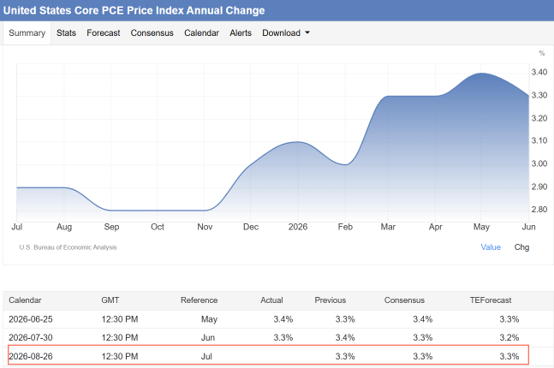
Market focus is now pivoting toward U.S. PCE inflation figures. Consensus estimates project July headline PCE at 3.6% YoY and core PCE at 3.3% YoY. Following tame CPI and PPI readings, market pricing for Federal Reserve rate hikes in September has receded significantly. Thereafter, Fed Chair Warsh will deliver his keynote address at the Jackson Hole Economic Symposium. Investors will scrutinize his comments for updated guidance regarding inflation trajectories, labor conditions, and the prospective monetary policy curve.