

1. Gold Rebounds After Brief Breach Below $4,600
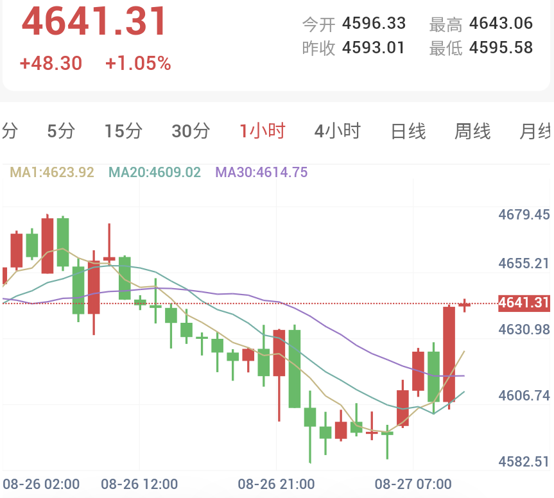
On August 26, spot gold ended its high-level consolidation, dropping over 1% on the day to close near $4,595/oz after dipping to a session low of $4,583. Gold had repeatedly tested the $4,700 handle, but following the release of US PCE inflation data, shifting Federal Reserve rate expectations prompted high-level profit-taking.
During the early Asian session on August 27, gold staged a recovery. As of 10:09 Beijing time, spot gold traded at $4,641.31/oz, reclaiming the $4,640 level. While still below the weekly peak of $4,696, firm buying interest re-emerged near $4,600.
2. US July PCE Prints Slightly Hotter Than Consensus
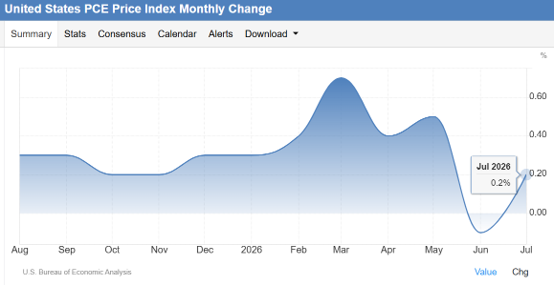
Data released by the US Department of Commerce showed the July overall PCE Price Index rose 3.7% YoY (vs. 3.6% expected) and 0.2% MoM (vs. 0.1% expected).
Core PCE inflation held steady at 3.3% YoY and 0.2% MoM. Overall, the latest inflation metrics indicated that price pressures are not accelerating drastically, yet the previous disinflationary trend has stalled.
Following the release, CME FedWatch data indicated that market pricing for a 25bps Fed rate hike in September increased from ~36% to nearly 40%, with a 60% probability assigned to a rate pause. The US Dollar Index gained ~0.3%, exerting pressure on spot gold.
3. US Consumer Spending Data Demonstrates Resilience
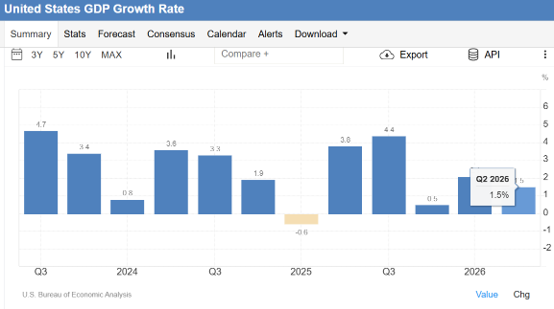
Concurrently, second-quarter US GDP revisions left annualized growth unchanged at 1.5%, but consumer spending growth was revised upward to 3.4%, underscoring household expenditure resilience.
Final sales to private domestic purchasers were revised up to 4.2%, with corporate profits expanding and capital expenditures in AI equipment remaining elevated. Despite recent cooling in employment and retail figures, overall economic demand remains steady.
Resilient economic growth alongside sticky inflation continues to fuel market debate regarding the Federal Reserve's prospective policy path.
4. Strait of Hormuz Navigation Deal Unfinalized

In the Middle East, talks between Iran and Oman regarding the Strait of Hormuz continued. While Iranian authorities previously reported progress on shared waterway administration, sources indicated that contractual details remain under negotiation and unfinalized.
Meanwhile, vessel restrictions persist, keeping commercial traffic through the strait below pre-conflict levels. While energy prices have pulled back recently, the full restoration of maritime transit remains a key focus for market participants.
5. Focus Shifts to Fed Chair Warsh's Jackson Hole Address
Market focus now centers on Federal Reserve Chair Warsh's upcoming speech at the Jackson Hole Economic Symposium.
Investors seek clarity on Warsh's assessment of inflation, labor conditions, and monetary policy settings. Barclays noted that if Warsh reiterates readiness to act when necessary, it will clarify the Fed's hawkish stance; Deutsche Bank highlighted the address as a pivotal opportunity for policy communication.
With most institutions expecting Warsh to withhold explicit rate guidance for the next meeting, the nuances of his speech wording will likely serve as the primary volatility driver for gold.