

I. Event Overview
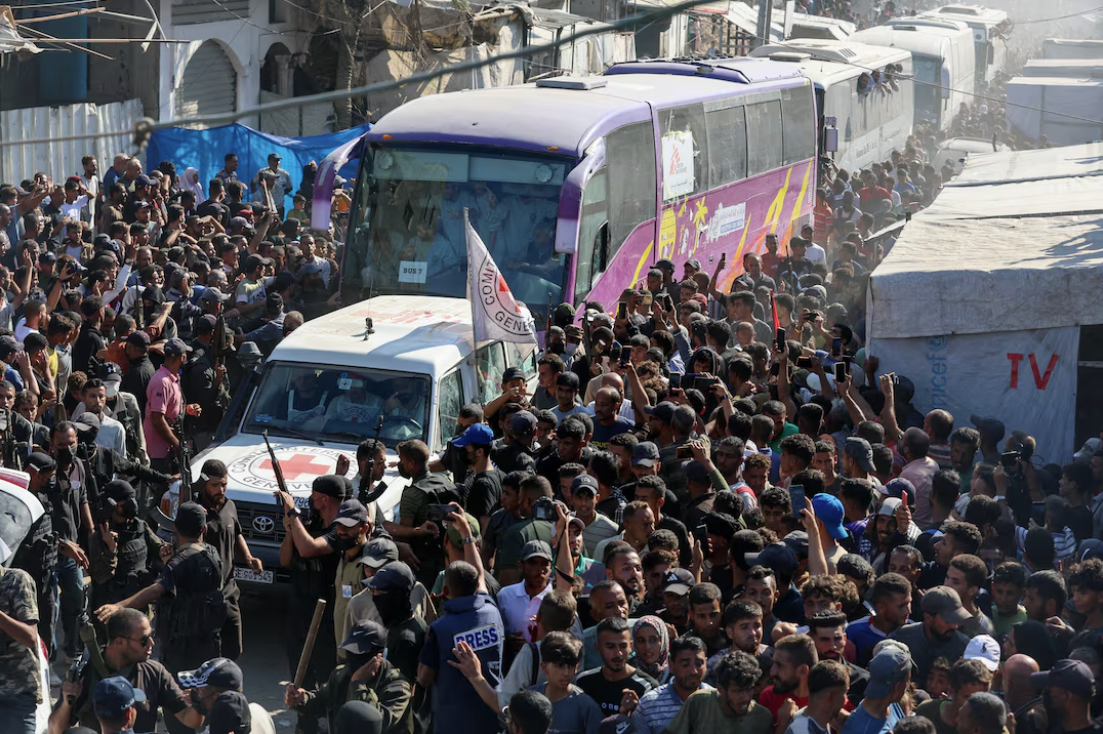
On October 13, U.S. President Donald Trump announced the end of the Gaza War. Hamas released the last remaining Israeli hostages alive, while Israel freed Palestinian prisoners and detainees. This agreement marks the first phase of Trump's initiative, encompassing a ceasefire, partial Israeli troop withdrawal, and the influx of aid.
Speaking at the Israeli Knesset, Trump stated, "The two-year nightmare is over – the skies are calm, the gunfire has fallen silent, and peace has finally come to the Holy Land." He later hosted a summit in Sharm El-Sheikh, Egypt, where he signed documents with the leaders of Egypt, Qatar, and Turkey, committing to implement and uphold the accord's outcomes. The summit addressed Gaza's governance, security, and reconstruction; Trump declared, "Reconstruction begins," noting that this could be the "largest agreement in history." The Israeli military confirmed receiving all 20 hostages verified to be alive, who were transferred from Gaza via the Red Cross. Thousands cheered at "Hostage Square" in Tel Aviv, while in Gaza, thousands of relatives gathered at Khan Younis Hospital to welcome nearly 2,000 released prisoners – some waving Palestinian flags.
Hamas handed over four coffins containing the bodies of deceased individuals, which Israel escorted back for identification. If fully implemented, the agreement will end the two-year war (the October 7, 2023, Hamas attack killed 1,200 people in Israel and took 251 hostages, while Israel's counteroffensive resulted in over 68,000 deaths in Gaza). However, obstacles remain, such as the recovery of deceased bodies, Gaza's governance, and the future of Hamas.
II. Reactions from All Parties
Trump described the agreement as a "great day," stating that all parties were treated fairly. He thanked the mediators, noted the start of reconstruction, and mentioned a possible visit to Egypt over the weekend. Israeli Prime Minister Benjamin Netanyahu invited Trump to address the Knesset, and the two held a call to celebrate this "historic achievement." Enav Zaghaur, a relative of an Israeli hostage, expressed emotions saying, "I can't breathe – it's overwhelming." Abdul Majid Abdul Rabo, a Gaza resident, said, "Thank God for the ceasefire; all of Gaza, the Arab world, and the whole world are happy."
Hamas stated that recovering the bodies of the deceased would take time, as not all burial sites were known. Itamar Ben-Gvir, Israel's far-right National Security Minister, claimed he would topple the government if Hamas was not dismantled. Gaza's medical authorities reported 7 deaths shortly after the agreement took effect
.
III. Market Impact Analysis
1. Escalating International Divisions Amplify Diplomatic Uncertainty
While the summit produced signed documents committing to uphold the accord, disputes persist over Hamas' future and the demand for a Palestinian state. The opposing stances between Arab countries and Israel may prolong uncertainty, amplifying global diplomatic risks. This is pushing central banks and sovereign funds to increase their gold reserves as a hedge against potential sanctions or ally fragmentation, creating a medium-to-long-term structural buying trend. Additionally, if U.S. deployment of peacekeeping forces faces resistance, it could trigger rifts between the U.S. and Europe, further enhancing gold's allocation value as a non-politicized asset.
2. Gaza Agreement Progress and Reconstruction Concerns
The agreement's implementation will launch large-scale reconstruction, and the influx of aid will ease the humanitarian crisis. However, doubts about financing and governance (e.g., the exclusion of Hamas) may stoke inflationary pressures. Reduced risks of energy and supply chain disruptions could ease global inflation; yet, if reconstruction is delayed or Hamas escalates security attacks, material shortages will drive up price expectations, strengthening gold's inflation-hedging properties. Overall, short-term de-escalation is bearish for gold prices, but long-term reconstruction uncertainties will support bullish sentiment toward gold.
IV. Technical Analysis
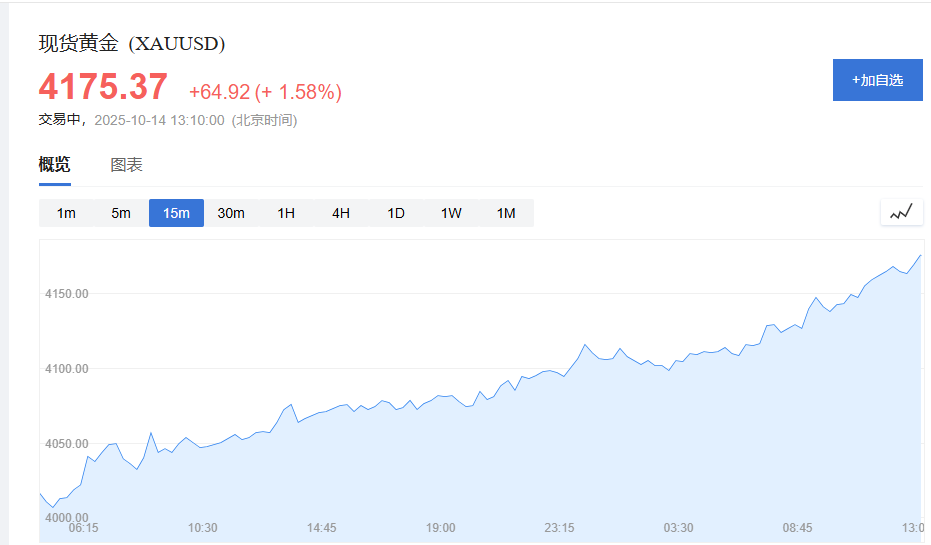
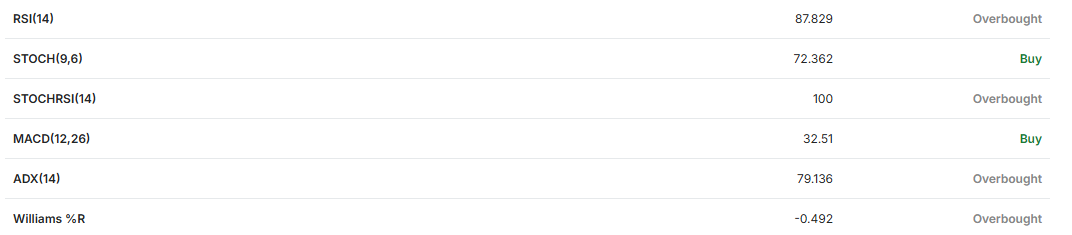
As of 13:10 Beijing Time on October 14, spot gold was trading at $4,175.37 per ounce. The Relative Strength Index (RSI, 14) stood at 87.829, and the MACD (12, 26) was at 32.51. A large number of indicator data fall in the strong buying range, indicating robust upward momentum. Overall, gold shows an oscillating upward trend, which is likely to continue rising and test the $4,200 per ounce level.
V. Outlook
1. Arab Countries and International Participation
If the Sharm El-Sheikh Summit gains support from Saudi Arabia and other nations, it may expand the Abraham Accords, promote regional peace, and reinforce de-escalation expectations. However, governance disputes could trigger sanctions and deepen U.S.-Europe rifts, further supporting medium-to-long-term demand for gold. If the UN's appeal for aid receives a response, it will ease the humanitarian crisis, but funding shortages may prolong reconstruction uncertainty.
2. Reconstruction and Governance Dynamics
If the deployment of post-war international forces remains unclear, escalating security attacks by Hamas will increase systemic risks, creating structural demand for gold. If Trump's exclusion of Hamas triggers internal conflicts among Palestinians, it could spill over to the West Bank, amplifying regional instability and enhancing gold's appeal as a hedging tool.
Summary
Trump's announcement of the end to the Gaza War marks a potential turning point in the Middle East's geopolitical landscape. De-escalation expectations will temporarily suppress gold's safe-haven demand in the short term. However, disputes over details, governance concerns, and uncertainties surrounding the agreement still pose risks. Amid a wave of international summits, progress in peace talks, and energy-related worries, gold's safe-haven and inflation-hedging properties are strengthened. Investors should focus on the implementation of hostage/prisoner releases, statements from Arab countries, and reconstruction developments. Technically, gold maintains strong momentum, and geopolitical risk premiums are expected to persist until the end of the year.