

I. Event Overview
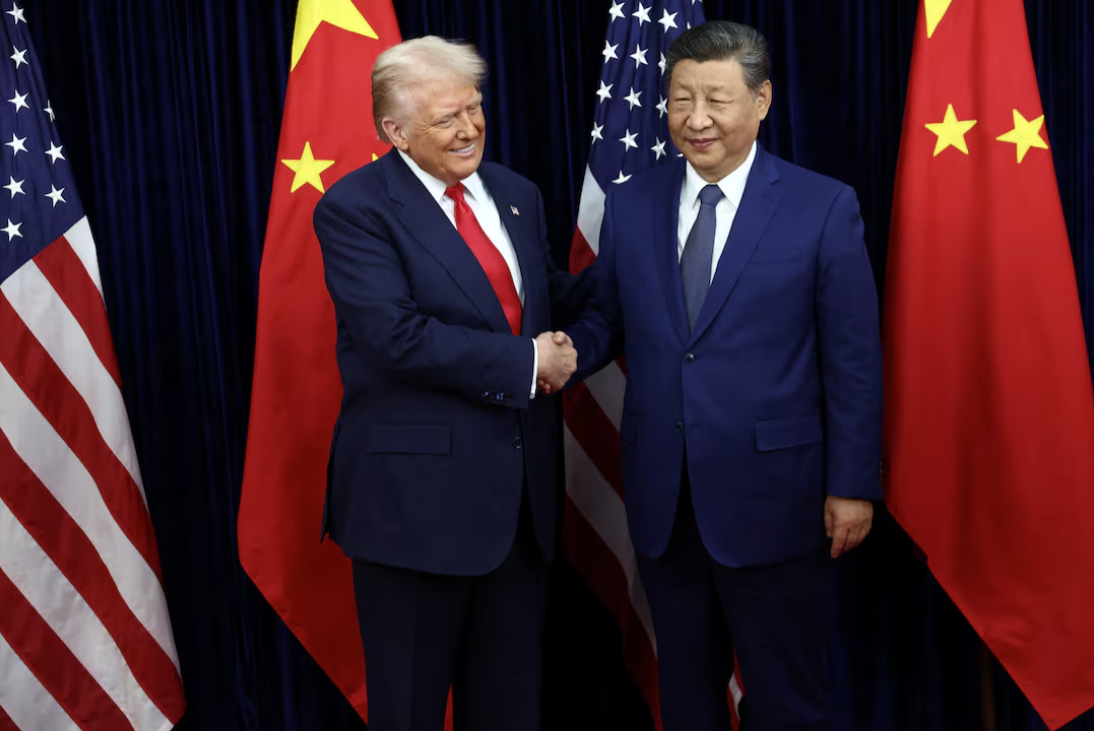
On October 30, 2025, Trump announced that the U.S. would cut tariffs on China from 57% to 47% in exchange for China resuming purchases of U.S. soybeans and ensuring the smooth export of rare earths. U.S. President Trump and Chinese President Xi Jinping held a meeting in Busan, South Korea—marking the first face-to-face exchange between the two leaders since 2019. The agreement reached at this meeting is expected to help ease global trade tensions and boost market confidence in the global economic recovery.
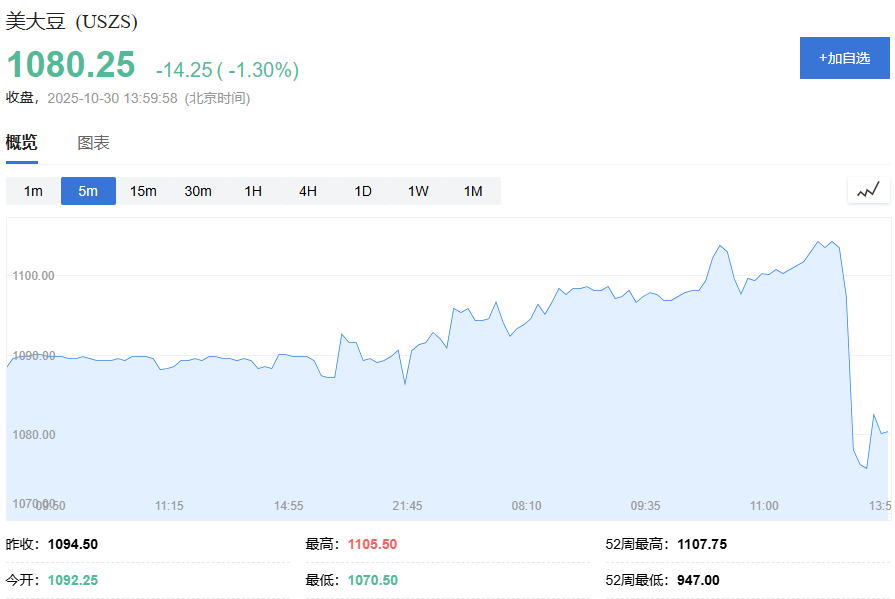
This agreement triggered volatility in global stock markets, particularly in Asian and European markets, although U.S. soybean futures prices plummeted sharply after the news was released. Overall, global markets are optimistic about the easing of the trade war, but doubts remain about whether stability can be sustained in the future.
II. Market Impact Analysis
1. Reduced Global Trade Uncertainty
The Trump-Xi meeting successfully reached a tariff reduction agreement and prompted China to resume rare earth exports, which helps ease uncertainties in the global supply chain. This move may lead to weakened demand for gold as a safe-haven asset, and gold prices may face pressure in the short term.
2. Rising Stock Markets and Falling Gold Demand
Global stock markets are likely to rise due to the trade agreement, and investor sentiment tends to be optimistic—this usually leads to a decrease in gold demand, as gold’s appeal as a safe-haven asset diminishes. Gold prices may face downward pressure.
3. Impact of a Stronger U.S. Dollar on Gold
The U.S. dollar may strengthen as global market uncertainty eases. A stronger U.S. dollar typically has a negative impact on gold prices, further limiting the upside potential of gold.
III. Technical Analysis
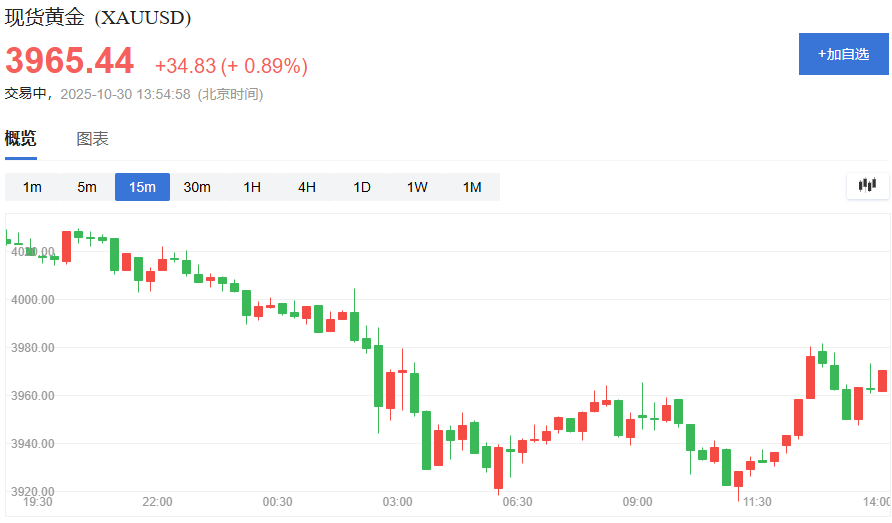
As of 13:54 Beijing Time on October 30, the spot gold price was quoted at $3,965.44 per ounce, an increase of $34.83 (+0.89%) from the previous trading day.
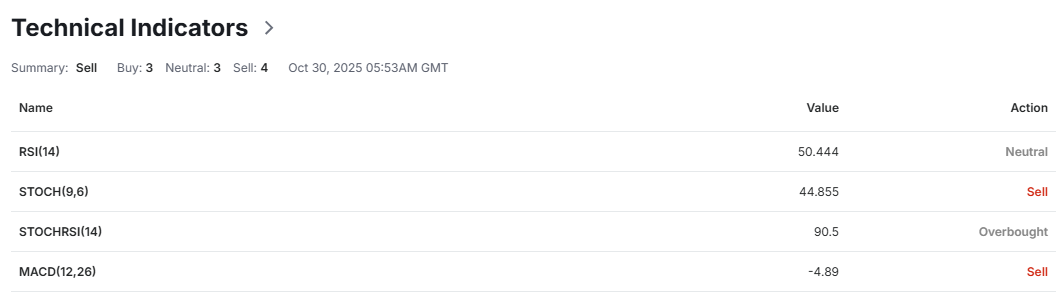
Technical indicators show:
- The RSI (Relative Strength Index) stands at 50.44, in the neutral zone, indicating an unclear market trend.
- The Stochastic Oscillator (STOCH) is 44.855, not entering the overbought or oversold zone, suggesting balanced market sentiment.
- The STOCHRSI is 90.5, in the overbought zone, implying potential correction pressure in the short term.
- The MACD (Moving Average Convergence Divergence) is -4.89, sending a signal of selling pressure.
IV. Outlook
1. Expectations for Global Economic Recovery
If China-U.S. trade relations continue to ease, uncertainties in the global economy may decrease, thereby curbing gold’s safe-haven demand. Rising stock markets and a stronger U.S. dollar may further exert downward pressure on gold prices.
2. Market Sentiment Shifting to Risk Assets
Due to the easing of trade tensions, stock markets are likely to continue rising, and investors’ risk appetite may also increase. Demand for gold as a safe-haven asset usually decreases, so gold prices may be suppressed in the short term.
3. Possibility of a Stronger U.S. Dollar
If the global economic situation improves, the U.S. dollar may strengthen. A stronger U.S. dollar typically puts pressure on gold, as gold is priced in U.S. dollars—dollar strength makes gold more expensive, thereby affecting its upside potential.
Summary
Progress in China-U.S. trade negotiations and the recovery of global economic confidence may weaken gold’s safe-haven demand, leaving gold prices facing certain correction pressure in the short term. Investors should pay attention to global economic trends, stock market performance, and U.S. dollar movements—gold may be constrained in the short term.