

I. Event Overview
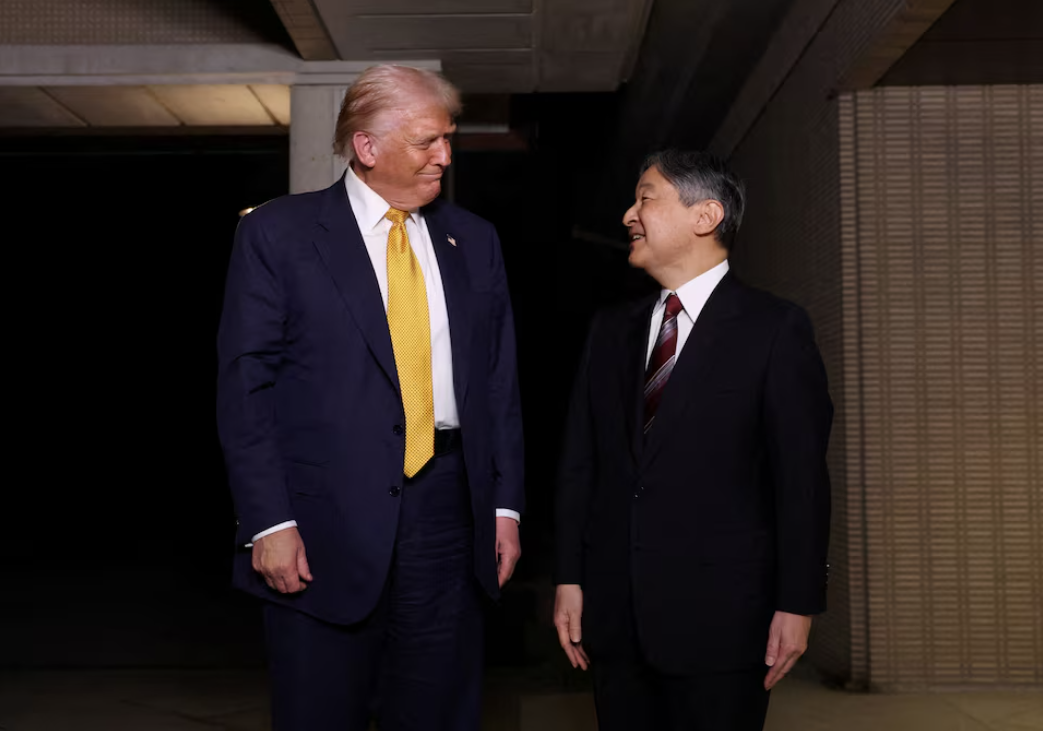
On October 27, 2025, U.S. President Trump visited Japan during his Asia trip, initiating trade negotiations with four Southeast Asian countries and announcing the conclusion of a series of agreements with these nations on critical minerals and trade. Trump also planned to meet with Chinese President Xi Jinping on October 29 to discuss a framework for suspending some tariffs and China’s rare earth export controls. Prior to the visit, Trump expressed confidence in reaching an agreement, and Asian stock markets hit new highs due to this news.
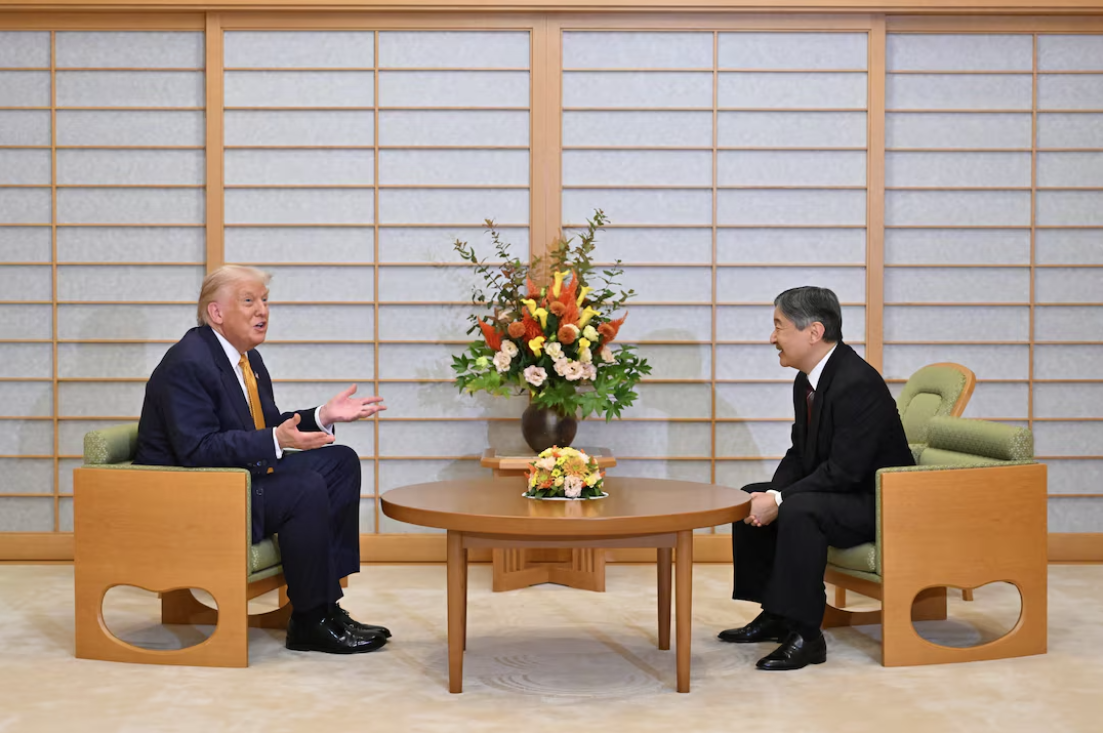
Trump also discussed a range of economic and security issues with Japanese leaders. Tokyo committed to making large-scale investments in exchange for exemption from U.S. tariff threats. Additionally, Trump met with the Emperor of Japan during his stay, during which he further emphasized the closeness of U.S.-Japan relations and held discussions on cooperation including defense matters.
II. Market Impact Analysis
1. Easing of China-U.S. Trade Tensions
The easing of China-U.S. trade tensions may reduce uncertainty in global markets and weaken the safe-haven demand for gold. The meeting between Trump and Xi Jinping could potentially push the two sides to reach an agreement on a truce and tariff reduction, which is expected to drive up global stock markets. As investors’ confidence in risk assets grows, the demand for gold as a safe-haven asset will decline accordingly.
2. Stronger U.S. Dollar and Gold Prices
Against the backdrop of progress in China-U.S. trade negotiations, the U.S. dollar may strengthen. A strong U.S. dollar usually exerts pressure on gold prices, as gold is priced in U.S. dollars—appreciation of the dollar makes gold relatively more expensive. Therefore, if trade tensions improve, gold prices may face correction pressure.
3. Changes in Global Investor Sentiment
The trade agreements promoted by Trump during this trip, as well as investment commitments from other Asian countries, may drive global economic recovery and reduce geopolitical risks, thereby having a negative impact on gold. Investors may be more inclined to invest in risk assets such as stock markets, further suppressing the upside potential of gold.
III. Technical Analysis
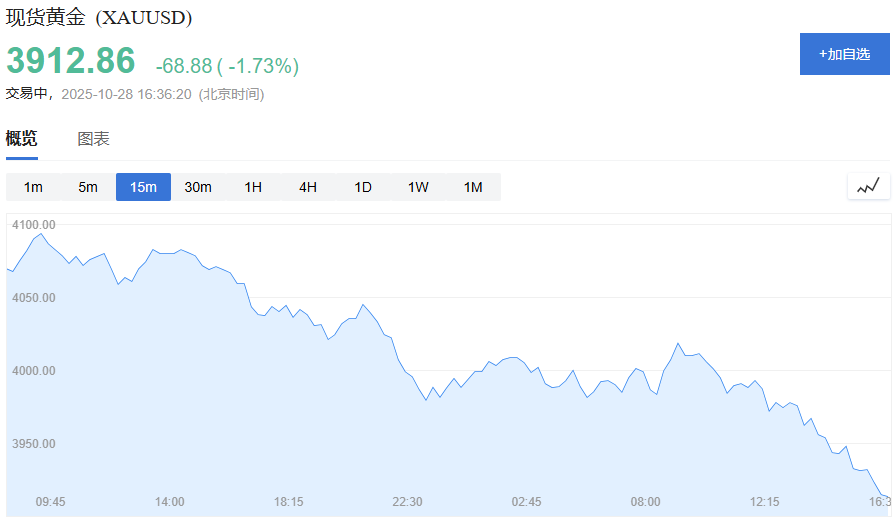
As of October 27, the spot gold price stood at $3,912.86 per ounce, dropping 1.73% on the day. The current support level is at $3,932.11; if the price falls below this level, it may further decline to $3,882.82 or $3,793.46. If the gold price drops to $3,466.25, it may indicate that the market has entered the oversold zone, and the possibility of a rebound will be relatively high.
Resistance levels: The main resistance level for gold is at $4,070.76; a breakthrough above this level may further test $4,160.12 and $4,209.41. If these resistance levels are breached, gold may regain its upward momentum.
IV. Outlook
1. Potential Impact of China-U.S. Agreement
If a China-U.S. trade agreement is reached and effectively eases tariffs and export controls, uncertainty in global markets will decrease, and the safe-haven demand for gold may decline. A strong U.S. dollar may further increase downward pressure on gold prices.
2. Market Sentiment and Stock Market Performance
The market may focus more on the performance of stock markets and other risk assets. If stock markets and other investment instruments perform strongly, the upside space for gold will be limited.
3. Gold’s Inflation-Hedging Function
Although gold’s safe-haven function may be restricted, amid signs of global economic recovery, gold can still serve as a tool to hedge against inflation—especially when issues related to energy prices and rare earth supply persist.
Summary
Progress in China-U.S. trade negotiations brought about by Trump’s Asia trip may weaken the safe-haven demand for gold. If China and the U.S. reach a trade agreement and ease global economic uncertainty, gold prices may face downward pressure. A strong U.S. dollar and a rebound in stock markets will further suppress gold price increases. Investors should pay attention to the implementation progress of the trade agreement and global economic trends; gold may remain in a volatile consolidation phase in the short term.