

I. Event Overview

On October 30, 2025, Russia launched a new round of strikes on Ukraine’s energy facilities. Particularly, an attack on a thermal power plant in Sloviansk killed two people and caused damage to infrastructure in multiple cities. Ukrainian President Zelensky described these attacks as "acts of terrorism" and stated that energy facilities are among Russia’s key targets. As winter approaches, Ukraine faces greater pressure on energy security, and market concerns over energy supply and global economic stability have further intensified.
Meanwhile, Russia’s offensive in eastern Ukraine continues, with intense fighting particularly in Pokrovsk and the Donbas region. The escalating military actions by both sides have heightened global market attention to geopolitical risks, driving up demand for gold as a safe-haven asset.
II. Reactions from All Parties
Ukrainian Government
Ukrainian President Zelensky stated that Russia’s attacks target not only military facilities but also directly threaten the living conditions of civilians, especially energy supply. Despite immense pressure, the Ukrainian government insists on continuing the resistance and has strengthened the defense of energy and military facilities.
Russian Government
Russia did not comment on the specific details of the attacks but repeatedly emphasized that its military objective is to weaken Ukraine’s war-fighting capabilities. It also accused the Ukrainian government of "deliberately provoking the conflict." Russia’s military operations continue, with increasing strikes on Ukraine’s critical infrastructure.
U.S. Government
According to a report by the Financial Times on Friday, the United States has canceled the scheduled summit between President Donald Trump and Russian President Vladimir Putin in Budapest. This decision comes as Russia maintains a tough stance on Ukraine, prompting the U.S. to adopt a firm position in response.
III. Market Impact Analysis
1. Escalating Geopolitical Risks
With Russia’s continued strikes on Ukraine’s energy facilities, geopolitical uncertainty has been on the rise, and demand for gold as a safe-haven asset has kept increasing. Market concerns over the protraction of the war have driven capital inflows into the gold market, and gold prices are expected to continue rising.
2. Safe-Haven Demand for Gold
Due to growing market concerns about geopolitics and energy security, demand for gold as a safe-haven tool is likely to remain high. Investors’ focus on the situation in Ukraine may lead to a further rise in gold prices.
IV. Technical Analysis
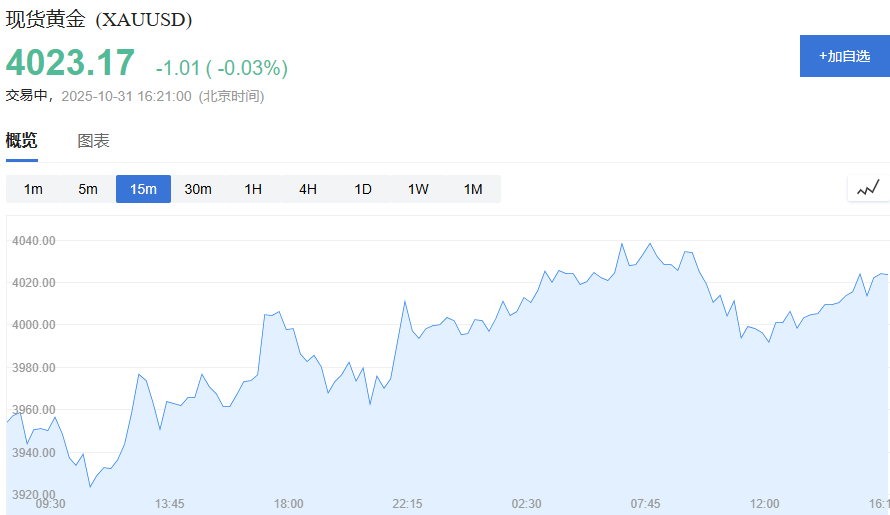
As of 16:21 Beijing Time on October 31, the spot gold price was quoted at $4,023.17 per ounce, and it fell into a wide-range fluctuation during the mid-session of the Asian market.
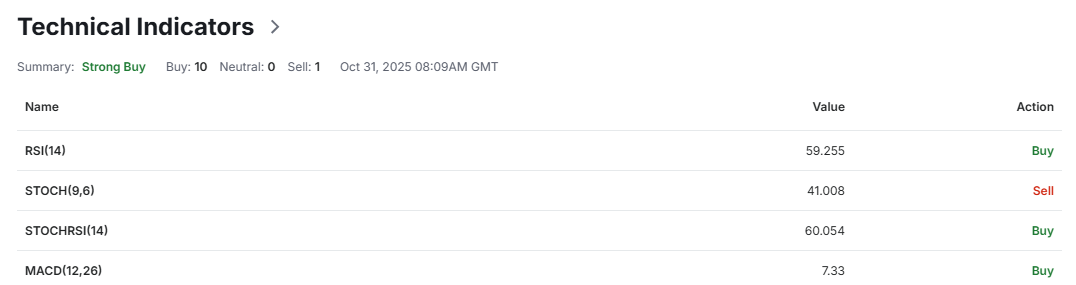
Technical indicators show a bullish tilt in market sentiment:
- The RSI (14) stands at 59.255, a level close to the buying zone, indicating strong buying momentum in the market.
- The STOCH (8,6) is 41.008, in the selling zone, suggesting potential short-term correction pressure.
- The STOCHRSI (14) is 60.054, indicating strong buying momentum in the market without entering the overbought zone, which reflects the upside potential of gold prices.
- The MACD (12,26) is a positive 7.33, showing short-term upward momentum.
Overall, although the stochastic indicator points to short-term correction risks, the positive values of RSI and MACD indicate that the market remains strong, and gold prices have the potential to continue rising.
V. Outlook
1. Geopolitical Risks Driving Gold Demand
The ongoing deterioration of the situation in Ukraine, particularly the escalated attacks on energy facilities, may further drive up gold demand. If the war escalates further, demand for gold as a safe-haven tool will become even stronger, which may support and push gold prices higher.
2. Impact of U.S. Dollar Trend
Amid heightened global economic uncertainty, the U.S. dollar may face certain depreciation pressure. A weaker U.S. dollar will enhance the attractiveness of gold as a non-yielding asset, further pushing up gold prices. Investors should pay attention to the trend of the U.S. dollar and changes in the Federal Reserve’s monetary policy, as these factors may have a significant impact on gold prices.
Summary
As tensions in Ukraine further escalate, increased geopolitical risks have driven up gold demand. Although there may be short-term correction risks, the overall trend supports a continued rise in gold prices. Investors should closely monitor changes in the situation in Ukraine and adjust their investment strategies to cope with potential market volatility.