

I. Event Overview
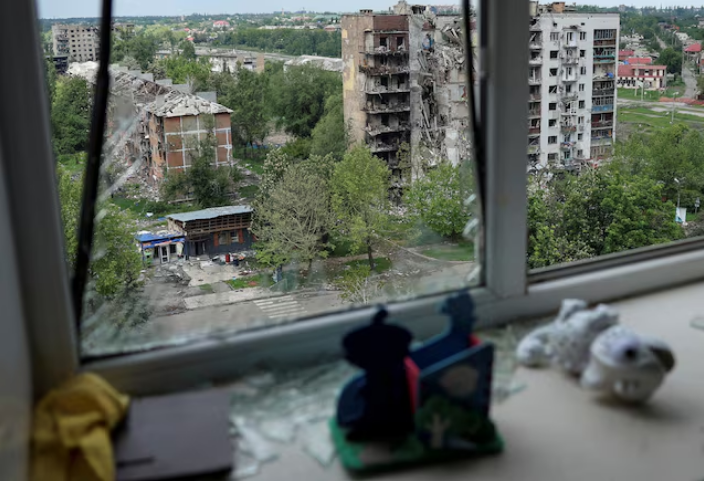
On November 4 (local time), Russian and Ukrainian troops engaged in intense fighting amid the ruins of Pokrovsk—a key transportation and logistics hub in eastern Ukraine. Russian forces have been attempting to capture the city for over a year. The Ukrainian military stated that fierce battles for critical areas of the city are still ongoing, with additional special forces deployed and more weapons and equipment delivered.
On the same day, Ukrainian President Volodymyr Zelensky visited troops in areas near Pokrovsk, including Dobropillia, where Ukrainian forces are launching a counteroffensive against Russian troops.
The Russian Ministry of Defense claimed that its soldiers had cleared Ukrainian forces from 35 buildings and stated that they were squeezing surrounded Ukrainian troops near Kupiansk in the Kharkiv region. This escalation of fighting has heightened tensions in the Russia-Ukraine conflict.
Furthermore, Russia’s alleged "hybrid warfare" activities have intensified in Europe, including drone incursions and airspace violations. Since September, these incidents have affected multiple NATO countries such as Poland, Estonia, and Belgium, leading to airport closures and investigations. These events have further increased global geopolitical uncertainty.
II. Reactions from All Parties
Ukraine
The Ukrainian military denied that its troops in Pokrovsk were surrounded and emphasized the stability of its defense lines. In a Telegram post, Zelensky stated that commanders reported the stabilization of defense lines and coordination with neighboring troops, with a focus on strengthening defenses and providing soldiers with necessary resources. In Dobropillia, Ukrainian forces are launching a counteroffensive to relieve pressure.
Russia
The Russian Ministry of Defense reported progress in Pokrovsk and claimed to be squeezing Ukrainian troops near Kupiansk. Russia denied involvement in certain airspace violations and emphasized that its military objective is to weaken Ukraine’s capabilities.
III. Market Impact Analysis
Escalating Geopolitical Risks
The escalation of the Russia-Ukraine conflict in Pokrovsk, coupled with Russia’s alleged "hybrid warfare" against Europe, has further increased global uncertainty. These events may disrupt energy supplies and global economic stability, prompting investors to turn to safe-haven assets such as gold and driving up gold prices.
Growth Potential of Gold Demand
As fighting continues and tensions over European airspace intensify, market concerns about geopolitical risks have risen. Demand for gold as a safe-haven tool is expected to increase, and investors may boost their holdings to hedge against potential economic and financial risks, leading to further gains in gold prices.
Global Economic Uncertainty
The escalation of the conflict may trigger broader international tensions, affecting energy markets and supply chains. Gold typically performs strongly in such environments, with its appeal as a store of value enhanced.
IV. Technical Analysis
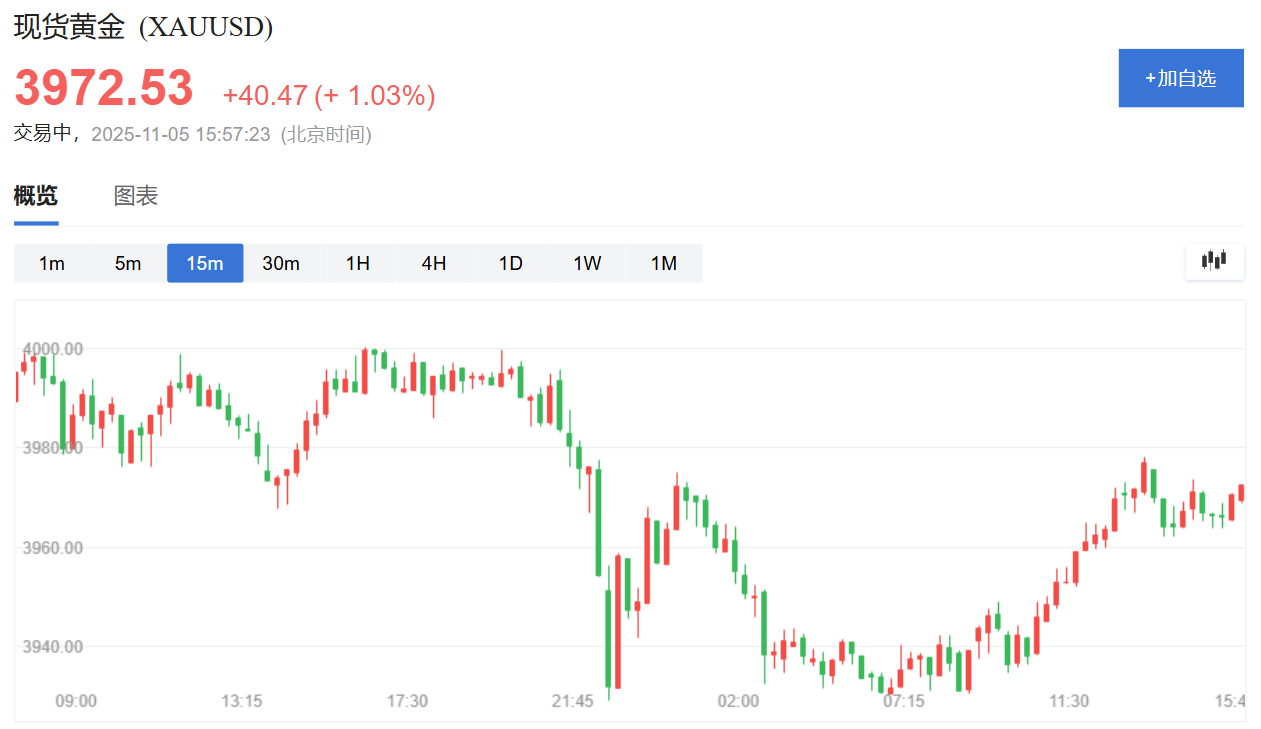
As of 15:57 Beijing Time on November 5, the spot gold price was quoted at $3,972.53 per ounce, showing a fluctuating and recovering trend. In the short term, the volatility range of gold prices is limited, and market sentiment remains cautious.
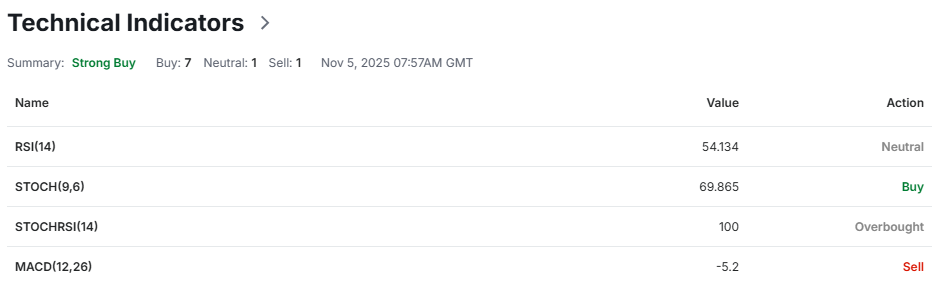
- The RSI (14) value is 54.134, in the neutral zone, indicating balanced market sentiment.
- The STOCH (9,6) is 56.487, in the buying range, suggesting strong buying momentum.
- The STOCHRSI (14) is 100, reaching an extremely overbought state, implying potential short-term correction pressure.
- The MACD (12,26) is -5.2 (negative), bearish, indicating that momentum may be stagnating.
Overall, gold prices may face short-term correction risks. Despite the presence of overbought signals, the market remains indecisive.
V. Outlook
Short Term
Bulls currently dominate, but the upward momentum appears overextended—overbought signals indicate a potential cool-down.
Medium to Long Term
Caution is warranted. Until gold prices break through and hold above the 200-day moving average, the upward trend may be limited.
Tactical Key Points
Chasing gains or selling into declines is risky unless gold breaks through major resistance levels or a short-term correction provides better entry opportunities.
Summary
The fierce clashes between Russian and Ukrainian troops in the ruins of Pokrovsk, along with Russia’s alleged "hybrid warfare" in Europe, have escalated geopolitical risks and driven safe-haven demand for gold. Although technical indicators point to short-term overbought conditions and correction pressure, the overall trend supports a fluctuating recovery in gold prices. Investors should closely monitor developments in the conflict and changes in the European situation, and adjust their strategies based on technical signals to cope with potential volatility.