

I. Event Overview
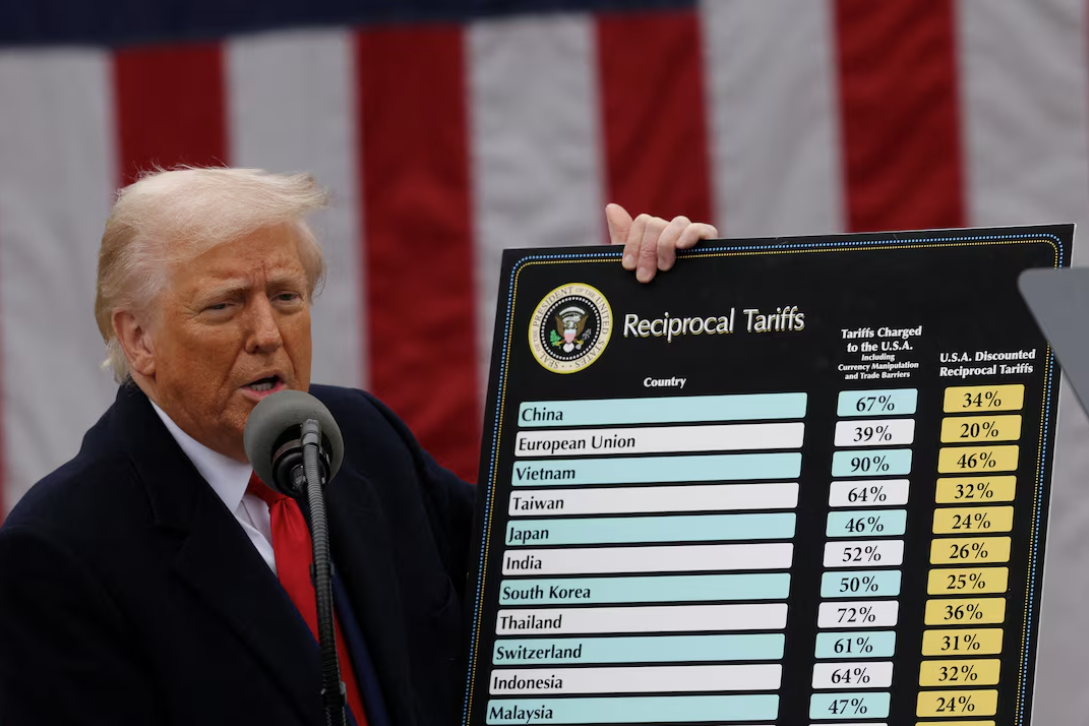
On November 5 (local time), during the hearing of the Trump administration’s appeal, the U.S. Supreme Court expressed doubts about the legality of President Trump’s global tariffs. The case involves the comprehensive tariffs imposed by Trump under the authority of the 1977 International Emergency Economic Powers Act (IEEPA), which was originally designed for commercial controls in times of national emergencies.
Trump used this act to impose tariffs on nearly all U.S. trading partners, aiming to address trade deficits and serve as a diplomatic tool—making him the first president to utilize the act in this manner. Lower courts have ruled that Trump exceeded his authority and infringed on Congress’ taxing power. The Supreme Court hearing lasted over 2.5 hours, with both conservative and liberal justices questioning the applicability of the act.
If the Supreme Court rules unfavorably, Treasury Secretary Scott Bentsen stated that the administration would turn to other legal authorities to maintain the tariffs. These tariffs have already generated $89 billion in revenue and could reach trillions of dollars over the next decade, triggering a global trade war, economic uncertainty, and market volatility.
II. Reactions from All Parties
U.S. Supreme Court
Multiple justices voiced their concerns:
- Chief Justice Roberts pointed out that tariffs are "taxes on Americans" and should fall under Congress’ purview.
- Justice Barrett questioned whether "regulating imports" includes imposing tariffs.
- Justice Jackson stated that IEEPA was intended to limit, rather than expand, presidential power.
- Conservative justices such as Brett Kavanaugh cited historical precedents from the Nixon era to counter these arguments.
Trump Administration
- Acting Solicitor General D. John Sauer argued that trade deficits constitute a national emergency, and tariffs are conducive to national security and economic negotiations. Sauer warned that revoking the tariffs would expose the U.S. to "ruthless trade retaliation."
- Treasury Secretary Bentsen expressed "great optimism" after attending the hearing.
III. Market Impact Analysis
Escalating Geopolitical and Economic Uncertainty
The Supreme Court’s doubts about Trump’s tariffs could lead to a policy reversal, affecting global trade and economic stability. Fears of an escalating trade war have driven investors to turn to safe-haven assets like gold, potentially pushing gold prices higher.
Growth Potential of Gold Demand
If the ruling goes against Trump, increased market uncertainty is expected to boost demand for gold as a hedging tool. Investors may increase their gold holdings to cope with potential economic fluctuations and inflation risks, leading to higher gold prices.
Impact on the Global Economy
Tariff disputes could exacerbate financial market volatility, affecting the U.S. dollar and stock markets. Gold typically benefits from uncertain environments, with its appeal as a store of value enhanced.
IV. Technical Analysis
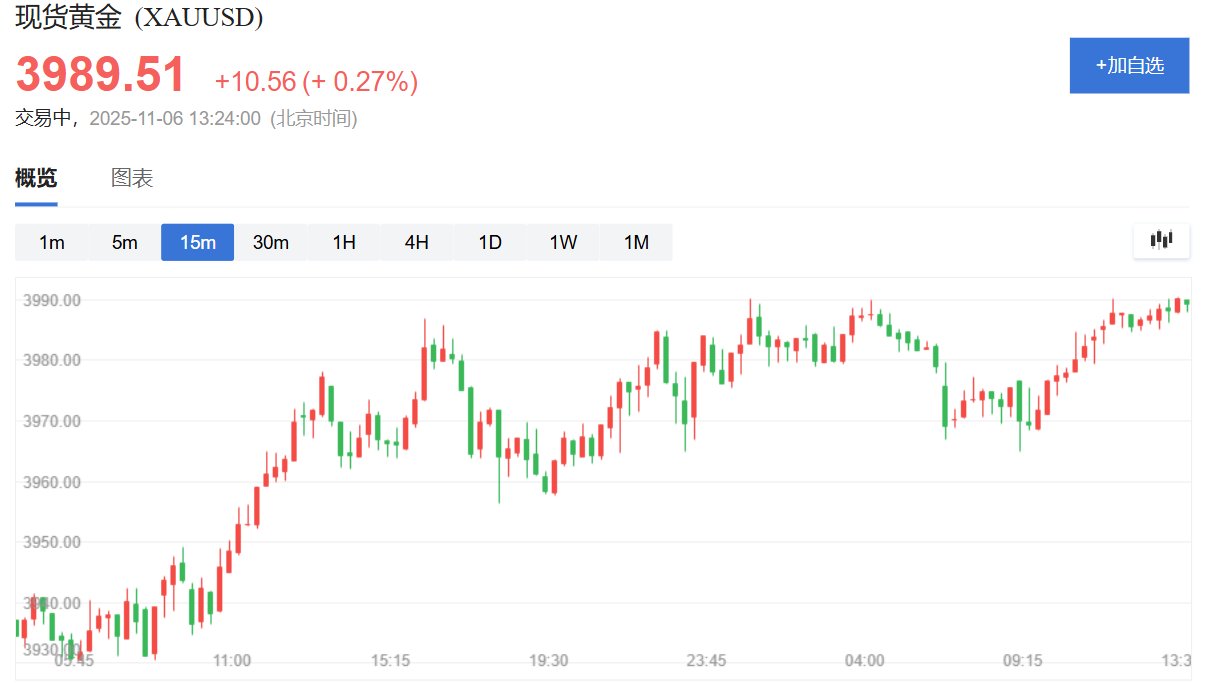
As of 13:24 Beijing Time on November 6, the spot gold price was quoted at $3,989.51 per ounce, showing a fluctuating trend. In the short term, the volatility range of gold prices is limited, and market sentiment remains cautious.
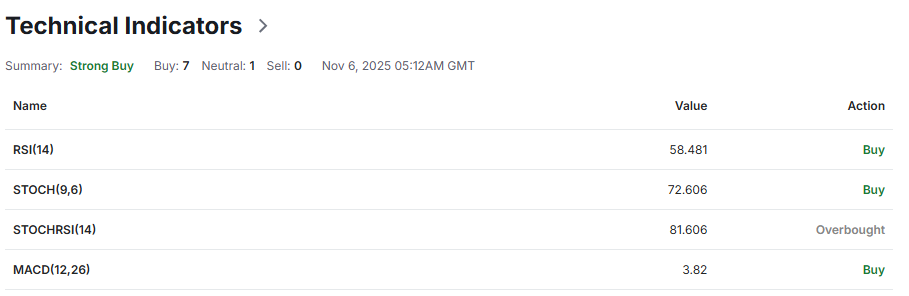
- The RSI (14) value is 58.481, in the buying zone, indicating strong buying momentum in the market.
- The STOCH (9,6) is 72.606, also sending a buying signal.
- The STOCHRSI (14) is 81.606, having entered the overbought zone, implying potential short-term correction pressure.
- The MACD (12,26) is 3.82 (positive), confirming short-term upward momentum.
Overall, gold prices may be bullish in the short term. Market buying momentum supports gold’s upward movement amid uncertainty, but multiple indicators show it is in the overbought zone—suggesting that momentum may be excessively strong and hinting at a potential rebound.
V. Outlook
Long-Term Support from Policy Uncertainty
If the Supreme Court rules that Trump’s tariffs are illegal, it could trigger adjustments to trade policies and exacerbate global economic uncertainty, providing safe-haven support for gold. Gold prices are expected to continue rising as risks increase.
Gold’s Safe-Haven Attribute
Against the backdrop of trade disputes and economic uncertainty, gold’s appeal as a hedging tool will remain high, especially as concerns about a potential global recession rise.
Summary
The U.S. Supreme Court’s questioning of the legality of Trump’s global tariffs has intensified policy and economic uncertainty, driving safe-haven demand for gold. Although technical indicators point to neutral fluctuations and overbought signals, the overall trend supports increased volatility in gold prices and potential upward movement. Investors should closely monitor developments in the Supreme Court ruling and trade dynamics, and adjust their strategies based on technical signals to cope with market volatility.