

I. Event Overview
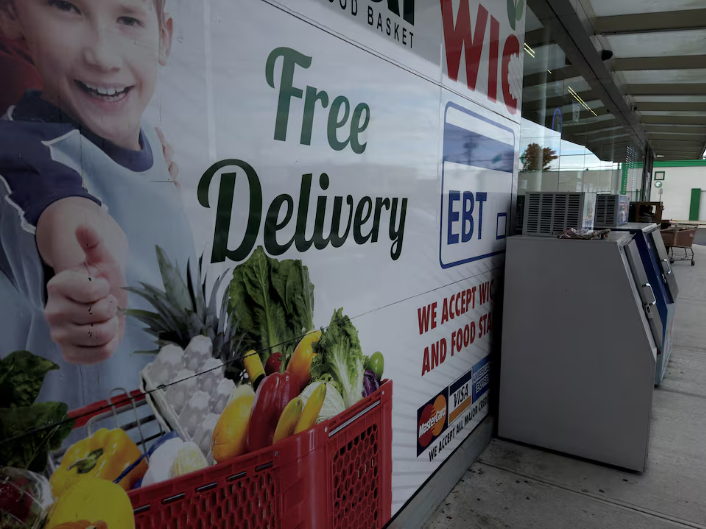
On November 6 (local time), John McConnell, a federal district judge in Providence, Rhode Island, ordered the Trump administration to fully fund this month’s food assistance (SNAP, or food stamps) for 42 million low-income Americans by Friday, blocking its plan to provide only partial benefits. The ruling accused the administration of withholding benefits "for political reasons," leading to hunger, overburdened food banks, and unnecessary suffering.
The Trump administration originally planned to completely suspend November’s SNAP benefits due to the 37-day government shutdown. Later, it was forced to use $525 million in emergency funds to provide partial funding. However, Judge McConnell rejected this plan and required the administration to use $23.35 billion from tariff funds to make full payments.
SNAP benefits target Americans with incomes below 130% of the federal poverty line and are distributed monthly. For the 2026 fiscal year, the maximum benefit is $298 for single-person households and $546 for two-person households. The government shutdown occurred because Congress failed to pass a funding bill. The USDA initially stated it would cut benefits by 50%, later updating the reduction to 35%. Some states reported needing weeks or months to adjust their computer systems to handle reduced benefits—an unprecedented situation.
Judge McConnell (appointed by Obama) noted that Trump’s recent statement that benefits would only be paid once the shutdown ends indicated an intent to defy the court order. The administration has quickly appealed, and the outcome remains uncertain.
II. Reactions from All Parties
Trump Administration
A USDA spokesperson accused Senate Democrats of voting against the Republican-backed temporary funding bill 14 times, leading to the shutdown and endangering SNAP. Vice President J.D. Vance called the ruling "absurd," stating that Democrats should end the shutdown to fund SNAP. The administration has filed an appeal, and the Treasury Secretary said that if the appeal fails, the government will turn to other funding sources.
Judge and Plaintiffs
Judge McConnell emphasized during a virtual hearing that evidence showed the benefit cuts would cause irreparable harm. The progressive legal group Democracy Forward, representing cities and nonprofits in the lawsuit, pointed out that some states—such as Minnesota (needing six weeks) and Pennsylvania (needing 9-12 days)—require time to adjust their systems.
III. Market Impact Analysis
- Escalating Economic UncertaintyThe prolonged government shutdown and disputes over SNAP funding have further amplified fiscal policy uncertainty, potentially leading to reduced spending by low-income groups and economic slowdown. Investors’ concerns about U.S. fiscal stability have increased, driving a shift to safe-haven assets like gold and pushing up gold prices.
- Growth Potential of Gold DemandAs the shutdown continues and the benefits dispute drags on, market expectations of inflation (related to food assistance) have risen. Demand for gold as an inflation hedge is expected to strengthen, and investors may increase their holdings to hedge against potential economic risks, leading to further upward movement in gold prices.
- Impact on the Global EconomyThe shutdown may affect U.S. debt and international trade, increasing pressure on the U.S. dollar. Gold typically benefits from uncertain environments, with its appeal as a store of value enhanced.
IV. Technical Analysis
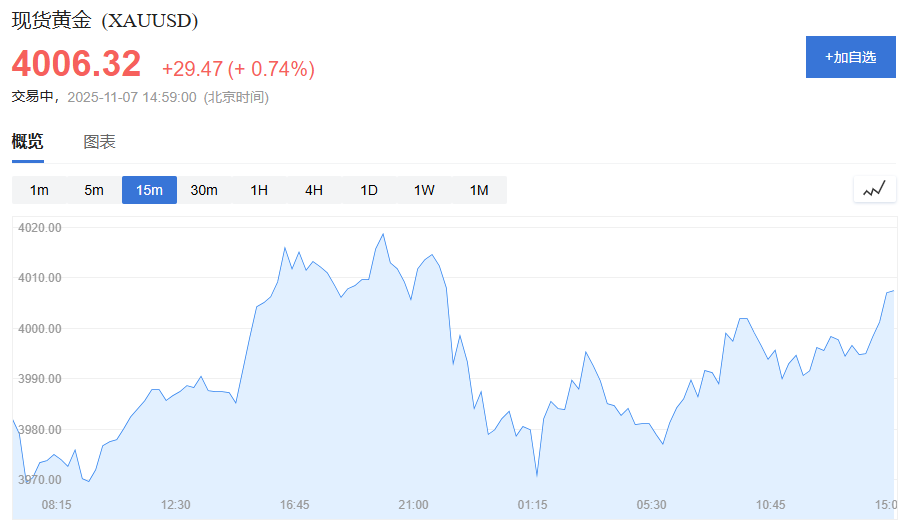
As of November 7 Beijing Time, the spot gold price was quoted at $4,014.25 per ounce, showing a fluctuating upward trend. In the short term, the volatility range of gold prices is limited, and market sentiment is skewed toward optimism.
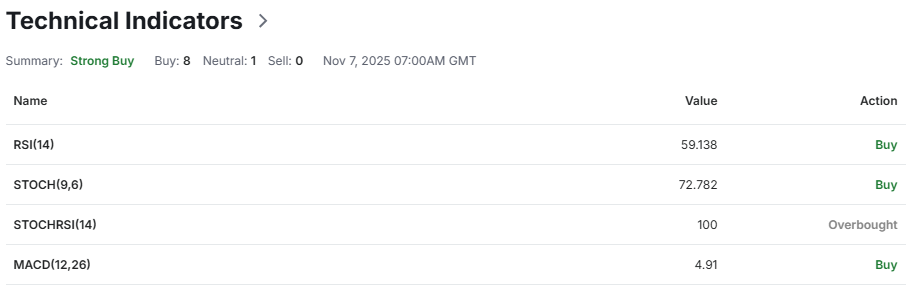
- The RSI (14) value is 59.138, in the buying zone, indicating strong buying momentum in the market.
- The STOCH (9,6) is 72.782, also sending a buying signal.
- The STOCHRSI (14) is 100, reaching an extremely overbought state, implying potential short-term correction pressure.
- The MACD (12,26) is 4.91 (positive), confirming short-term upward momentum.
Overall, gold prices maintain strength in the short term. Despite the presence of overbought signals, the market is dominated by buying momentum, which supports further upward movement of gold prices. From a technical perspective, the overall outlook is "strong buy".
V. Outlook
- Long-Term Support from Prolonged ShutdownIf the government shutdown extends and the SNAP dispute escalates, it may exacerbate economic uncertainty and inflationary pressures, providing long-term safe-haven support for gold. Gold prices are expected to continue rising as fiscal policy uncertainty intensifies.
- Gold’s Inflation-Hedging AttributeAmid disputes over food assistance and economic aid, gold’s appeal as a tool to hedge against inflation and uncertainty will remain high—especially as the impact on low-income groups expands.
Summary
A U.S. judge has ruled that the Trump administration must fully fund food assistance benefits by Friday, escalating economic uncertainty caused by the government shutdown and driving safe-haven demand for gold. Although technical indicators point to short-term overbought pressure, the overall trend supports the fluctuating upward movement of gold prices. Investors should closely monitor developments in the shutdown and changes in fiscal policy, and adjust their strategies based on technical signals to cope with potential volatility.