

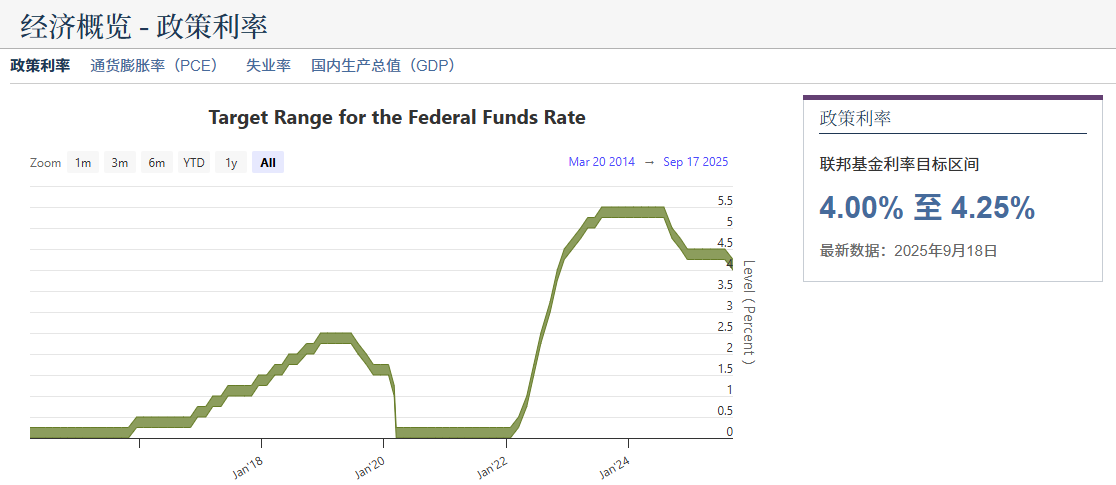
On September 17, 2025, the Federal Reserve released the minutes of its August Federal Open Market Committee (FOMC) meeting, announcing a 25-basis-point cut to the target range for the federal funds rate, bringing it to 4.00%–4.25%.
This move marks the official restart of the rate-cut cycle. The minutes revealed that the central bank is paying close attention to downside risks in the job market. Combined with the potential impact of the Trump administration's tariff policies on inflation, divisions have emerged within the decision-making body. Newly appointed Governor Stephen I. Miran cast a dissenting vote, advocating for a larger 50-basis-point rate cut.
I. Core Meeting Content: Rate Cut Launch and Policy Divisions
Voting for the monetary policy action: Jerome H. Powell, Chair; John C. Williams, Vice Chair; Michael S. Barr; Michelle W. Bowman; Susan M. Collins; Lisa D. Cook; Austan D. Goolsbee; Philip N. Jefferson; Alberto G. Musalem; Jeffrey R. Schmid; and Christopher J. Waller.
Voting against this action: Stephen I. Miran, who preferred to lower the target range for the federal funds rate by 1/2 percentage point at this meeting.
- Interest Rate Decision: A 25-Basis-Point Cut and a Dissenting Vote
- The FOMC voted 11–1 to lower the target range for the federal funds rate by 25 basis points to 4.00%–4.25%. Newly appointed Governor Stephen I. Miran (who took office on September 16) cast the lone dissenting vote, pushing for a 50-basis-point cut. He argued that mounting signs of weakness in the labor market required more aggressive easing to keep the economy from slowing down further. Most committee members believed that current economic data justified a smaller cut to balance employment and inflation goals, though they noted a need to remain vigilant against sticky inflation.
- Economic Assessment and Diverging Views
- The Labor Market: Recent data indicates that economic growth slowed during the first half of the year, with job growth decelerating significantly. The unemployment rate rose to 4.3%, coming in higher than the 4.0% forecast from June. Fed Chair Jerome Powell emphasized that downside risks to the labor market are rising. He noted that the pace of hiring has dropped below the level needed to keep the unemployment rate stable, warning that layoffs could quickly drive unemployment higher.
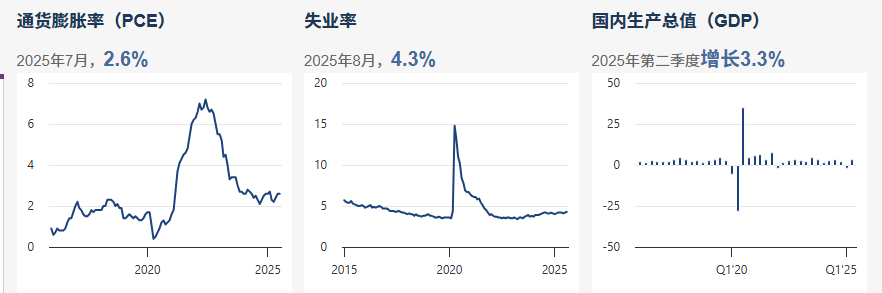
- Inflationary Pressures: Headline inflation remains slightly above the long-term 2% target, with core PCE inflation projected to hit 3.1% by the end of 2025 before dropping to 2.6% by the end of 2026. Recent tariff policies introduced by the Trump administration (affecting $200 billion worth of imports and taking effect in August) have intensified inflationary pressures. However, some members viewed the tariff impact as a "one-off shock" that does not pose a long-term risk of unanchoring inflation expectations.
- The Focus of Division: A minority of members, including Miran, advocated for more aggressive rate cuts to prioritize supporting employment. Conversely, the majority favored a gradual approach to easing, emphasizing the need for more data to evaluate how tariff impacts will pass through into inflation.
II. The Complex Interplay Between Tariff Policies and Inflation
- Tariff Impacts: The Trump administration's tariff policies, which took effect in August, cover 407 categories of products (including steel, aluminum, and wind turbines) and are expected to push up the effective US tariff rate by about 1 percentage point. According to data from the US Department of Commerce, the new tariffs cover more than $200 billion in imports. This could drive up manufacturing costs across supply chains, which may eventually feed into the service sector.
- Inflation Outlook: Some committee members noted that if tariff impacts are stripped away, inflation is already nearing the 2% target, suggesting that current inflationary pressures stem primarily from short-term supply shocks. Christopher Hodge, an economist at Natixis, pointed out that the Fed must carefully balance sticky inflation against downside risks to employment, which adds to the complexity of its decision-making.
III. Rate Cut Expectations and the Gold Market
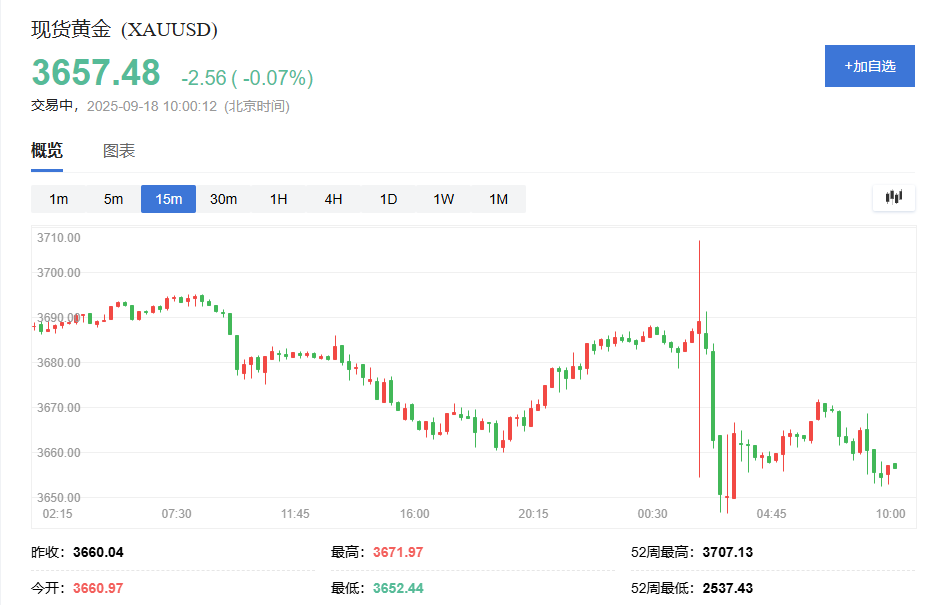
The push for a 50-basis-point rate cut at the September 17 resolution did not receive widespread support, reaffirming the Fed's firm commitment to maintaining its independence. Because the meeting failed to deliver an overly dovish surprise to the market, gold retreated from its high of $3,671.97 per ounce, with the spot price tracking at $3,657.48 per ounce. However, precious metals continue to find strong underlying support from expectations of future rate cuts.
Conclusion
The release of the Fed's September meeting minutes marks the restart of the rate-cut cycle, reflecting that the goal of stabilizing employment is carrying more weight in policy considerations. Miran's dissenting vote highlights a distinct division among policymakers over balancing jobs and inflation. Trump's tariff policies, labor market softness, and vulnerabilities within the financial system are collectively acting as policy constraints.
While experiencing short-term volatility, the gold market retains strong long-term support. Expectations of rate cuts, geopolitical risks, and the weakening credibility of the US dollar continue to drive potential upside for gold, though sticky inflation may cap near-term gains.