

Market News Analysis
Sustained Escalation of the US-Iran Conflict: During Friday's Asian early session, gold extended its losses to trade near $3,973.00 per ounce, touching a two-week low. Counting from the peak of $4,190 on July 6, the price has plummeted by over 200 points in less than two weeks. The US has launched consecutive airstrikes against Iran, targeting command centers, air defense positions, and missile facilities. In response, Iran has instructed the Yemeni Houthis to immediately blockade the Bab-el-Mandeb Strait in the Red Sea should the US strike its power grid.
Fed's Hawkish Stance Coupled with Robust Economic Data: Newly appointed Fed Chairman Kevin Warsh released hawkish signals in his debut public commentary, and Dallas Fed President Lorie Logan also publicly called for a minor interest rate hike.
CME data reveals that the market projects the implied probability of a rate hike before September at approximately 56%, with the probability of a cumulative 50-basis-point hike by next April standing around 52%. On the economic front, initial jobless claims released on Thursday dropped to 208,000, printing better than the 217,000 consensus. June retail sales grew 0.2% month-on-month, matching expectations. With both consumption and employment remaining resilient, US Treasury yields and the US dollar climbed in tandem, continuously compressing precious metal prices.
Visible Divergence Among International Investment Banks Regarding Gold Forecasts:
Major global investment banks display a distinct three-tier split regarding their gold price forecasts for the end of 2026.
The conservative tier (Bank of America, Deutsche Bank, Commerzbank, ANZ, HSBC) targets a range between $4,600.00 and $4,800.00.
The neutral tier (Goldman Sachs, Citi) expects $4,900.00 to $5,000.00.
The optimistic tier (Morgan Stanley, UBS) forecasts $5,200.00, while the extreme bull (JPMorgan) targets $6,000.00.
The root cause of this divergence rests on the multi-directional tug-of-war between bearish variables (duration of Fed high interest rates, US dollar strength, ETF capital outflows) and bullish variables (sustained strategic gold accumulation by global central banks, geopolitical uncertainties, and long-term demand for global debt monetization).
Gold Technical Analysis
Daily Level: Moving averages remain in a dead cross bearish alignment, keeping the daily timeframe direction biased to the downside. Prior short positions can be continuously held or progressively liquidated for profit. Gold fluctuated repeatedly within the $4,008.00 to $3,973.00 range today, with a double bottom support now taking shape near $3,970.00. The hourly Bollinger Bands are widening, indicating short-term technical recovery needs, with overhead attention focused on the resistance zone between $4,025.00 and $4,050.00.
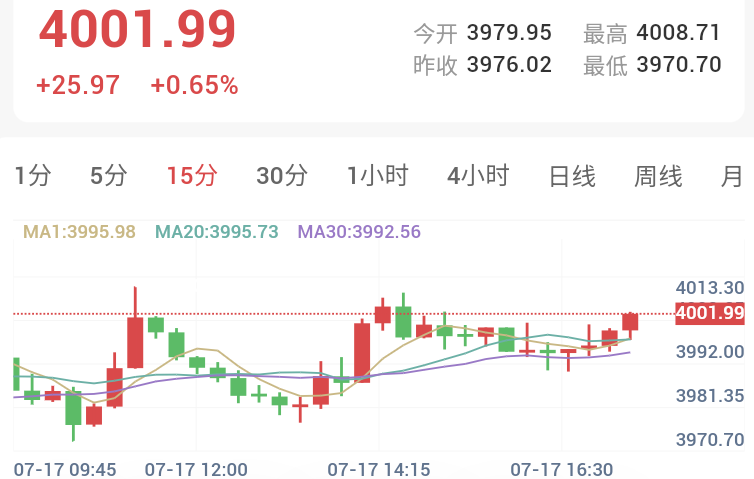
Intraday Short-Term (15 Minutes): Moving averages on lower timeframes and the MACD have formed golden crosses in tandem, tilting the short term toward a technical rebound and repair. It is recommended to enter long positions near the current price of $3,991.00, scale in near $3,987.00, using $3,970.00 as a stop-loss reference, targeting a range between $4,022.00 and $4,050.00. Should the price break below the $3,970.00 support, short-term long setups should be closed dynamically to maintain a wait-and-see stance.
Silver Technical Analysis
Daily Level: Silver tracking gold's rhythm moved lower in tandem, currently trading near $55.676 per ounce with moving averages presenting a bearish alignment, keeping the daily direction weak. Pressure from both soft industrial demand and a strengthening US dollar causes silver's performance to lag behind gold. Attention should be paid to the validity of the monthly-level support zone in the short term.
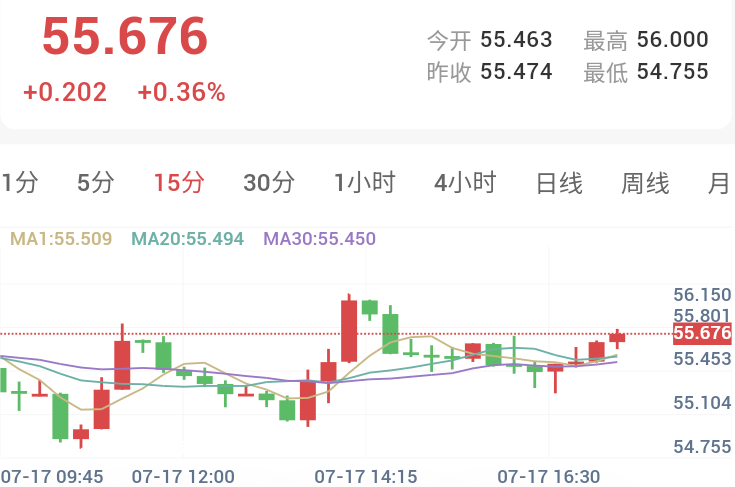
Intraday Short-Term (15 Minutes): The short-term chart follows gold's rebound rhythm. If the $3,970.00 support holds firm for gold, silver is expected to recover concurrently to hurdle above the $58.000 mark.
Risk Warning
Financial market trading involves unpredictable risks, including but not limited to the loss of principal. This analysis is for reference only and does not constitute direct investment advice. Investors should make independent judgments and autonomous decisions based on their own risk tolerance.