

Gold Prices Pull Back
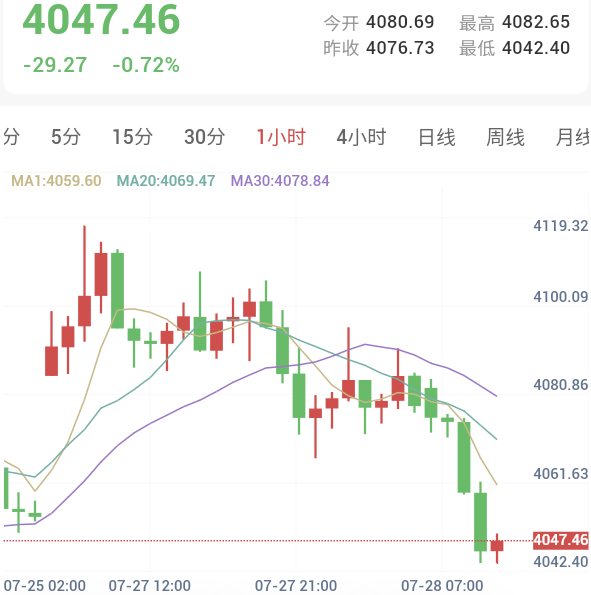
On July 27, spot gold opened higher on a price gap near $4,096 per ounce, spiking intraday to $4,119 before surrendering part of its gains to close at $4,076.73 per ounce, up 0.5% intraday. On the same day, benchmark energy futures plunged 8% to settle at $87.47 per barrel, breaking below the $90 threshold. During the Asian session on July 28, spot gold consolidated within a narrow range around $4,047 per ounce.
The US-Iran conflict, energy price swings, US dollar momentum, and the impending Federal Reserve interest rate decision constitute the four core focal points for current market participants.
Airstrikes Suspended in US-Iran Conflict as Diplomatic Prospects Rebound
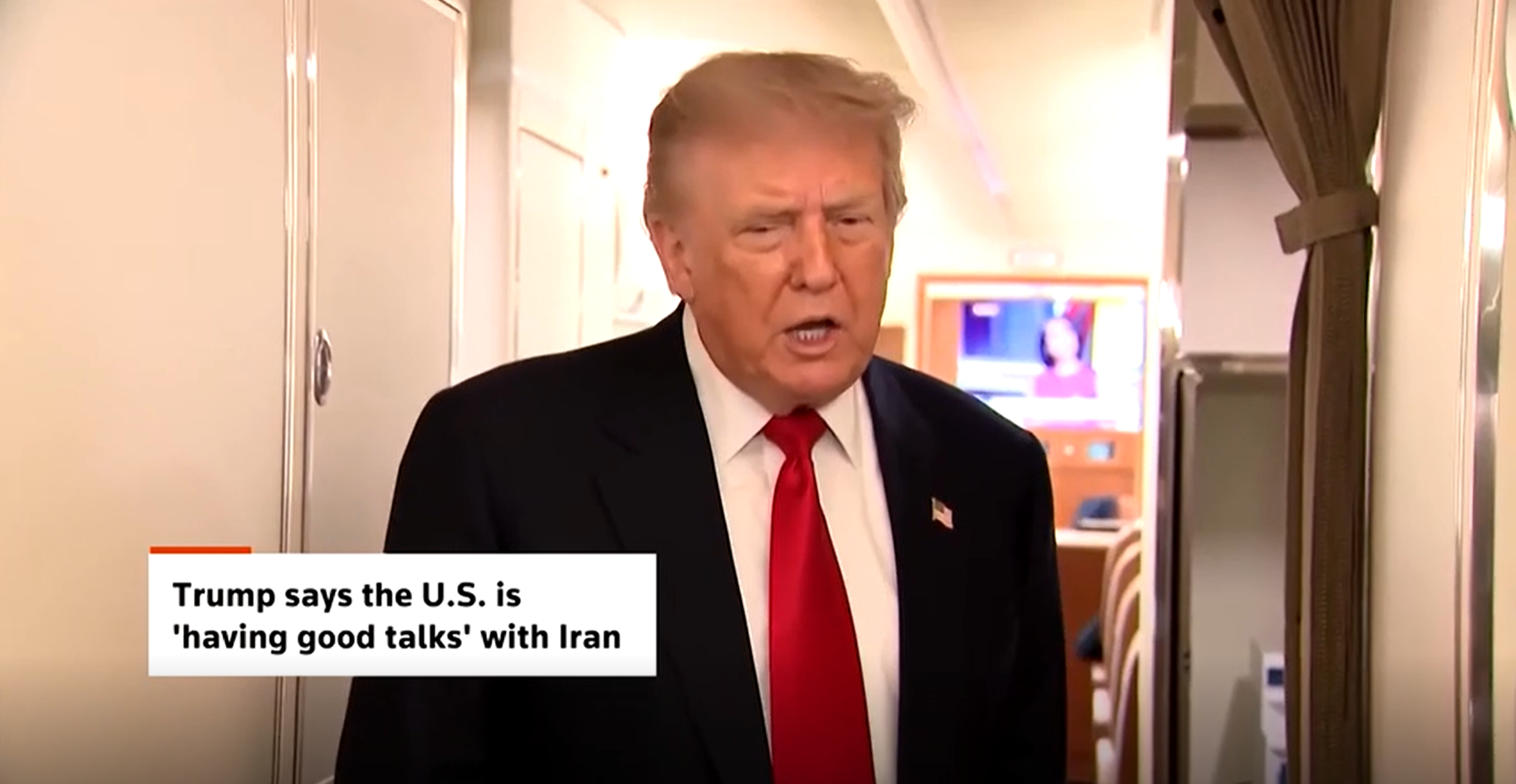
Geopolitical dynamics saw fresh developments on July 24. Following 13 consecutive nights of airstrikes against Iranian targets, senior US military officials reviewed operational efficacy and interceptor missile stockpile levels. President Donald Trump subsequently ordered a pause on further large-scale strike operations.
Iranian officials signaled that as long as the US maintains the pause on airstrikes, Tehran will likewise observe the ceasefire. President Trump publicly stated on July 27 that communication with Iran was progressing well. Although Iran's foreign ministry clarified that formal negotiations have not yet commenced, it acknowledged active message exchanges. The five-month military standoff exhibits signs of marginal de-escalation.
Energy Slump and Strong Durable Goods Data Push US Dollar Index to Four-Week Highs
In market data, benchmark energy futures dropped over 8% on July 27 to touch an intraday low of $87.47 per barrel, pulling back sharply from the prior week's high above $100.
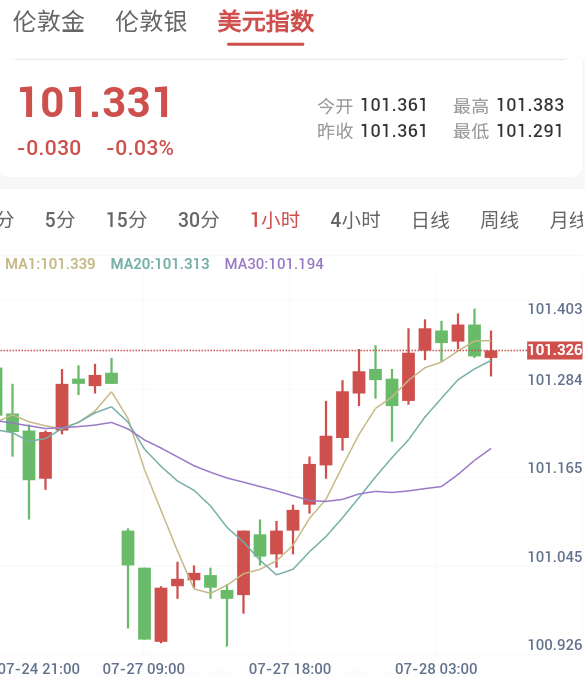
Concurrently, the US Dollar Index advanced 0.1% to settle at 101.53, touching a four-week intraday high of 101.54. US Department of Commerce data revealed that June core durable goods orders rose 0.9% month-over-month, beating market expectations of 0.8%, with the May reading revised up to 1.9%. Core capital goods shipments gained 1.9%, marking the largest monthly gain since December 2021 and highlighting corporate equipment investment resilience.
Federal Reserve July FOMC Meeting Arrives as Rate Hike Expectations Diverge
Financial market pricing data indicates the Fed convenes its July FOMC rate decision meeting on July 28–29. The CME FedWatch tool shows traders price in a 37.9% probability of a 25-basis-point rate hike in July and a 62.1% probability of holding rates steady, while the implied probability of a September rate hike has risen to approximately 80%.
Significant divisions persist within Fed leadership. Voting members including Dallas Fed President Lorie Logan and Cleveland Fed President Beth Hammack previously advocated for a rate hike, whereas officials such as New York Fed President John Williams prefer deferring policy moves until September. Meanwhile, markets await Thursday's release of US June Personal Consumption Expenditures (PCE) data.
Institutional Forecasts and Future Outlook
Institutional forecasts for medium-to-long term gold price targets remain varied. UBS projects gold price targets of $4,675 and $4,800 per ounce for 2026 and 2027, respectively. Goldman Sachs forecasts a short-term price target of $4,900 per ounce, while the World Gold Council expects prices to fluctuate around $4,100 per ounce over the remainder of the year. JPMorgan estimates an average price of $4,400 per ounce in the second half, warning that a Fed rate hike could trigger a downside test toward $3,500 per ounce.
Regarding official reserves, the People's Bank of China has expanded its gold holdings for 20 consecutive months. Global central banks purchased a net 244 tonnes of gold in Q1 2026, marking the strongest single-quarter performance in a year. From a technical perspective, the $4,000 psychological threshold remains a critical pivot for both buyers and sellers.