

I. Event Overview
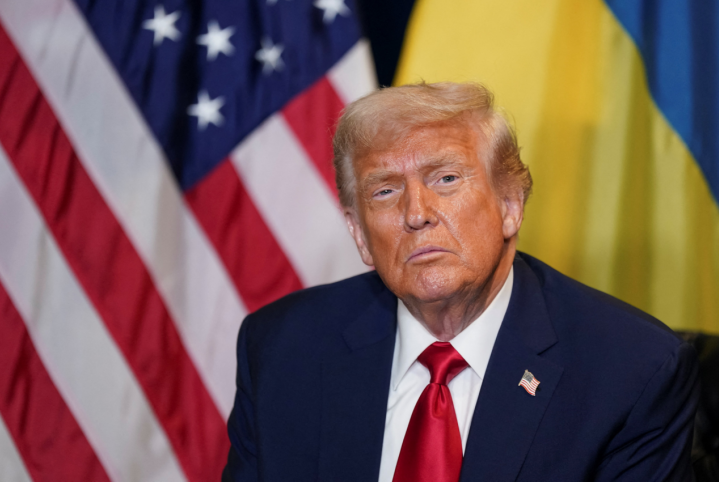
US President Trump met Ukrainian President Zelenskiy at the UN General Assembly on September 23 and later posted on Truth Social, expressing support for Kyiv to reclaim all territories occupied by Russia. This marks a sudden and significant rhetorical shift in his stance on the conflict. Previously, Trump had urged Ukraine to cede territory to end the war and warmly hosted Russian President Putin in Alaska last month. However, analysts and officials suspect this could be a tactic to shift the burden of weapons and funding to Europe, maintaining US strategic ambiguity while gradually reducing Washington's role. European leaders have been working to convince Trump that Russia bears full responsibility for the full-scale invasion on February 24, 2022.
II. Reactions
Neil Melvin, director of international security at RUSI, stated that Trump's comments indicate a shift in his understanding of the conflict, acknowledging its complexity and his frustration with Vladimir Putin, but still maintaining strategic ambiguity and pushing leadership responsibilities onto Europe.
German Foreign Minister Johann Wadephul welcomed Trump's remarks but emphasized the need for Europe to step up support, noting that many European countries have not fulfilled their commitments to Ukraine.
An anonymous Western European official described Trump's stance as seeming like a "farewell," though it could change at any time. A senior Eastern European diplomat views it as a signal of the US beginning to disengage.
Polish President Karol Nawrocki called Trump's comments "excellent" but sees them as a "public change" rather than a "core shift."
III. Market Impact Analysis

1. Increased European military aid burden drives defense spending
Europe may need to fill the potential gap left by the US, with countries like Germany calling for more financial and military options. While this could boost European defense stocks (as seen in early trading gains following the remarks), it also adds fiscal pressure and potential inflation concerns, enhancing gold's anti-inflation appeal.
2. Concerns over Ukraine's economic outlook weigh on bond markets
Ukraine's international bonds have fallen, reflecting market doubts about the continuity of aid. If the US disengages, Europe might increase support despite Russia's unwillingness to negotiate, potentially prolonging the conflict and amplifying risks of energy supply chain disruptions, which further bolsters gold as a monetary alternative asset.
3. Erosion of diplomatic trust heightens global volatility
Trust in the Trump administration has weakened in Europe due to its policies over the past eight months, and these remarks could shift with "one phone call from Putin." This amplifies geopolitical volatility, prompting central banks to accelerate diversification of gold reserves, with global gold purchases expected to remain high through 2025.
IV. Technical Analysis
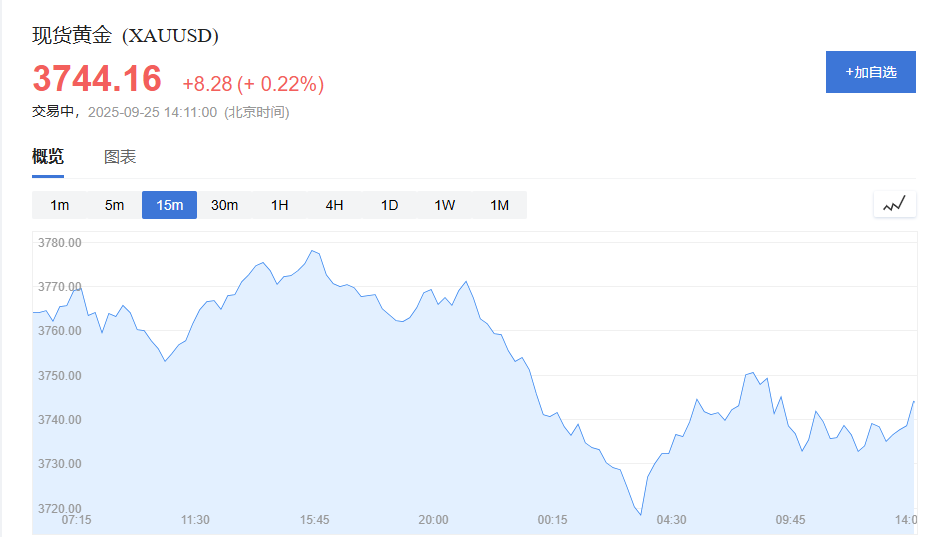
Spot gold was trading at 3744.16 USD per ounce on September 25 at 14:01 Beijing time, experiencing slight oscillations amid geopolitical uncertainty. Short-term support is at 3730.00 USD per ounce, with a potential drop to 3720.00 USD per ounce if breached. Resistance is at 3750.00 USD per ounce, and a breakout could target 3780.00 USD per ounce. Although the overall trend is currently selling, geopolitical events could reverse this short-term direction.
V. Prospect Outlook
1. Risk of Trump reversing his stance
Analysts warn that Trump's comments could change abruptly, such as with "one phone call from Putin," reverting to urging territorial concessions. This would further erode European trust, intensify market volatility, and increase gold's safe-haven demand.
2. Strengthening of European support mechanisms
NATO members in Europe have already boosted military spending and are using new systems to provide weapons from US stockpiles to Kyiv. If the US withdraws, Europe will need to explore more options, though fiscal challenges could prolong conflict uncertainty.
3. Stalemate in Russia-Ukraine negotiations
If Russia remains unwilling to negotiate, the prolonged conflict could drive up energy price risks and global inflation expectations, further strengthening gold's structural support.
Summary
Behind Trump's optimistic remarks on Ukraine lies a potential US disengagement, shifting the support burden to Europe and heightening geopolitical policy uncertainty. Amid eroding diplomatic trust, increased European burdens, and expectations of a prolonged conflict, gold's safe-haven and anti-inflation attributes are gaining reinforced support. Investors should closely monitor Trump's subsequent policy signals, progress in European military aid, and developments in Russia-Ukraine diplomacy.