

On September 17, 2025, the Federal Open Market Committee (FOMC) reduced the federal funds rate target by 25 basis points to 4.00%–4.25%. This marks the start of a easing cycle. Committee members disagreed on the outlook and pace. New governor Stephen I. Miran cast the only dissenting vote, arguing for a 50-basis-point cut. Below is a simple summary of the main points.
1. Main decisions and disagreements
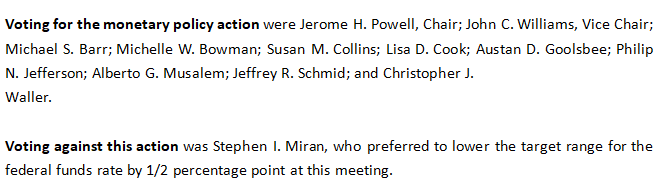
- Rate decision: The FOMC voted 11–1 for a 25 bp cut, taking the target to 4.00%–4.25%. Stephen Miran dissented and wanted a 50 bp cut.
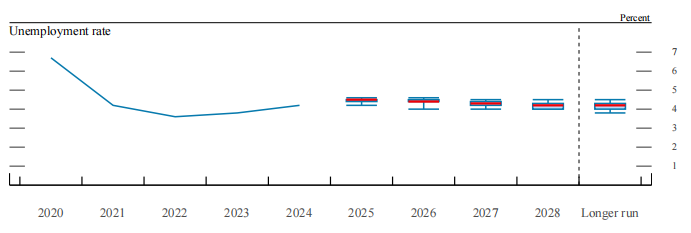
- Economic view: Members saw slower growth in the first half of the year and weaker job growth. The unemployment rate rose to 4.3% in August. While the jobless rate is still low by historical standards, downside risks to the labor market have grown.
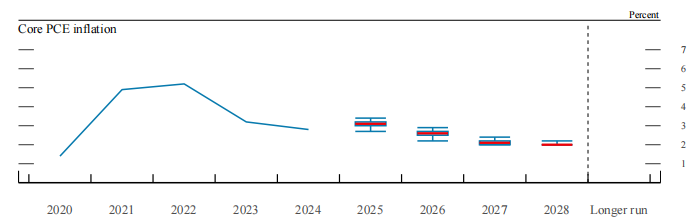
- Inflation: August PCE inflation was 2.7% and core PCE was 2.9%, both above the 2% goal. Many members said recent tariff policies add upward pressure to inflation, though some thought that effect may be temporary. Excluding tariffs, inflation could be closer to target.
2. Outlook and risks
- Growth and jobs: The Summary of Economic Projections (SEP) shows median real GDP growth of 1.6% for 2025 and a median unemployment rate of 4.5%. Members expect modest growth ahead and a gradual move of unemployment toward its longer-run level. But labor market uncertainty, especially for young people and minorities, is a concern.
- Inflation path: The SEP median for PCE inflation is 3.0% in 2025, 2.6% in 2026, and back to 2.0% by 2027. Most members see upside risks to inflation from tariffs and potential de-anchoring of expectations. Others think higher productivity and weaker demand may limit inflation.
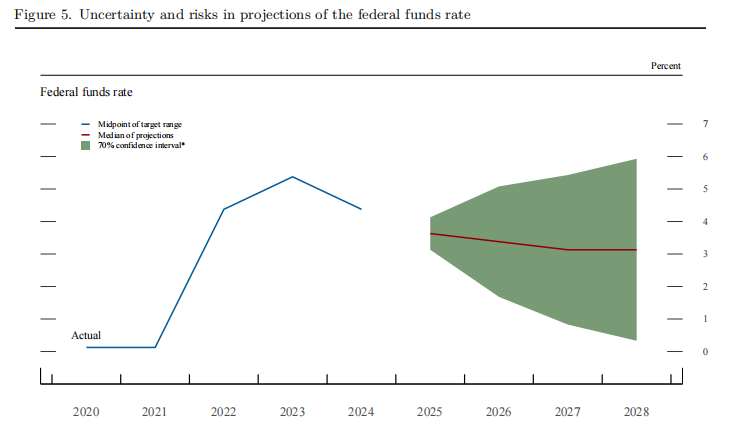
- Policy path: The median federal funds rate path shows 3.6% at end-2025, 3.4% at end-2026, and a long-run neutral rate of 3.0%. The committee said policy will be data-dependent and it will continue shrinking the balance sheet.
Overall, members expect rates to fall slowly over time.
3. Policy stance and risk management
- Policy shift: Most members supported the cut, viewing it as a move from restrictive toward neutral policy to address rising job risks without letting inflation run away.
- Balancing risks: The Fed faces two-way risks—cutting too fast could lift inflation expectations, while staying too tight could worsen jobs. The committee aims to balance supporting jobs and keeping prices stable.
- Markets and liquidity: Financial markets were calm around the meeting. Stocks were near highs and corporate spreads were low. Short-term funding rates showed some volatility during tax and Treasury issuance periods, but overall liquidity was ample and systems functioning.
Summary
The September FOMC meeting started a rate-cutting cycle, reflecting heightened concern about the labor market. Inflation remains above target, so policy will be cautious and data-driven. Stephen Miran’s dissent highlights internal disagreement on how fast to ease. Going forward, the Fed will watch employment, inflation, and the real effects of tariffs while adjusting policy as new data arrive.