

1. Event summary
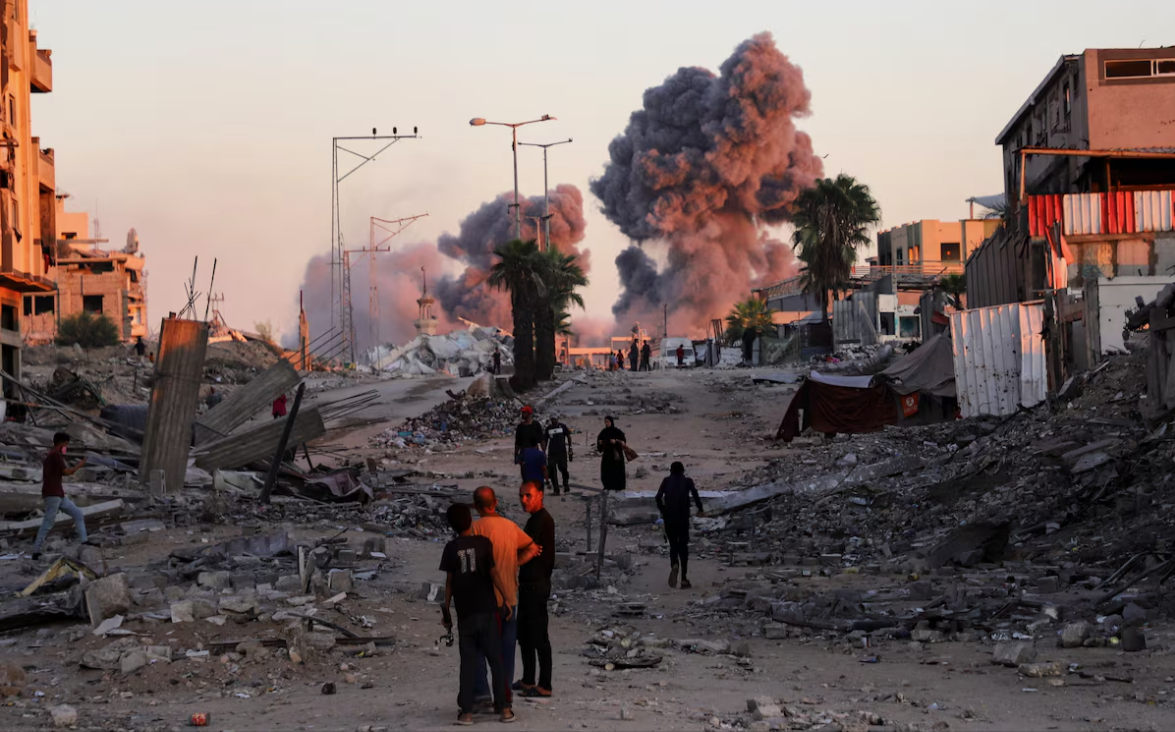
- On October 8, Israel and Hamas reached agreement in indirect talks in Egypt on the first phase of U.S. President Donald Trump’s 20-point Gaza peace plan. The first phase covers a ceasefire and hostage exchanges. This could start an end to the two-year war that began with Hamas’s October 7, 2023 attack.
- The deal came a day after the attack’s second anniversary. That attack killed about 1,200 people in Israel and left 251 hostages. Israel’s response killed over 67,000 people in Gaza and devastated much of the area.
- Trump posted on Truth Social that “Israel and Hamas have both signed the first phase,” saying hostages will be released soon and Israeli forces will pull back to agreed lines as a first step toward lasting peace. Israeli Prime Minister Benjamin Netanyahu said, “God willing, we will bring everyone home,” and called a government session to approve the deal.
- Israeli officials said releases would begin on Saturday. Talks involved U.S. envoys Jared Kushner and Steve Witkoff and senior mediators from Qatar and Turkey. Negotiations focused first on ceasefire logistics and hostage safety, avoiding later issues like governance, Hamas’s fate, and disarmament.
2. Reactions
- Trump said all parties will be treated fairly and thanked Qatar, Egypt, and Turkey. He called the day historic for the region.
- Netanyahu and Trump both called the deal historic. Israel’s markets reacted positively: the shekel rose to a three-year high and stocks hit new highs.
- Hamas insists on a full Israeli withdrawal and guarantees for rebuilding, and refuses to disarm unless occupation ends. Palestinian factions vowed to resist and said no one can give up weapons. Israel’s far right threatens to topple the government if concessions are too large. Attacks continued as Hamas demanded guarantees that war will not be repeated.
3. Market impact analysis
1) Short-term drop in safe-haven demand
- If the first-phase ceasefire is fully implemented and hostages are released, geopolitical risk would fall and gold’s safe-haven appeal could weaken, pushing investors into risk assets and causing gold to pull back. But if talks fail, renewed conflict would lift gold again.
2) Diplomatic divisions still create uncertainty
- Hamas’s demand for withdrawal and Israel’s insistence on disarmament create major differences. Pressure from Arab states and political friction could push sovereign funds toward gold as a hedge, creating structural buying.
3) Reconstruction and inflation concerns
- If the deal holds, rebuilding Gaza will need large funds and raise inflation expectations. Post-war governance and financing uncertainty could last, supporting gold’s inflation-hedge role.
4. Technical analysis
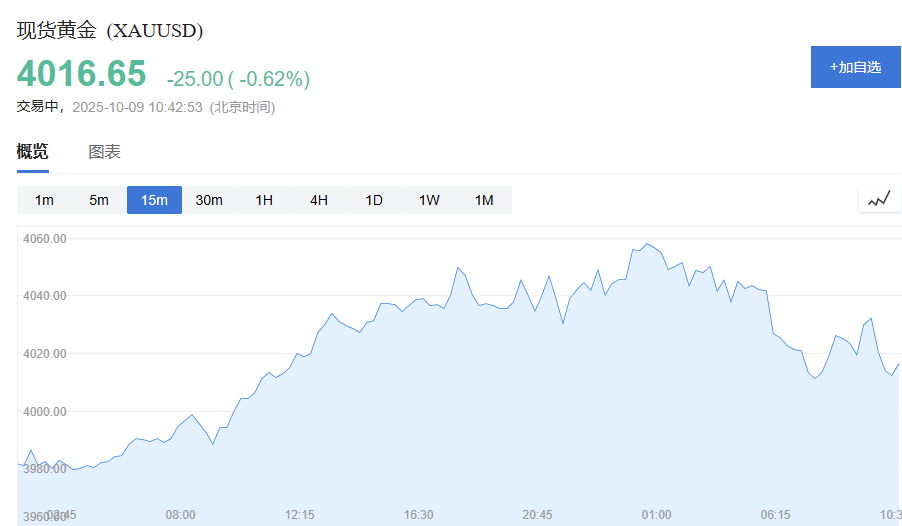
- At 10:42 Beijing time on October 9, spot gold was $4,016.80 per ounce. After reaching a record high of $4,042.76, it fell about 0.62% on easing geopolitical risk.
- The 14-day RSI was near 44.39 (in the sell zone). The MACD (12,26) was 5.21 (in buy territory). The pullback appears to be slowing, and price may trade in a $4,010–$4,020 range.

5. Outlook
- If hostage releases and troop withdrawals begin on Saturday, the ceasefire could accelerate and be bearish for gold in the short term. If either side delays or stalls, a breakdown would raise uncertainty and support gold.
- Summary: Agreement on the first phase signals a possible shift in the Middle East and may reduce gold’s safe-haven demand short term. But major disagreements, governance and rebuilding risks, and ongoing protests and energy concerns mean gold’s hedge and inflation properties remain relevant. Investors should watch hostage release execution, Arab states’ responses, and reconstruction developments.