


I. Event Overview
In the early morning of October 10, Russia launched a large-scale attack on Kyiv, the capital of Ukraine. The attack triggered fires in high-rise apartment buildings and targeted energy sites, resulting in power outages in some cities. Vitali Klitschko, Mayor of Kyiv, stated that 9 people were injured (with 5 hospitalized), and power and water supplies were cut off in the eastern bank area. Images showed apartments on fire, firefighters at the scene, and debris from downed drones hitting multiple areas. Svetlana Grinchuk, Minister of Energy, noted that Russia’s attacks on energy sites involved both drones and missiles.
Timur Tkachenko, the regional governor, said firefighters had brought under control the apartment fire (on the 6th-7th floors) caused by drones. In Zaporizhzhia in the southeast, a drone attack injured 3 people and set at least one residential building on fire. Recently, Russia has intensified its attacks on Ukraine’s energy infrastructure. As the fourth winter of the war approaches, diplomatic efforts have stalled. Last week, large-scale attacks hit Ukraine’s major natural gas production facilities, causing significant damage. Earlier, Volodymyr Zelenskyy, President of Ukraine, stated that Russia had launched over 50 missiles and nearly 500 drones.
II. Market Impact Analysis
1. Escalating Geopolitical Tensions Strengthen Safe-Haven Demand
Russia’s large-scale attacks on Ukraine’s energy infrastructure highlight the risk of spillover from the Russia-Ukraine conflict. This may lead to more direct involvement by NATO; investors are turning to gold to hedge against potential military escalation and sanctions risks, forming structural buying demand.
2. Potential Increased Burden on Europe Elevates Energy Risks
The attacks have damaged natural gas and electricity facilities. If the attacks persist, they may intensify Russia’s energy countermeasures (such as cutting supplies), further disrupting global supply chains and pushing up inflation expectations—this will strengthen gold’s anti-inflation attribute.
3. Multilateral Diplomatic Confrontation Affects Global Market Volatility
The attacks occurred amid stalled diplomatic efforts. If tensions fail to ease, expectations of a prolonged conflict may grow, prompting capital to flow from risky assets to gold and enhancing gold’s appeal as a non-politicized asset.
IV. Technical Analysis
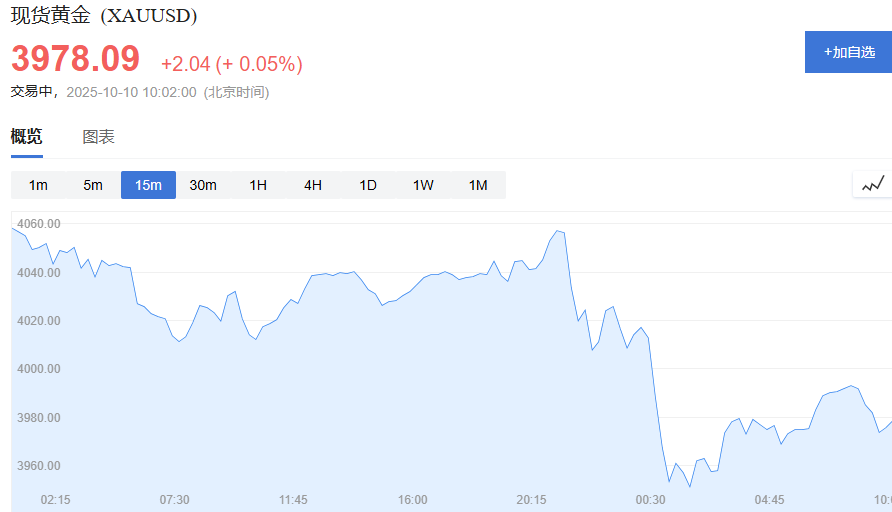
At 10:02 Beijing Time on October 10, spot gold was quoted at $3,978.09 per ounce. It corrected sharply as geopolitical tensions in the Middle East eased, but the Russia-Ukraine conflict still provided strong support to the market.
- $4,000.00 per ounce is a key resistance level. A re-breakthrough above this level may trigger a strong bullish extension.
- $3,940.00 per ounce serves as a recent support barrier, capable of providing temporary support during short-term corrections.
- $3,840.00 per ounce is the core support level: it is the key support connecting the recent consolidation range. A break below this level may threaten the current uptrend and shift momentum to moderately bearish.
V. Outlook
1. Russia-Ukraine Diplomatic Developments
If attacks continue, they may intensify confrontation, increase market uncertainty, and be beneficial to gold’s safe-haven premium; the resumption of diplomatic efforts may ease tensions in the short term.
2. Risks of NATO’s Response
If actions by Poland (such as dispatching aircraft) trigger more aggressive moves (e.g., shooting down Russian drones), it will amplify the hidden danger of conflict spillover and further support the rise of gold prices.
3. Long-Term Impact of Energy Disruptions
If natural gas supply is interrupted, natural disasters or increased demand in winter will push up energy prices, strengthening the demand for gold as an anti-inflation asset.
Summary
Russia’s airstrikes on Ukraine have killed five people and damaged energy facilities, pushing geopolitical tensions to a new high. Driven by multiple factors—including the escalating conflict in eastern Europe, rising policy uncertainty, and emerging energy risks—gold’s safe-haven and anti-inflation attributes have received strong supportive momentum.