


I. Event Overview
On October 12, 2025, U.S. President Donald Trump stated that the United States might provide long-range Tomahawk missiles to Ukraine if Russian President Putin fails to end the war in Ukraine. Speaking to reporters on Air Force One en route to Israel, Trump said he had discussed Ukraine's request for weapons assistance, including Tomahawk missiles, with Ukrainian President Zelenskyy. Zelenskyy had previously made it clear that Ukraine would only use Tomahawk missiles for military targets and would never attack Russian civilians.
The Tomahawk missile has a range of 2,500 kilometers (1,550 miles), which is sufficient to strike deep into Russian territory, including Moscow. In response, the Kremlin warned that supplying Tomahawk missiles to Ukraine would escalate the war and trigger a "new phase of aggression." Trump stated that although the U.S. would not directly sell the missiles to Ukraine, they could be provided to Ukraine through NATO. He added, "If the war doesn't end, we might do this, but we might not either."
After his second meeting with Trump, Zelenskyy said Ukraine is working to persuade the U.S. to approve this missile deal and emphasized that these missiles would only be used for military targets.
II. Reactions from All Parties
Zelenskyy insisted that Ukraine would not attack Russian civilians and emphasized the fundamental moral difference between Ukraine and Russia in the war. Meanwhile, Putin warned that if the U.S. provides Tomahawk missiles to Ukraine, it would push the situation into a "new phase of qualitative escalation."
III. Market Impact Analysis

1. Escalating Geopolitical Risks
The Russia-Ukraine war has entered an intense phase. The news that the U.S. may supply Tomahawk missiles to Ukraine has further heightened risk aversion in the market. Investors' concerns about geopolitical uncertainties have increased, driving up demand for gold. If the supply of Tomahawk missiles becomes a reality, the market may face greater uncertainties and risk premiums, thereby pushing gold prices higher.
2. Possibility of War Escalation
Russia has expressed strong opposition to the supply of Tomahawk missiles, which may trigger larger-scale military conflicts. Market concerns about the further deterioration of the situation may prompt capital to flow into safe-haven assets such as gold as a means to hedge against geopolitical risks.
IV. Technical Analysis
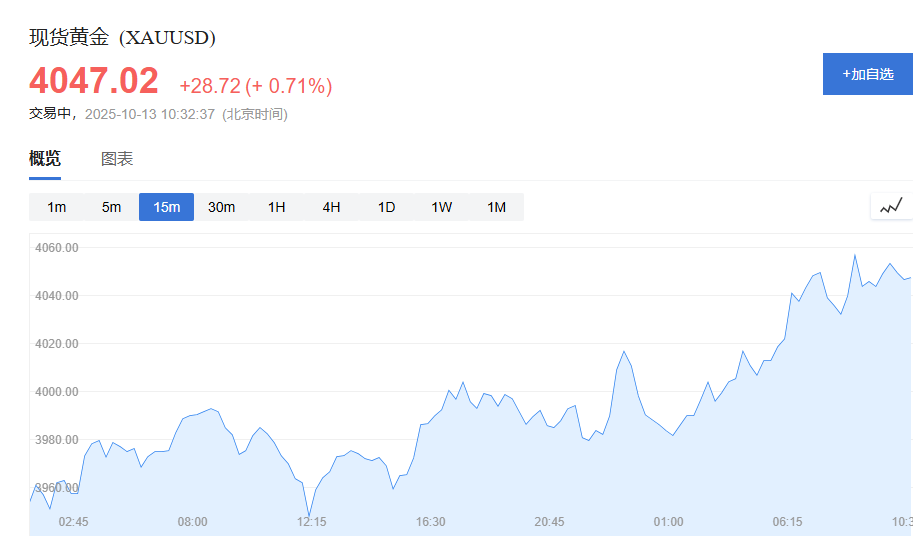
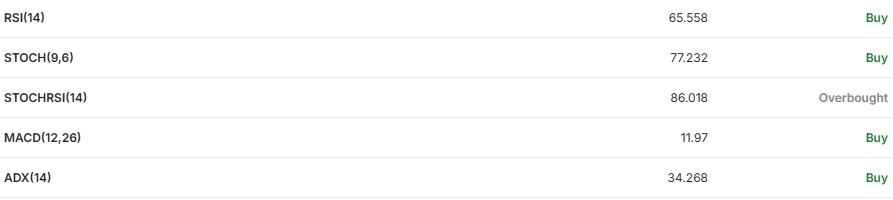
As of October 13 (Beijing Time), spot gold was quoted at $4,047.02 per ounce. The RSI (14) indicator stood at 65.558, falling within the buying range, and the MACD (12, 26) was 11.97. Against the current geopolitical backdrop, gold prices have shown a trend of fluctuating upward. Investors should pay attention to the development of the situation and the further impact of relevant news.
V. Outlook
1. In the Short Term, Gold May Continue to Be Supported by Geopolitical Risks
If the arms deal between the U.S. and Ukraine further deepens, geopolitical risks will intensify, and gold may continue to be driven up by safe-haven demand.
2. In the Medium Term, Gold May Face Significant Volatility
Russia may take more countermeasures, while U.S.-Ukrainian military support may also enter a new phase. In the short term, gold prices are expected to maintain strength. Investors should pay attention to the progress of the Tomahawk missile deal and Russia's response.
Summary
Trump's statement that he may approve the supply of Tomahawk missiles to Ukraine highlights the complexity and uncertainty of the geopolitical situation. The market has reacted strongly to this, and the demand for gold as a safe-haven asset may further increase. Investors need to pay attention to the further development of this matter in the coming days and the dynamic changes in the gold market.