

I. Event Overview
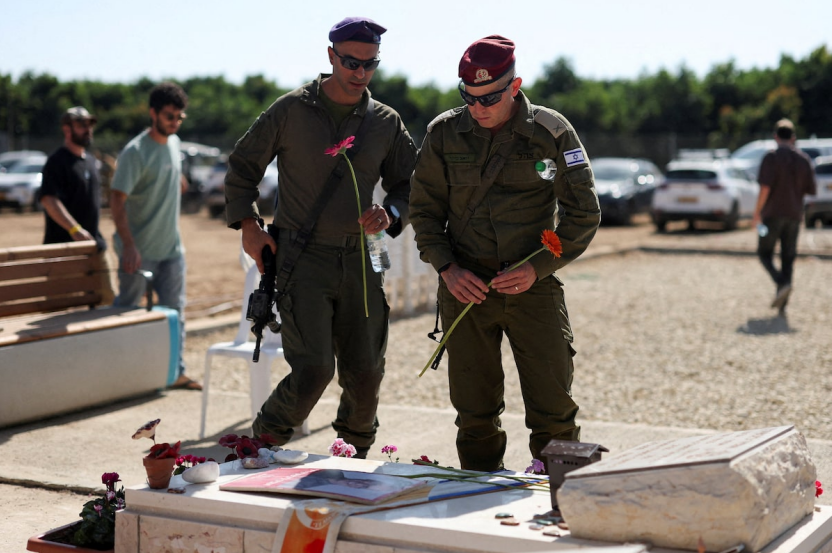
On October 16, 2025, Israel and Hamas engaged in a fierce dispute over the U.S.-brokered ceasefire agreement. The core of the dispute lies in whether Hamas will return the bodies of Israeli hostages killed, as required by the agreement. Hamas stated that many bodies are buried under the rubble destroyed by Israeli bombings, so it may take some time to hand over these bodies. Israel, however, insisted that Hamas should abide by the agreement and return all 19 bodies of hostages killed by Hamas. Although Hamas has handed over 10 bodies, Israel claimed one of them is not a hostage.
This dispute may threaten the smooth implementation of the ceasefire agreement and also highlights other unresolved issues in the agreement, including the handover of Hamas’ weapons and the future governance of the Gaza Strip. The Israeli military said that future agreement terms will include requiring Hamas to give up weapons and hand over political power, but this demand has so far been rejected by Hamas.
II. Reactions from All Parties
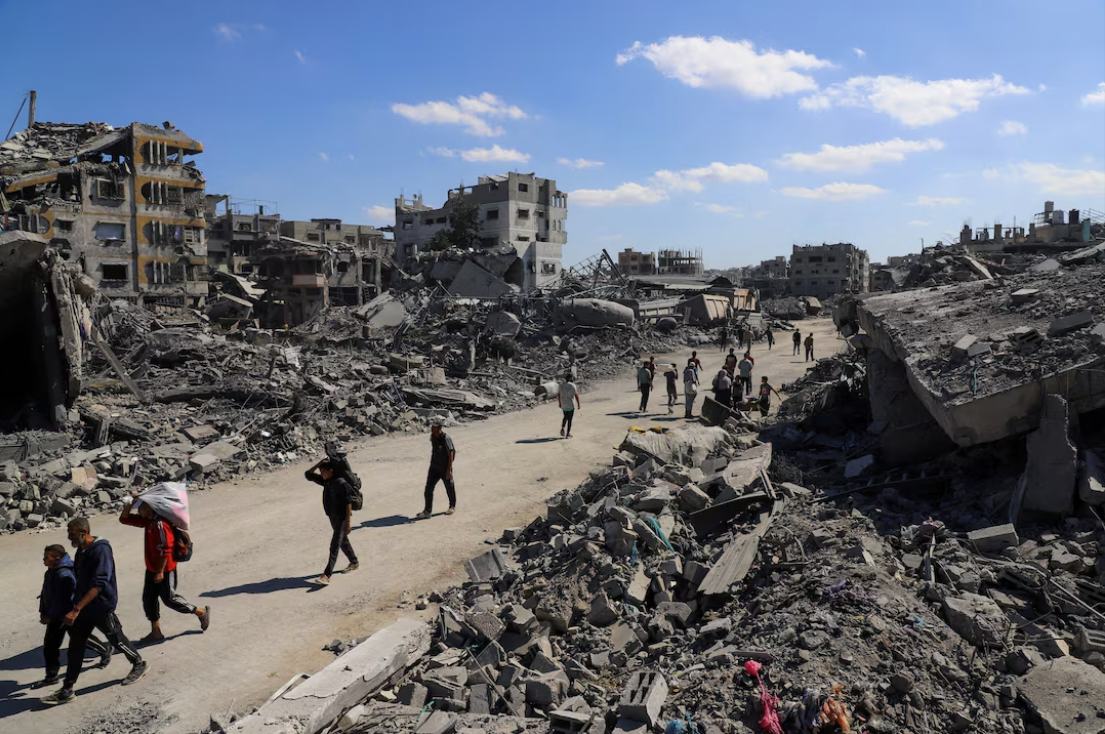
An Israeli government spokesperson stated that despite difficulties, Israel still insists on implementing the agreement and demands that Hamas return all hostages’ bodies. Hamas, on the other hand, reiterated its willingness to fulfill the agreement, but noted that since many bodies are buried under the rubble, heavy machinery must be used for excavation.
During the implementation of the ceasefire agreement, the two sides accused each other of violating the agreement. Hamas accused Israel of carrying out multiple attacks since the ceasefire, resulting in the death of at least 24 people. The Israeli military responded that in some cases, Palestinians failed to comply with warnings in the ceasefire zones, forcing the military to open fire to eliminate threats.
III. Market Impact Analysis
- Geopolitical Instability Drives Gold DemandThe deadlock in the ceasefire negotiations between Israel and Hamas, and the further escalation of the situation, have undoubtedly heightened tensions in the global market. When facing ongoing unrest in the Middle East, investors usually seek safe-haven assets such as gold for protection. The demand for gold as a safe-haven tool may thus be further boosted.
- Panic Intensifies Gold’s Safe-Haven DemandThe breakdown of the ceasefire agreement and the mutual accusations between the two sides have complicated the situation, especially as issues related to humanitarian aid and the return of dead hostages remain unresolved. The persistence of this tense situation may lead to a further decline in investors’ confidence in the market, prompting them to turn to safe assets like gold.
- Impact of Israel’s Military Operations on GoldIsrael’s continued military operations against Hamas have increased the uncertainty of the war. Particularly against the backdrop of the large-scale humanitarian crisis in the Gaza Strip, gold, as a tool to hedge geopolitical risks, is favored by investors. Investors will pay closer attention to the development of the situation, further pushing up gold prices.
IV. Technical Analysis
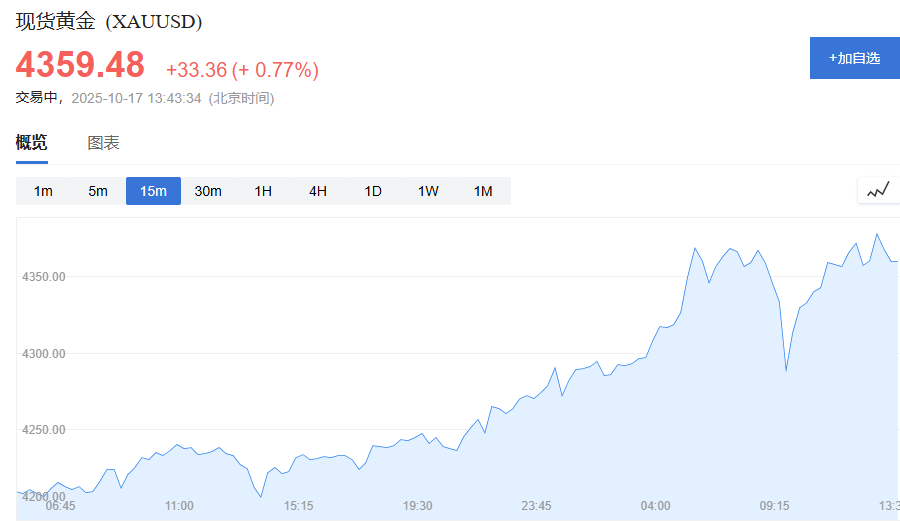
At 13:43 Beijing Time on October 16, the spot gold price was approximately $4,359.48 per ounce. Gold prices continued their strong upward trend, breaking through the previous resistance level of $4,330.00 per ounce and forming a new upward channel. The current support level is at $4,285.00 per ounce; if the price pulls back to this level, it may decline further. The key resistance level above is $4,370.00 per ounce; once this level is broken, gold prices are expected to rise further.
V. Outlook
- Persistent Uncertainty in the Middle East SituationAs the implementation of the ceasefire agreement becomes more difficult, investors’ attention to the Middle East situation continues to rise. The uncertainty of the situation and the escalating confrontation between Hamas and Israel may keep gold demand at a high level, especially against the backdrop of escalating military operations and humanitarian crises.
- Strong Market Demand for Gold as a Safe HavenUncertainties in the global market, the military confrontation between Israel and Hamas, and other geopolitical issues are expected to continue pushing up the safe-haven demand for gold in the short term. Investors should pay attention to the development of the global situation and the technical trend of gold; gold is likely to maintain a strong upward trend in the coming period.
Summary
The ceasefire agreement between Israel and Hamas has reached a deadlock, and the war in the Gaza Strip continues to escalate. Uncertainties in the global market have further pushed up the demand for gold as a safe-haven asset. Gold prices continue to remain strong; it is expected that driven by both geopolitical risks and global economic uncertainties, gold prices will continue to rise. Investors should closely monitor the situation in the Middle East, the progress of negotiations between Israel and Hamas, as well as changes in the global economy and Federal Reserve policies to make appropriate investment decisions.