


I. Event Overview
On October 21, 2025, U.S. Vice President JD Vance visited Israel, stating that the ceasefire was "progressing better than expected" but reaffirming that Hamas would be "eliminated" if it refused to cooperate in disarmament. This statement aligned with Trump’s previous threat, in which Trump indicated that if Hamas failed to abide by the ceasefire agreement, the U.S. would take "quick, fierce, and brutal" actions. Uncertainties surrounding the ceasefire agreement persist, as Israel and Hamas have accused each other of violations, particularly regarding the handover of bodies and border crossings. Both Hamas and Israel have alleged that the other party breached the agreement, and the inflow of aid remains blocked.
Meanwhile, the U.S. and mediating parties such as Egypt, Qatar, and Turkey are pushing the ceasefire into its second phase, demanding that all parties make additional concessions. Trump’s 20-point ceasefire plan includes requirements for Hamas to disarm and for Israel to withdraw troops from Gaza, but Hamas opposes these terms. Despite the tense situation, some analysts believe that the advancement of the ceasefire agreement will gradually reduce geopolitical risks in the Middle East.
II. Reactions from All Parties
Trump continued to emphasize that the ceasefire agreement was still in effect, stating, "We will take multiple measures to maintain the ceasefire and ensure peace with Hamas." During his meeting with Israeli Prime Minister Netanyahu in Israel, Vance expressed optimism about the ceasefire despite current challenges, noting that if Hamas continued to resist, the U.S. would not hesitate to take tougher actions. At the same time, Hamas stated through an announcement that despite Israel’s violations, it remained committed to abiding by the ceasefire agreement. The political game between the two sides continues, but mediation efforts by the U.S. and other mediating parties have offered hope for stabilizing the situation.
III. Market Impact Analysis
1. Eased Geopolitical Risks Drive Gold Price Correction
As Trump and the U.S. made some progress in advancing the Gaza ceasefire agreement, the market felt slightly more at ease about geopolitical risks in the Middle East. Although the advancement of the ceasefire agreement remains unstable, this initial easing has led some investors to withdraw from safe-haven assets like gold, resulting in a short-term correction in gold prices. If the ceasefire can be sustained and pave the way for subsequent peace talks, gold prices may come under pressure.
2. U.S. Threats Against Hamas and Geopolitical Uncertainty
While Trump’s tough stance on Hamas failed to immediately quell market unease, it also reflects the U.S.’s continued efforts to strengthen its intervention in the Middle East situation. If Hamas continues to challenge the ceasefire agreement, the U.S. may adopt more military measures, which could complicate the situation and push gold prices higher again. However, gold prices are under short-term pressure, as the market is more focused on whether the ceasefire agreement can be implemented smoothly.
IV. Technical Analysis
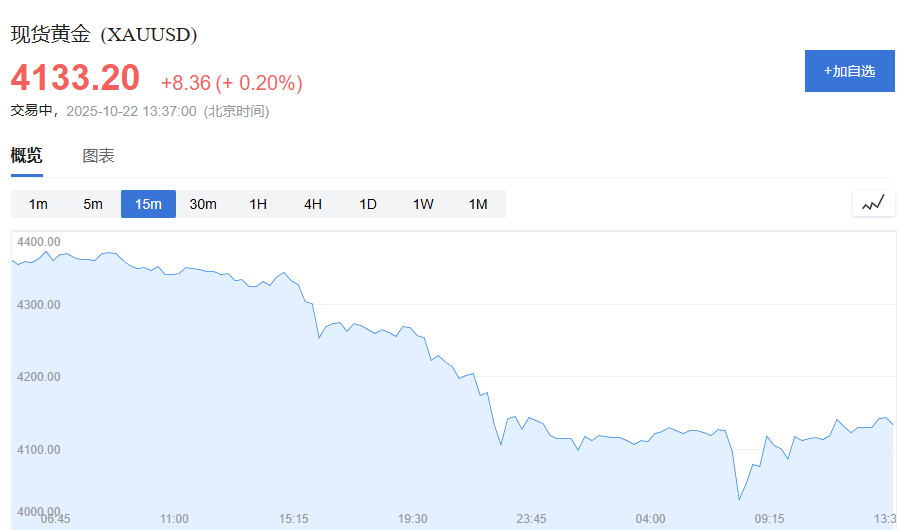
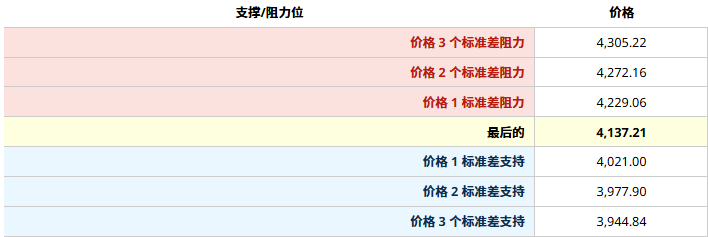
As of October 22, 2025, the spot gold price was quoted at $4,137.20 per ounce. In the short term, gold prices are in a state of volatile consolidation. The key support level is at $4,021.00 per ounce; if this level is broken, prices may further correct to below $4,000.00. The upper resistance level is at $4,229.06 per ounce; if this level is breached, gold prices may rise further to the $4,270.00 level. Currently, gold prices maintain a volatile trend, and future trends will be jointly influenced by geopolitical conditions and Federal Reserve policies.
V. Outlook
1. Implementation of the Ceasefire Agreement and Fading Geopolitical Risks
If the ceasefire agreement can continue to be implemented smoothly and gradually put into practice, geopolitical risks will ease, and gold prices may continue to face correction pressure. Investors should pay attention to whether the agreement can effectively reduce violent conflicts and promote subsequent governance arrangements.
2. Progress on Hamas’ Disarmament and International Oversight
If Hamas ultimately agrees to disarm and international oversight bodies can effectively participate in Gaza’s governance, the stabilized situation will exert more downward pressure on gold. If difficulties arise in the implementation of the agreement, gold prices may continue to receive support.
Summary
Trump’s threats against Hamas and the advancement of the Gaza ceasefire agreement have driven a short-term market correction, and the easing of geopolitical risks has curbed gold prices. However, uncertainties remain regarding the implementation of the ceasefire agreement—particularly issues related to Hamas’ disarmament and the humanitarian crisis—and these factors will continue to support gold’s safe-haven demand. Investors should closely monitor changes in the Gaza situation, U.S. policy trends, and the impact of global economic uncertainties on gold.