

I. Event Overview
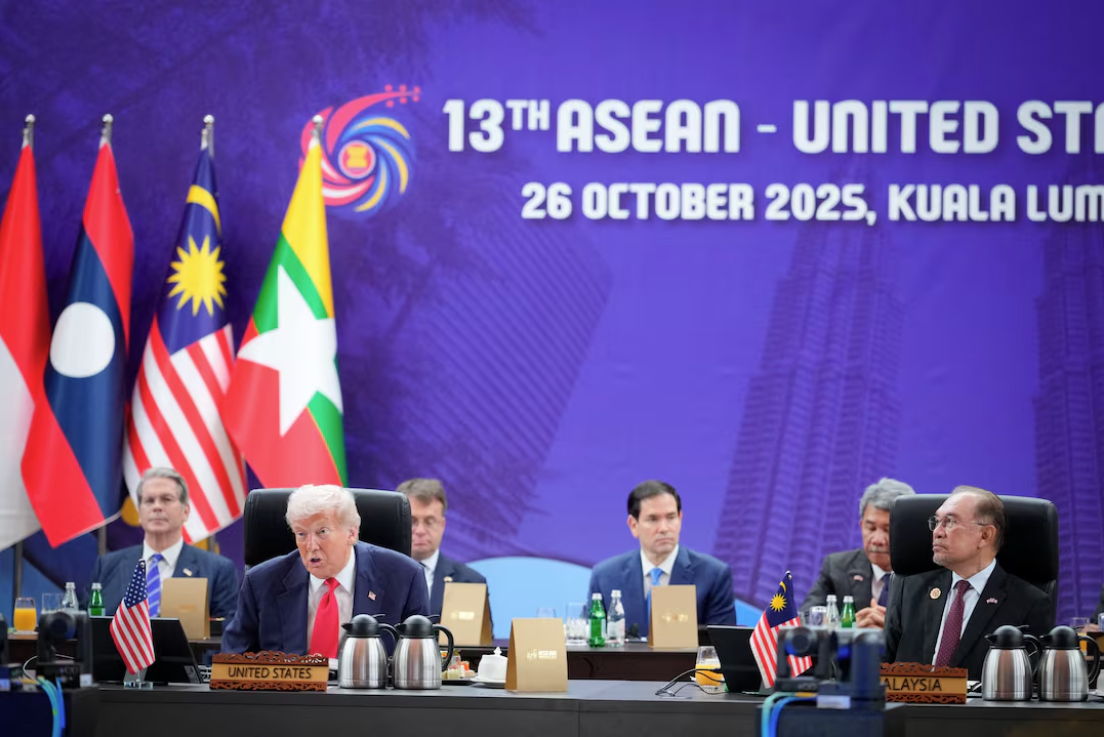
On October 26, 2025, senior economic officials from the United States and China held key trade negotiations in Kuala Lumpur, Malaysia, to discuss ways to prevent the escalation of China-U.S. trade conflicts. U.S. Treasury Secretary Scott Bessent stated that the two sides had reached a preliminary consensus on suspending the U.S. threat of imposing a 100% tariff on Chinese goods and China delaying the implementation of rare earth export controls. Bessent pointed out that this agreement would ease uncertainties in global trade and potentially lay the groundwork for the upcoming meeting between Xi Jinping and Trump.
The focus of this round of negotiations was the tense situation in the global rare earth supply chain. China controls over 90% of the world’s rare earth supply, and these resources are crucial for the high-tech industry. The U.S. hopes to use the agreement to push China to resume large-scale purchases of U.S. goods such as soybeans, in order to alleviate the difficulties faced by American farmers. In addition, the two sides also discussed other economic cooperation issues, including U.S. export controls on Chinese technology products and measures to reduce the trade deficit between the two countries.
II. Reactions from All Parties
- China: While China remained cautious about the details of the agreement, it stated that the two sides had reached a "preliminary consensus." Chinese officials emphasized that export controls were intended to safeguard national security and prevent rare earth resources from entering the military field.
- U.S.: Bessent believed that the negotiations had laid the groundwork for the meeting between Trump and Xi Jinping, and stated that the suspension of tariffs and China’s delay in rare earth export controls would help stabilize the global economy.
III. Market Impact Analysis
1. Geopolitical Risks
Trade negotiations between China and the U.S. may ease market concerns about global economic uncertainty, potentially reducing gold’s safe-haven demand in the short term. However, if the negotiations collapse or unexpected changes occur, gold may still benefit from increased safe-haven demand.
2. Rare Earth Supply and Inflation
Since China controls over 90% of the world’s rare earth supply, a delay in export controls would ease tensions in the global supply chain, potentially alleviating cost pressures for production in certain industries. Reduced inflation expectations may slow down the upward momentum of gold prices.
3. Impact on the U.S. Dollar
If the China-U.S. agreement ultimately stabilizes economic relations between the two countries, it may help boost confidence in the U.S. dollar, thereby curbing the upside of gold prices. However, if the implementation of the agreement encounters obstacles, pressure on the U.S. dollar may further enhance gold’s attractiveness.
IV. Technical Analysis
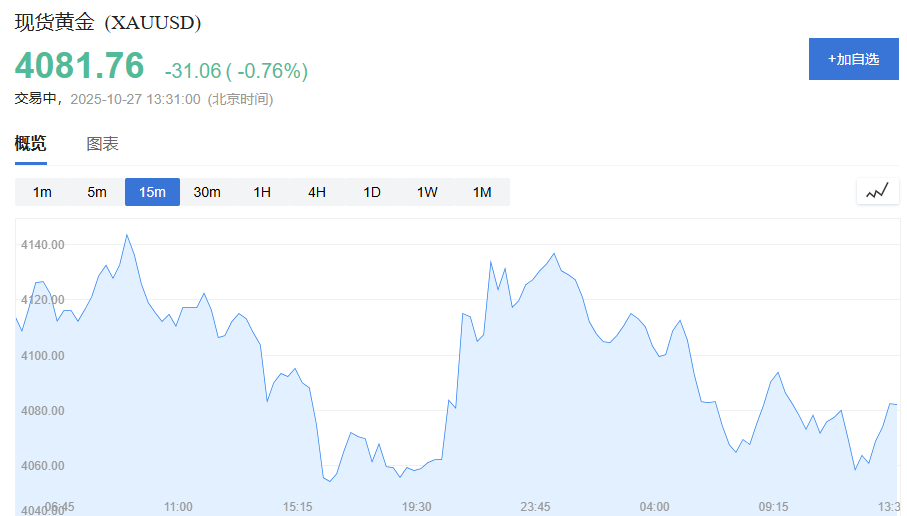
As of 13:31 Beijing Time on October 26, spot gold was quoted at $4,081.76 per ounce during the midday session of the Asian market. The 15-minute chart shows that gold prices maintain a volatile downward trend but remain within a range-bound fluctuation. Current technical indicators indicate a relatively weak market:
- The RSI stands at 46.117, in the neutral zone, with no obvious overbought or oversold signals.
- Both the Stochastic Oscillator (STOCH) and Stochastic RSI (STOCHRSI) show sell signals, suggesting the market may be in a downward trend.
- The negative MACD value (-10.16) further confirms the bearish trend.
Overall, the market presents a downward trend.

V. Outlook
1. Trade Situation and Gold Demand
If China-U.S. trade relations continue to improve, global economic uncertainty may weaken, thereby reducing gold’s safe-haven demand. However, if negotiations collapse or the situation deteriorates, gold may continue to be favored as a safe-haven asset, driving up prices.
2. U.S. Dollar Volatility
The impact of the China-U.S. trade agreement may have a profound effect on the U.S. dollar, and the dollar’s trend will be a key factor influencing future gold price movements. If the dollar weakens, gold will continue to benefit and may maintain an upward trend.
Summary
Although progress in the China-U.S. trade negotiation framework may bring short-term stability to the global economy, attention must still be paid to the implementation process of the agreement. If changes occur in China-U.S. relations, gold’s safe-haven demand may remain strong, supporting price increases. Investors should focus on the upcoming leaders’ meeting and the potential market reactions it may trigger.