

I. Event Overview
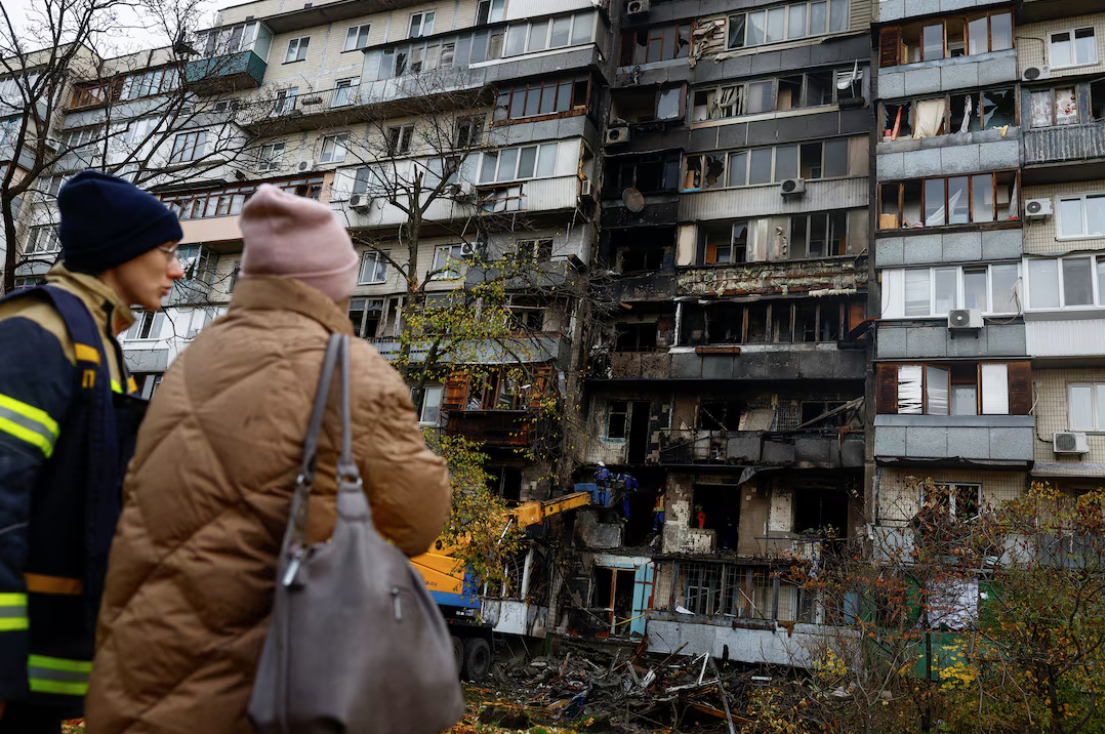
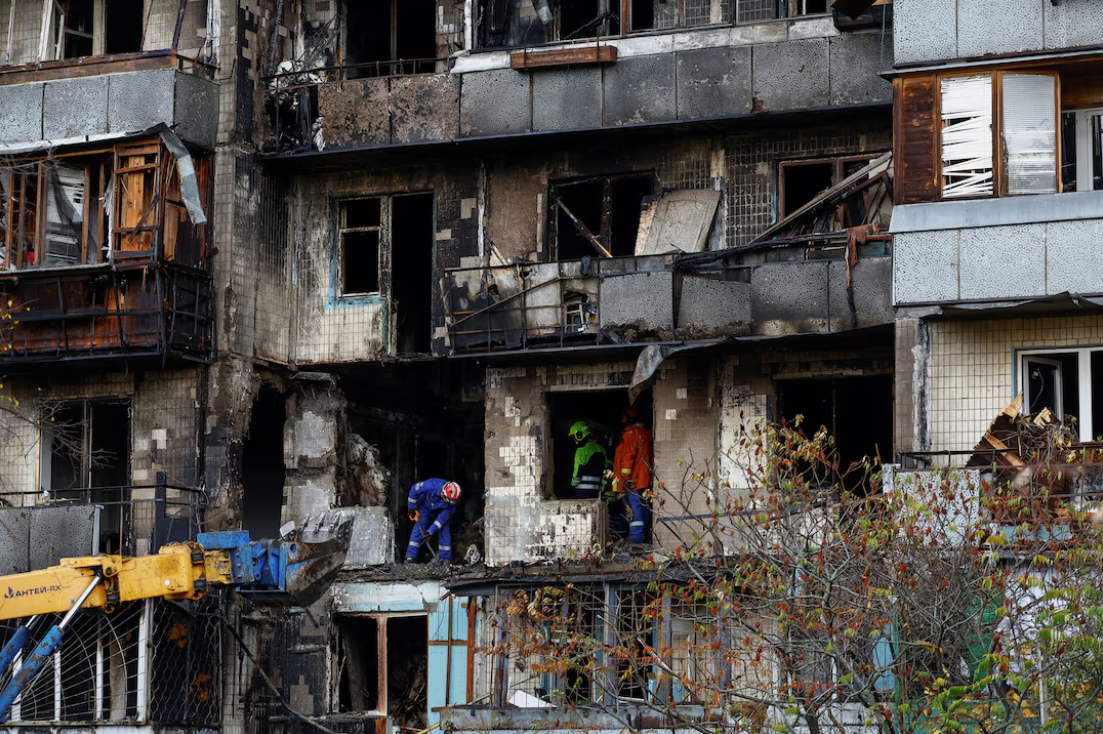
In the early hours of October 26, 2025, Russia launched a large-scale drone attack on Kyiv, the capital of Ukraine, killing at least 3 people and injuring 31 others, including 6 children. The attack destroyed two high-rise apartment buildings; debris from downed air-launched weapons hit a nine-story apartment building in the Desnianskyi District, triggering a multi-floor fire. Kyiv Mayor Klitschko stated that some of the injured (including two children) were sent to hospitals in the city, and the State Emergency Service rescued 13 people from high-rise residences.
During the attack, Kyiv and surrounding areas were under an air raid alert for approximately 1.5 hours, which was lifted around 00:30 Greenwich Mean Time (GMT). The Ukrainian military reported that Russian forces launched a total of 101 drones that night, and air defense units shot down 90 of them. However, falling shells and debris still caused severe damage to residential buildings. Zelensky said that within the past week, Russia had used nearly 1,200 attack drones, over 1,360 guided aerial bombs, and more than 50 missiles of various types to carry out continuous and intensive strikes on targets within Ukraine.
Although both Russia and Ukraine have denied deliberately targeting civilians, since the full-scale war broke out in February 2022, the conflict has caused heavy casualties and repeatedly damaged Ukraine's urban infrastructure, escalating concerns about European security and geopolitical risks in global markets.
II. Reactions from All Parties
Zelensky emphasized that every attack by Russia is an attempt to disrupt the lives of civilians, and the Ukrainian government has called on the international community to step up sanctions. Meanwhile, Kyiv Mayor Klitschko stated that the losses and casualties caused by the attack have further intensified public panic. Russia denied intentionally targeting civilians, but as the war continues, tensions between the two sides have resulted in thousands of casualties.
III. Market Impact Analysis
1. Escalating Geopolitical Risks
Russia's attack on Kyiv and Zelensky's call for stronger sanctions have further heightened uncertainty in global markets. In such cases, demand for gold as a safe-haven asset usually increases. Investors may turn to gold to avoid risks caused by market volatility.
2. Rising Gold Demand
As the war in Ukraine continues and the international community increases sanctions pressure on Russia, gold's safe-haven attribute will continue to be favored, especially when the global economy faces more uncertainties. Gold prices may rise further due to increased safe-haven demand.
3. Energy Market and Inflation
Although this incident does not directly involve energy supply, the escalation of the war may lead to increased volatility in the global energy market. Rising energy prices will push up global inflation expectations, thereby further enhancing gold's appeal as an inflation hedge.
4. Weakening U.S. Dollar
Due to the increase in international political risks, the U.S. dollar may come under pressure, especially when uncertainty in global markets intensifies. A weak U.S. dollar usually drives up gold prices, as gold—an unyielding asset—becomes more attractive in such situations.
IV. Technical Analysis
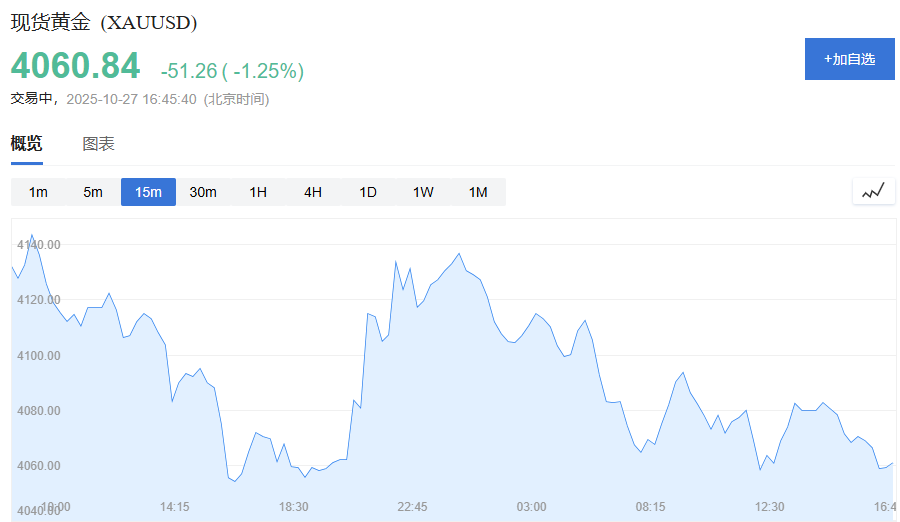
As of 16:45 Beijing Time on October 27, the spot gold price was $4,081.76 per ounce, and the gold market is still in a downward trend.
Technical indicators show:
- The Relative Strength Index (RSI) is 39.55, below 50, indicating that the market is still under selling pressure.
- The Stochastic Oscillator (STOCH) is 30.704, close to the oversold range, further emphasizing that sellers are dominant.
- Although the Stochastic RSI (STOCHRSI) is 4.827, entering the oversold range, which may indicate a short-term rebound, the overall trend remains weak.
- The Moving Average Convergence Divergence (MACD) has a negative value of -11.3, further confirming the dominance of the bear market.
Therefore, gold prices may continue to fall in the short term. Investors should remain cautious and pay attention to potential correction and rebound signals.

V. Outlook
1. Sustained Impact of Geopolitics
As tensions between Russia and the West continue to escalate, safe-haven demand for gold may keep rising, driving up gold prices.
2. Increased Market Uncertainty
With the strengthening of sanctions and the continuation of the war, uncertainty in global markets will increase, and gold prices may continue to rise.
3. Inflation Pressure and Gold Demand
Energy price volatility caused by the war may push up inflation expectations, and demand for gold as an inflation hedge will receive further support.
Summary
Russia's attack on Kyiv has heightened uncertainty in global markets and driven demand for gold as a safe-haven asset. As geopolitical risks rise, gold prices may continue to increase. Investors should pay attention to further developments in the situation, especially changes in international sanctions and the progress of the war.