

As the April 28–29 Federal Reserve policy meeting approaches, the eyes of global financial markets are once again locked on Washington. This meeting is highly anticipated not just because the Fed is widely expected to hold interest rates steady for the third consecutive time, but also because it likely represents Chair Jerome Powell’s final curtain call. With the market having fully priced in a hold, the true centerpieces of this meeting will be the outlook for the transition of power, persistent inflationary pressures, and Powell's closing remarks.
I. Interest Rate Decision: Holding Steady for the Third Consecutive Time, Rate Cut Expectations Evaporate
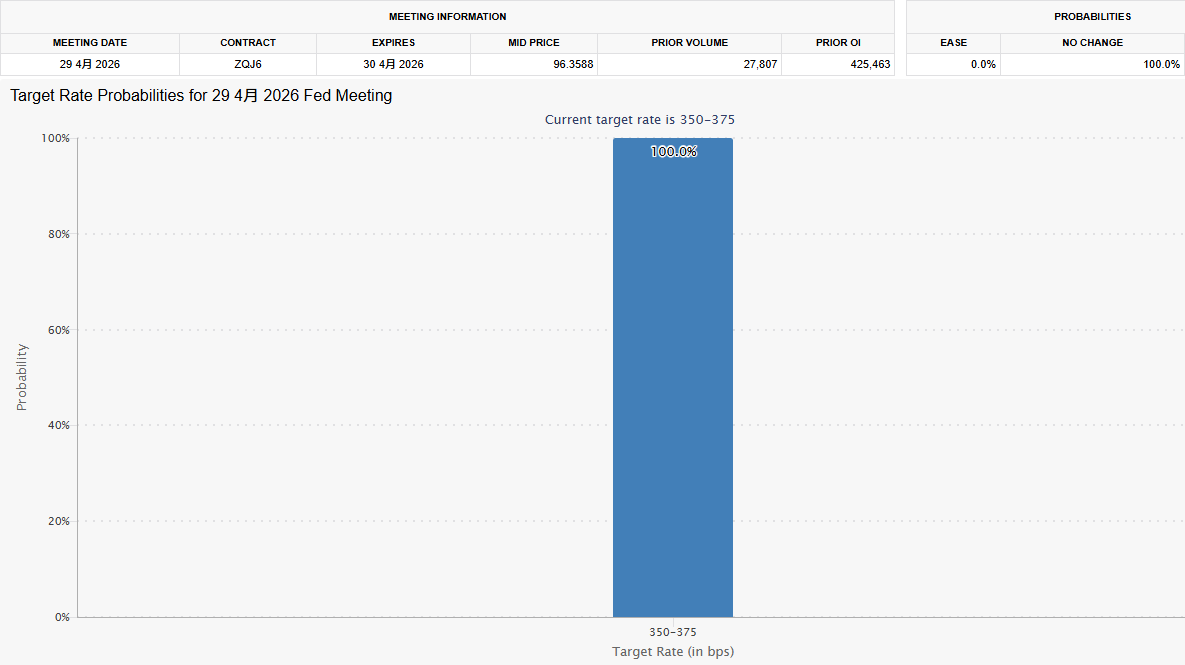
The market widely expects the Federal Reserve to maintain the target range for the federal funds rate at 3.50%–3.75%. According to the CME FedWatch Tool, market pricing has entirely digested a hold this month, placing the probability of unchanged rates at 100%.
This consensus is backed by recent economic data and reflects an increasingly cautious stance among policymakers. The Fed's March meeting minutes revealed that while officials still project one rate cut this year and a second in 2027, a vast majority of participants believe both upside inflation risks and downside employment risks have risen. Crucially, they noted that these risks have intensified with unfolding developments in the Middle East. A few officials even stated explicitly during discussions that further rate hikes might be required if inflation remains stubbornly above target.
II. Inflation Remains the Biggest Roadblock: PCE Projections Upgraded Significantly
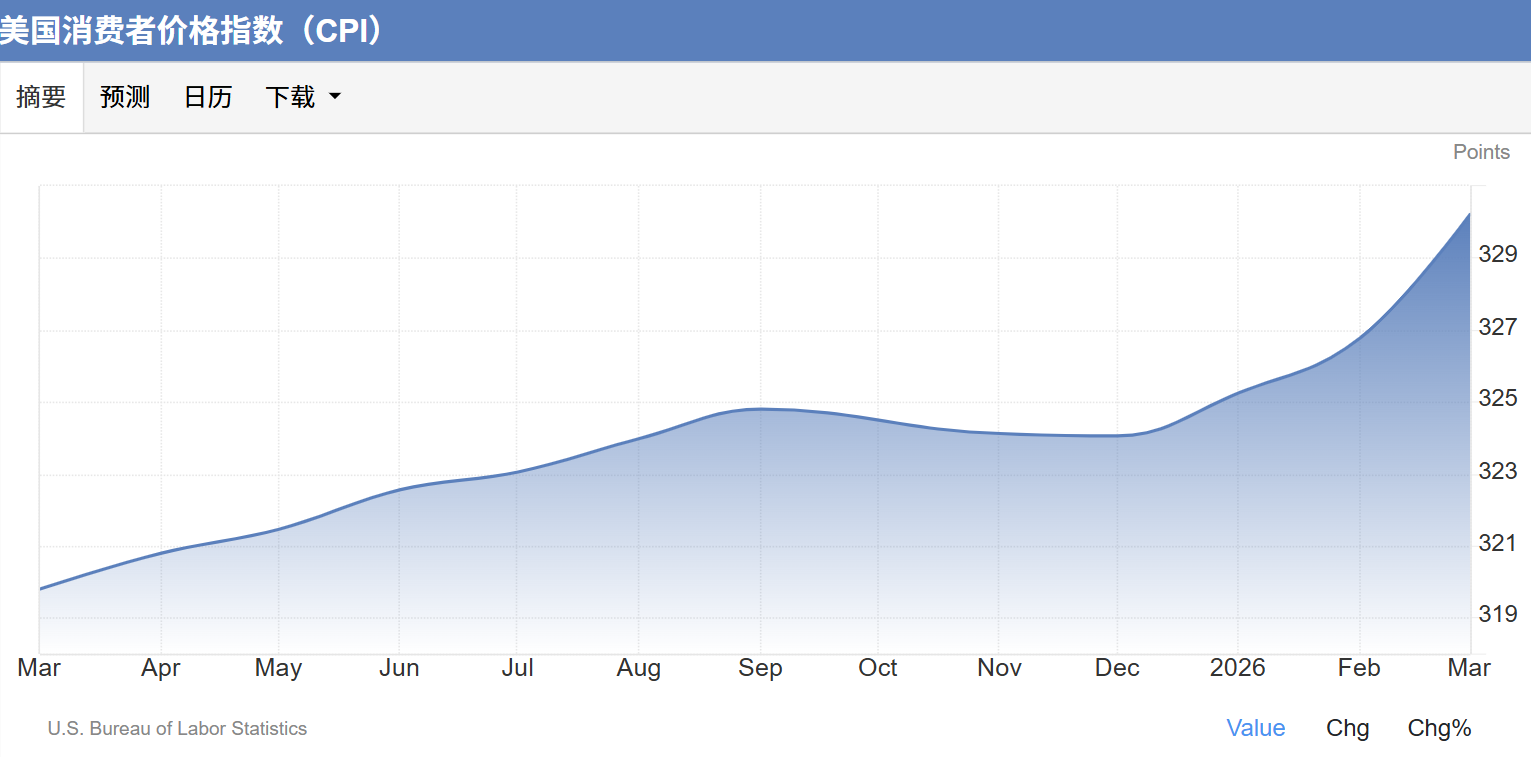
Recent data demonstrates that the energy shock triggered by the war with Iran continues to drive up inflation. The US March CPI accelerated to 3.3% year-over-year, with energy commodities skyrocketing 10.9% month-over-month and gasoline prices surging 21.2%.
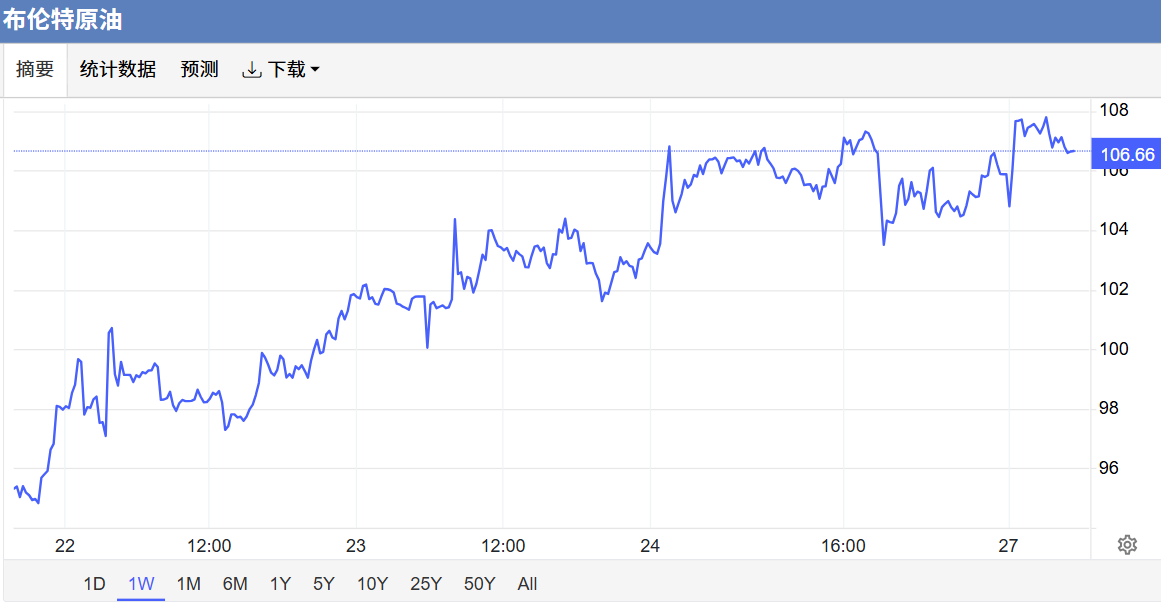
As of April 27, Brent crude futures are trading around $106 per barrel, representing a surge of nearly $50 compared to pre-conflict levels.
A recent Reuters poll of 103 economists shows that projections for the PCE price index—the Fed's preferred inflation gauge—have been upgraded across the board by roughly 30 basis points compared to late March forecasts. The consensus now expects PCE inflation to hit 3.7% in Q2, 3.4% in Q3, and 3.2% in Q4, remaining well above the long-term 2% goal.
Meanwhile, the labor market remains in a fragile balance characterized by low hiring and low layoffs. The March unemployment rate stood at 4.3%, with job gains concentrated in just a few sectors as companies maintain a highly cautious approach to adding staff. This combination leaves the Fed with zero incentive to deliver immediate policy easing.
III. Powell's Farewell Show: Clear Outlook for the Transition of Power
What makes this meeting unique is that it will very likely be the last time Jay Powell hosts the post-meeting press conference as Fed Chair, given that his term officially concludes on May 15.
Kevin Warsh, nominated by President Trump to succeed Powell, attended his Senate confirmation hearing on April 21. During the hearing, Warsh advocated for a dual policy path of shrinking the balance sheet alongside cutting interest rates, arguing that a gradual reduction of the balance sheet can create room for rate cuts. He also emphasized that he would not become a sock puppet for the administration, aiming to ease external worries regarding central bank independence.
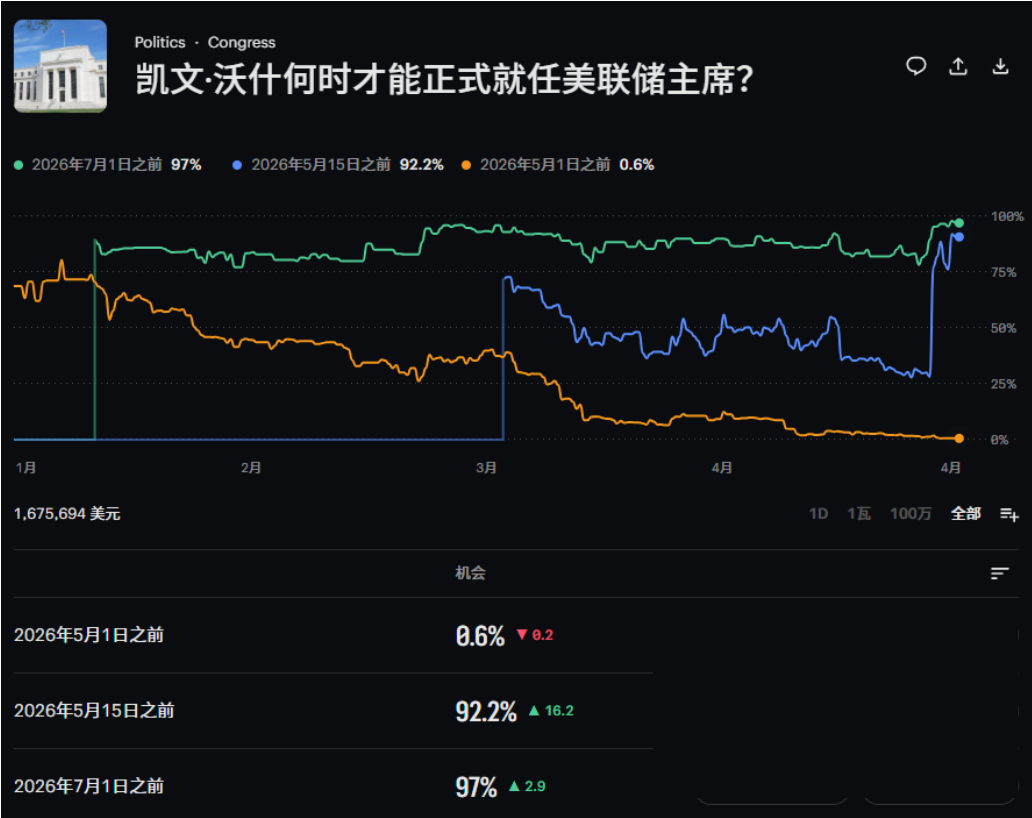
On April 24, the US Department of Justice announced it had concluded its criminal investigation into Powell regarding headquarters renovation expenses, clearing a major hurdle for Warsh's succession. Data from the prediction market Kalshi shows that the probability of Warsh being confirmed by May 15 has skyrocketed to 92.2%, rising to 97% for confirmation before July 1. Consequently, Powell's commentary at the April 29 press conference—especially his thoughts on economic resilience, the inflation outlook, and central bank independence—will be viewed by the market as the definitive closing statement of his career as Fed Chair.
IV. Core Market Focus: Press Conference Signals, Balance Sheet Reduction Details, and Dot Plot Hints
- Powell's Press Conference: Analysts expect Powell to emphasize economic resilience as the primary rationale for holding interest rates steady. Traders will scan his remarks for any hints regarding oil price pass-through effects, inflation expectations, and the future policy trajectory.
- The Pace of Quantitative Tightening (QT): The monthly cap for Treasury redemptions has already been scaled back from $60 billion to $300 billion. A Bloomberg poll from January showed that a majority of economists expect QT to conclude around October 2026. Whether this meeting provides explicit clarity on the definitive end date for balance sheet reduction remains a key detail to watch.
- The Easing Outlook: Out of 103 economists surveyed by Reuters, more than half (56) expect interest rates to remain unchanged through the end of September. Additionally, roughly one-third (32%) believe the Fed will not cut rates at all in 2026—a proportion that has nearly doubled since March. Financial traders are currently pushing the timeline for the first rate cut into mid-2027, pricing in less than a standard 25-basis-point reduction for the entirety of this year.
- The Independence Debate: Although the Department of Justice investigation has concluded, concerns over whether Warsh can safeguard the Fed's independence remain a talking point among lawmakers. How Powell addresses related questions will offer a vital window into current political pressures.
Conclusion
The April Fed meeting will open with a foregone conclusion of unchanged interest rates, but the underlying signals carry weight far beyond the headline decision. Against a complex backdrop of stubborn inflation, ongoing Middle East warfare, and an imminent leadership transition, Powell's farewell press conference will serve as a vital window for gauging the policy direction for the second half of the year.
With Warsh's takeover fast approaching, whether his blueprint of simultaneous balance sheet reduction and rate cuts can become reality will dictate the broader path of monetary policy heading into 2027. Until then, the Fed is content to remain on hold—but underneath this calm surface, the underlying currents are rapidly shifting.