

The Federal Open Market Committee (FOMC) will convene for its policy meeting on June 16–17 Eastern Time, with the interest rate decision and the latest Summary of Economic Projections scheduled for release on June 17. This will be the first monetary policy meeting hosted by the newly appointed Chair, Kevin Warsh, making its importance stretch far beyond a routine rate review. The target range for the federal funds rate currently stands at 3.50%–3.75%. Factoring in the latest non-farm payrolls and CPI data, the market widely expects a hold in June. However, the core suspense lies in two questions: What kind of policy signal will Warsh send? And is the Fed's communication framework about to undergo a historic overhaul?
I. Interest Rate Decision: A Hold Is a Foregone Conclusion, but a "Hawkish Pause" Becomes the Baseline Scenario
- Labor Market Resilience: May non-farm payrolls showed an increase of 172,000 jobs, coming in significantly higher than expected, while the unemployment rate held steady at 4.3%. With the data for the previous two months upwardly revised by a combined 93,000 jobs, the sheer strength of the labor market signals that the Fed faces zero immediate pressure to deliver early rate cuts to shore up the economy.
- Energy-Driven Inflation Tensions: On the inflation front, the May CPI rose 0.5% month-over-month, pushing the year-over-year print up to 4.2% (higher than April's 3.8%). Energy prices jumped 3.9% month-over-month and plummeted a staggering 23.5% year-over-year, with gasoline prices skyrocketing 40.5% annually. However, core CPI remained relatively tame, ticking up 0.2% month-over-month (down from the previous 0.4%) and hitting 2.9% year-over-year (a minor increase from April's 2.8%). This suggests that the current flare-up in inflation is primarily a supply-side phenomenon driven by energy shocks, rather than a total breakdown into a core services and wage-price spiral.
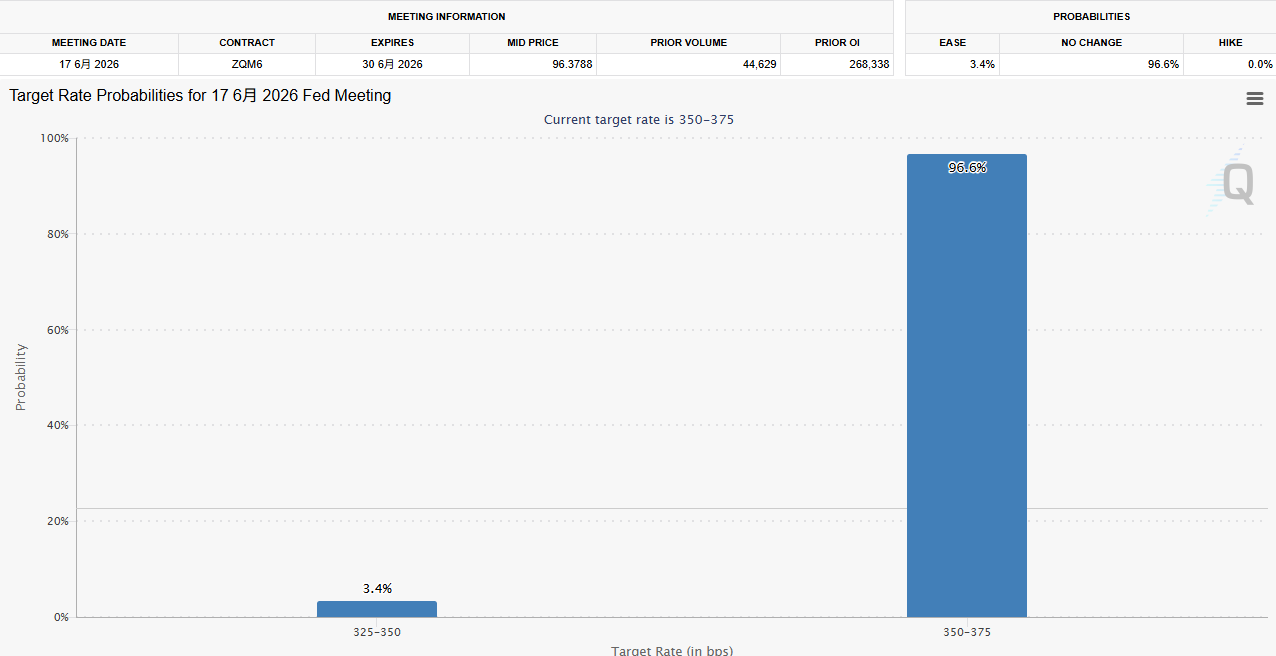
- Rate Hike Bets Linger: According to the CME FedWatch Tool, following the CPI release, the market still prices the probability of a rate hike in June and July below 2%. However, expectations for a hike later in the year persist, with the probability of a December hike remaining well above 60%. All in all, the most probable outcome of this meeting is an unchanged policy rate paired with a distinctly more aggressive tone—the quintessential "hawkish pause."
II. The New Chair's Debut: Warsh Is the Ultimate Wild Card
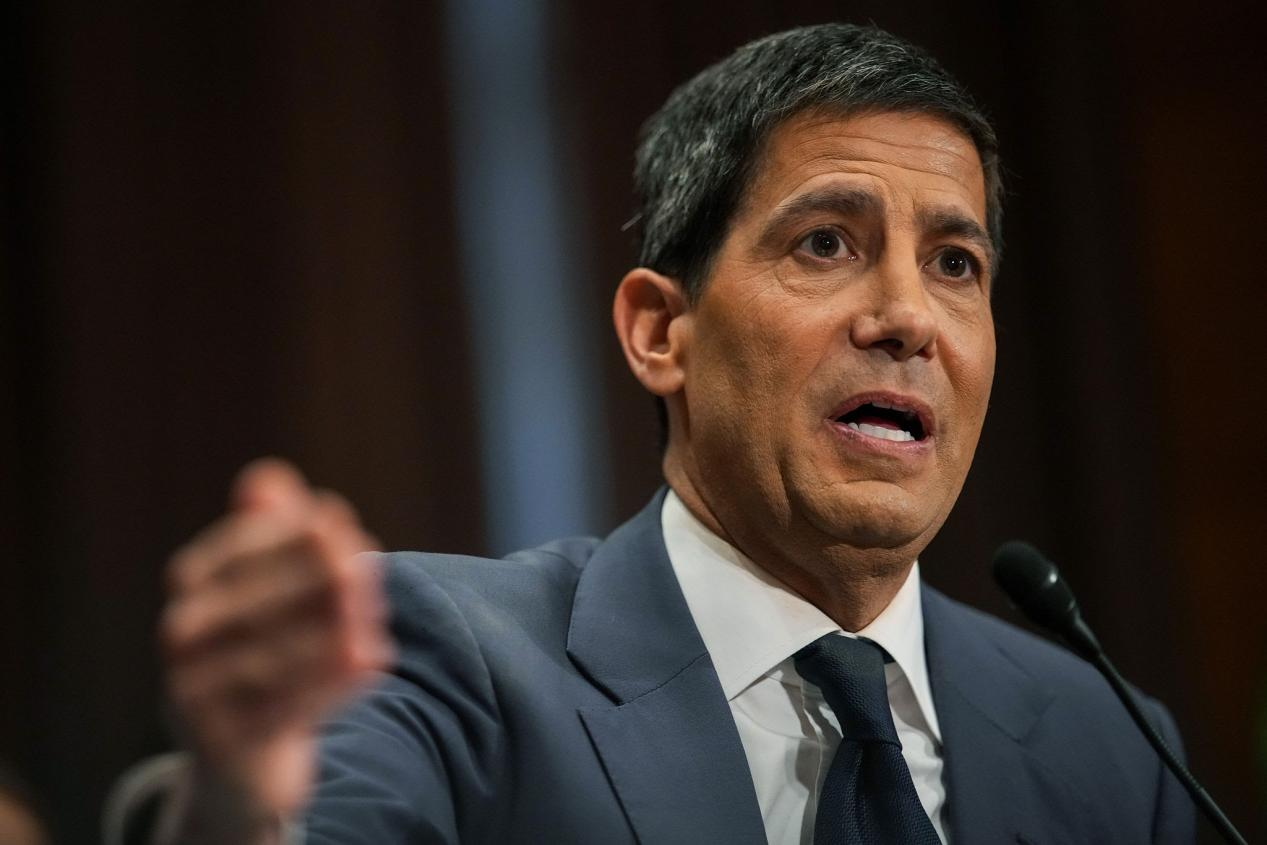
Warsh's debut FOMC meeting since taking office is the absolute centerpiece of the month. During his Senate confirmation hearing in April, he made his stance crystal clear, stating, "Unlike many of my past and present colleagues, I do not believe in forward guidance." This philosophy has put the bond market on high alert.
Potential changes currently being debated by market participants include:
- Shortening the FOMC statement to minimize official policy steering.
- Abolishing the interest rate dot plot—a tool that has served as the core anchor for market expectation management since Ben Bernanke introduced it in 2012.
- Reducing the frequency of the post-meeting chair press conferences.
III. Quantitative Tightening: The Crucial Structural Variable
In the eyes of institutions like PIMCO, the trajectory of the Fed's balance sheet is a far more critical variable than any adjustment to its communication style.
The Fed's balance sheet currently hovers around $6.7 trillion, down significantly from its 2022 peak of $9 trillion. Warsh has previously stated that further balance sheet reductions could run parallel with interest rate cuts. Dan Ivascyn, Group CIO at PIMCO, emphasized:
"Balance sheet runoff has profound implications for the shape of the yield curve and the performance of bonds across different maturities. This carries significantly more weight than changes in communication style or fine-tuning forward guidance."
Summary and Outlook
The core narrative of the June Fed meeting is no longer about the rate decision itself—a hold is a locked-in certainty. The genuine suspense centers on how newly appointed Chair Kevin Warsh will reshape the Fed's communication framework in his debut performance. Will the dot plot hint at upcoming rate hikes? And how will the path for the $6.7 trillion balance sheet unfold?
Against a tangled backdrop of labor market resilience, energy-driven inflation, and a simmering conflict in the Middle East, investors are bracing for a Federal Reserve that is bound to be more unpredictable in its communication and potentially more hawkish in its policy signals. For market participants, every single phrase and every pause from Warsh could easily become a fresh catalyst for market volatility.